Here’s a welcome new facility for the youth of Brownhills and Walsall Wood, kindly provided by Walsall Police, who have plenty of experience of this sort of thing. It’s nice to see someone doing something for the local kids, and I wish everyone well in the venture.
Seriously, though, it’s being officially opened at 6pm tonight at the premises on the Maybrook Road, and if you have a budding young pugilist in the family (10 years old or over), or fancy learning the sport yourself, why not get down there?
Thanks to Nicky for the headsup.
Looks well kitted out. Picture from Walsall Police.
A brand new community boxing club is opening to the public on Wednesday 28 November at 6.00pm in Brownhills.
Walsall Police amateur boxing club was originally the brain child of Willenhall amateur boxer Shaun Hargreaves whose vision was to create an amateur boxing club and fitness centre that could be enjoyed by the local community and the police who serve Walsall.
Shaun has over 30 years experience in amateur boxing and has been working closely with Walsall Police to set up the club.
Walsall police amateur boxing club has a simple philosophy, to bring communities together to improve fitness, break down barriers between police and young people, reduce crime and anti social behaviour and provide a place for members of the public to meet and train in a safe and secure environment.
The club is open to the general public (ages 10 upwards) on a Monday, Wednesday and Friday between 6.00pm to 8.30pm. At weekends the club is open from 12 noon until 4pm.
PC Alan Poole said: ‘To finally see the club finished and open is such an achievement and pleasure especially in current times of financial constraints. I have been personally touched by the sheer generosity of people who have offered their time and support both financially and in other ways.
‘A special thank you to Aldridge based charity, Rosie’s Helping Hands for their words of encouragement and support and their kind donation of £1,000. To Build Blocks, West Midlands Police Charitable Trust, Caldmore Accord Housing and the Co-Op.
‘I am confident that the club will become a well used facility and meeting place, not only to train and improve fitness but to make new friends and get to know local officers better. Boxing enthusiasts have the opportunity to box competitively or simply use the facilities to train and get fit.’
The club will be officially opened by Walsall Police Commander David Sturman on Wednesday 28 November at 6.00pm at Walsall Police Amateur Boxing Club, Maybrook Industrial Estate, Maybrook Road, Walsall Wood, Brownhills, WS8 7DG.
There will be an opportunity to tour the club and speak to both head coach Shaun and fitness coach Ian Benton.
I thank Ian for his wonderfully thought out and well crafted pieces – they are wonderful and I always enjoy posting them up. Cheers.
Ian wrote:
Anglesey/Anglesea Sidings served the now long-gone Charringtons Oil Terminal in Newtown for many years. Image from The South Staffordshire Railway Group.
Like many places associated with the London & North Western Railway, Anglesea Sidings are no different. The spelling has alternated over the years between ‘Anglesey’ and ‘Anglesea’. Certainly, in railway circles in BR times, ‘Anglesea Sidings’ is the name most commonly referred to in railway documents and which adorned the signal box.
The last working colliery on the eastern shore of Norton Pool was No.8 which closed in January 1962. As I understand it, the washery at No.3 continued for a little while after but by mid- 1962 it is true to say that the only NCB facility still operational and served by the mineral lines was ‘Wembley’ Central workshop. The line south of the junction with the original ‘Cannock Chase and Wolverhampton’ line was redundant, although I believe it was still in-situ after the 1960 date which has been given for closure. Using Clouseau-like techniques I believe the excellent, and recently published, June 1963 aerial photographs reveal the line to still be in existence at that time. I would suggest that it was abandoned and that the five sidings at the landsale wharf at Anglesea Sidings had been removed.
Prior to the coal traffic ceasing the down sidings at Anglesea were used for wagons to and from the mineral railway.
If you look very carefully at Anglesea Sidings on the June photograph, two things are striking; one the empty coaching stock which was used for Saturday only excursion traffic, and at this time, some weekly workers trains from Brownhills to Witton and Vauxhall; and, secondly, the line of ‘white’ wagons which I suspect may be tank wagons and possibly the embryonic start of Charrington’s oil traffic. Both of these trains are in the Down sidings (Walsall side). To the right are the Up sidings, which are actually on the down side of the running lines – yet another LNWR idiosyncrasy!
The Working timetable of June 1962 indicates that empties were still ‘booked’ from Norton Junction and Birchills Power Station to Anglesea Sidings; with loaded trains returning to the same destinations. However, by the September timetable such workings had ceased and the sidings were only booked to be used by empty coaching stock. It is probable that these workings actually finished as soon as the stocks of coal at No.3 washery were exhausted and there was no more slack for Birchills Power Station.
I would say that dates are a minefield to get right and that, certainly in railway parlance, they can relate to all sorts of variations on the meaning of ‘closure’. So if anyone can confirm dates I am more than pleased to know.
Possibly the last run through Brownhills on the South Staffordshire Line. Film courtesy of South Staffordshire Railway Group. The video is speeded up.
Turning to Chasetown.
St Anne’s Free Church contains a bust to a man I consider to be the Brunel of the Midlands. John McClean, an engineer by profession, was a Victorian through and through. Not only was he instrumental in creating the South Staffs Railway, but he also created the mining on the eastern shores of the Pool, the South Staffs Water Company and was involved in undertakings such as the Suez Canal. At one stage he was the sole lease holder of the South Staffs Railway, a feat that only one other person has undertaken in the history of the railways of Britain. He was also one of the founders of Chasetown and the church where his bust resides.
I know nothing of the above relates to the Cannock Chase Colliery Co.’s electricity supply, but as a final twist to my ramblings, the Colliery also supplied electricity to the railway, in particular to light the sidings at Norton Junction. In a seven year agreement signed on the 2nd May 1923, the railway company was to pay 50% less than the ordinary lighting consumer supplied by the Colliery Company, on the proviso that a minimum of 8,000 units per annum were used. In order for the supply to be provided, the Colliery Company had to apply to the Electricity Commissioners for a special order under the Electric Lighting Acts, authorising them to supply electricity within a defined area, ie:- the railway sidings.
St. Anne’s Church, Chasetown. An illuminating history.
It’s an odd fact of local history that little St. Anne’s Church, in Church Street, Chasetown, was the first church in Britain lit by electric light. The history of this installation, and of electricity coming to Chasewtown and Brownhills is inextricably tied up with the history of mining in the area.
Top local community worker and credit union whizz Steve Lightfoot tells the story of the church being lit for the first time; of fabric-insulated cables running in damp channels up the hill from the mine; of how the lights on a dark Sunday evening must have flickered and dimmed and the cables shorted as the electricity supply fought the conditions. One can imagine the drama and wonder of the modern age, first arriving at such an austere symbol of the old times. It must have been like something from a horror film.
I thought I’d shed a bit of flickering light upon this historical curiosity. On Friday coming (30th November 2012), respected local historian Gerald Reece will be coming back to Brownhills from his retirement in Devon to give a talk about the history of our area. Gerald has been very influential on the matter of Brownhills history through his book ‘A Walk Into History With Gerald Reece‘, which remains rare, but probably the best work on the subject around.
I thought I’d share these two short chapters from Gerald’s book as a taster of what promises to be a fascinating evening. The pieces talk about the Cannock Chase Colliery Company and their supply of electricity, a situation quite unique at the time. They may also go some way to illuminate the curious enclosure map featured here last week.
Gerald’s talk will be at Brownhills Methodist Church Hall, at 7:30pm on Friday, 30th November 2012. Click for a larger version.
XVIII
THE CANNOCK CHASE COLLIERY COMPANY
In May 1853 Henry William Paget, The Marquis of Anglesey, Earl of Uxbridge, Baron Paget of Beaudesert, etc. etc., advertised ‘for letting or otherwise Collieries now working and the unopened mines on Cannock Chase. He had two working pits, The Hammerwich Pit close to the Reservoir and The Uxbridge Pit in Chasetown. In 1854 John Robinson McClean, again, together with his partner in so many other projects, Richard Croft Chawner of Hammerwich, entered into an agreement with the Marquis for the lease of the mines. Before these arrangements could be finalised the Marquis died. To save time and money in further negotiations, the Partnership took control of the mines on the agreed terms which were included in the new terms offered by the new Marquis in 1858.
The Hammerwich Pit was designated the No. 1 Pit and the Uxbridge Pit became No. 2 Pit, it was nicknamed ‘The Fly’. The Partnership became The Cannock Chase Colliery Company, a title it held until it was finally dissolved in 1955. In all throughout its history the Company worked ten pits in the area. No. 1 Pit was short lived and was closed in 1864. No. 2 Pit was transformed in 1923 from a conventional shafted pit to being a drift pit. Instead of raising the coal to the surface at the pit head it was raised on an inclined ropeway direct to the sorting screens and into the waiting barges. No. 2 Pit was finally closed in 1940. In its early days the Company ran a closed railway from the pit heads of the mines to take the coal to the canal loading wharf. The idea of running the railway to join up with the South Staffordshire Railway and so gain access to the national distribution network had long been on the cards, the Old Marquis had obtained estimates of cost involved in 1852, but it was McClean who got things going in 1856. It progressed slowly and it was to be another two years, 1st February 1858 that the line was opened for the conveyance of coal from the pits to join the S. S .R. at Newtown. The connecting area was called the Anglesey Sidings. This Mineral Railway was lifted in 1960 after a life of 100 years. Until 1856 the coals were taken from the pits to the wharf in horse drawn trucks. In 1856 McClean purchased a locomotive. It was an 0-4-2 Saddle tanker and had been built by Beyer Peacock & Co. of Manchester. He named it McClean. In 1861 came ‘Chawner’ from the same manufacturer. ‘McClean’ lasted for 100 years before being broken up for scrap in 1956.
The McClean locomotive. Picture from Chasewaterstuff’s Railway and Canal blog.
XIX
ELECTRICITY SUPPLY
Brownhills frrst experienced the wonder of electricity in December 1878. A performance of ‘Taming the Tiger’ staged by Walsall Amateur Corps Dramatique at Ogley School Rooms was illuminated by electric lighting provided by Mr. F. Brown of Walsall. He explained the principle of the electric ‘candle’ and stated that it had been designed by a Russian named Jablochkoff.
It was not until 1922 that Brownhills was eventually supplied with power and then it came from a most unusual source, The Cannock Chase Colliery Company. The CCCC. were among the foremost exponents at introducing electricity into the mining industry. In 1883 they were generating electricity for use at their own workings and had also wired St. Anne’s, Chasetown, with electric lighting. This was reputed to be the frrst Church in the Country to have been supplied with electricity. In 1908 CCCC built a power station at Chase Terrace, from there electricity was distributed to sub-stations at each of its pits. Brownhills almost had electricity in 1905 when the Worcester and Staffordshire Electric Supply Company applied to Parliament with a scheme to build a power station on the south shore of Norton Pool. The scheme was swiftly booted out when it was revealed that the electricity to be generated was not for Brownhills and District at all but that it was destined to be wired direct to South Birmingham. In July 1921 Brownhills Urban District Council asked Walsall Corporation Electricity Undertaking to extend its supply to take in the Brownhills area.
Cannock Chase No. 5 pit at Chase Terrace, as photographed by Aerofilms in 1926. This would have been about where Chase Park Industrial Estate stands today, just south of the Cannock Road. The curved road to the right is Princess Street, the straight one to the left Ironstone Road. Cannock Road runs diagonally across the middle. Note the electricity cables in front of the pit buildings. Click for a larger version.
The reply was clear, they would but only if they could supply all the local collieries as well. BUDC were not empowered to agree to those terms. At a BUDC meeting in April 1922 Chris Jones, CCCC’s Electrical Engineer, attended as an impartial consultant when the subject of an electricity supply was again discussed. He intimated that CCCC were capable of supplying Brownhills with all the electricity it required if a guarantee could be provided covering the initial expense of supplying poles and cable. CCCC were at that time producing 800 Kilowatts of power but their own requirements during the evenings was only 50 Kilowatts. At a BUDC meeting on 26 April it was unanimously decided to take up CCCC’s offer. Without seeking further legislation they gave the go-ahead.By August 1922 Brownhills had been transformed. Poles had been erected fron1 Chasetown to Brownhills and cables strung along the route. On the evening of 13th September 1922 Councillor George Hodgkins, the elder statesman of the Council aged 79, pulled the switch at the transformer station in the Council Yard. ‘The Council Chambers were flooded with the new illumination. Electric lights shone for the first time from many shop windows in the High Street. Street lamps had 120 candlepower bulbs and at crossroads 250 candlepower bulbs were used. Domestic supply was 400 volts for power and 250 volts for lighting.
On 16th September 1922 Walsall Corporation Electricity Undertaking applied to the Electricity Commission for permission to extend their supply into the Brownhills Urban District Council area. In their haste to get power to Brownhills the BUDC and the CCCC had overlooked the small legality of obtaining permission. Luckily the Electricity Commission granted a belated blessing of approval. In 1929 the electricity generating side of CCCC was formed into a separate company called The Chasetown and District Electricity Company Limited.
Just to add a bit more to it, this is the same photo as the one from A Click in Time that Kate mentions in her comment.
I don’t know the year, my book just says early twentieth century.
Many thanks
Ann.
To anyone reading, I heartily recommend the A Click in Time service for old local photos. It’s a bit clunky in the user interface, but shows just what a vast range of incredibly diverse images are held by Walsall Local History Centre. Do take a look.
Thanks to Ann Cross and those commenting for their continually enlightening and thoughtful contributions. You’re all brilliant.
A very interesting image supplied from an unnamed book by reader Ann Cross. This is the same image shown on Walsall’s ‘A Click in Time’ that Kate mentioned, but better quality. Date unknown, click for a larger version.
Students of Brownhills Local History will be aware of an elusive, long lost site by local chap Robert Webster. This great resource ceased to exist a few years ago, when Freeserve, the service provider in whose hosting space the website was based, shut down and merged with Orange.
Robert Webster’s homepage and site, which disappeared around 2008. A sad loss, although the colour schemes could be rather vibrant. Not a site to face when hung over…
One often finds broken links to Rob’s site around the net, and I asked Rob a couple of years ago if I could republish his material. At the time, he agreed, but he also talked about getting the site back up, so I thought I’d leave it for a while, in case he had a change of heart.
Since then, I’ve been unable to contact Rob, so if you’re reading this, please shout up if you object and I’ll take this stuff down. However, along with David Hodgkinson’s wonderful Brownhills site, this labour of love was formative for me. The writing was good, and very, very diverse, and covers lots of material I’ve not seen before.
Today, I’m dredging Rob’s site to bring up something we’ve never touched on here on the Brownhills Blog: Clayhanger Brickworks and The Gentleshaw Sand Company. What I’ve done is combined two of the author’s original pages: one about the brickworks itself, and another that appears to be a 1967 project donated to Rob by Sheila Norris (nee Jones), a member of the Jones Family. I’m unclear where the boundary is between Robert and Sheila’s work, but it’s all good stuff.
I have more to come on this, but I’d like to see what readers remember.
Note that I’ve recycled this from a saved version from the Wayback Machine from three years ago, it fades in and out, so I’ll only make general links here. The archive also mangles the character values that Robert used for pounds, so the prices are incomplete.
Remember folks, comment is invited and welcomed. Either on this post, or by email to BrownhillsBob at Googlemail dot com. Cheers. I want to get as much of this stuff back up and online as possible.
The following work is exclusively from Robert and Sheila’s original work, and they retain full rights.
Clayhanger Brickworks
Clayhanger Brickworks was one of two brickworks in the area, the other one being close to the Walsall Wood Colliery where Maybrook road runs now.
Ordnance Survey 1884 1:10,000 plot of Clayhanger showing the brickworks. This is from my archives. Note there was a tramway or cart track from the marl-hole up to the brickworks on the canal bank. it’s the amazing sinking building myth again… Click for a larger version.
The brickworks was most probably established in the 1790’s to provide bricks for the building of the Wyrley and Essington canal. It was built next to the canal by Clayhanger bridge on Clayhanger road. It was a working brickyard in 1887 and was clearly shown on the OS maps of that time. When it was established it was on the same level as the canal but the house that stands on the site today has sunk well below the canal level due to subsidence.
The house next to the brickyard was called, ‘Clayhanger Court’, and in 1881 was occupied by Thomas Clark (excavator) and his wife Mary. There were 3 labourers employed at the yard in 1881, ‘James James’, who had moved to the area from Norfolk. ‘John Anslow’ a local man who lived with his wife and 4 children in Clayhanger Road in a row of houses called, ‘Snapes Buildings’. There was also, ‘Josiah Ward’, and his wife Emma, they lived in the village in Bridge Street.
The brick works eventually closed as the pit filled with water and became unworkable, this became known as Clayhanger Pool. The brick works were converted into 2 houses, Nos. 17 & 19 Clayhanger Road, (now Nos. 3 & 5 Bridge Street). Mr Ernest Jones moved into no.17 in 1923 and ran his haulage business from there , taking bricks from Aldridge Brickworks to Birmingham. Later, with his three sons, Dennis, Edward and Leonard, he expanded the business into sand and gravel & established the Gentleshaw Sand Company. They built a thriving business and operated a fleet of Bedford & Leyland Comet lorries which were a common sight travelling the roads in the area.. The Company built a new workshop over the canal bridge which was later taken over by Bourne Tools Ltd who manufacture injection moulding tools, they are due to vacate the premises in October 2003 as the Company stops the manufacture of tools.
Clayhanger Brickworks History
By Sheila Norris (nee Jones)
The pair of houses converted from the old engine sheds at the brickworks. Originally numbered 17 and 19 Clayhanger Road, now 3 and 5 Bridge Street. Picture taken about 1923. Picture from Webster’s Genealogy site.
Information given to Sheila Jones by Ernest Jones in about 1967/8 for a School Local Studies project.
Ernest Jones bought the site in 1923 (the value was then [?]).
About 30 years earlier it had been a brickworks. Clayhanger Pool had been the clay pit. The clay was of good quality for brick making but occasionally bits of lime in the clay caused trouble. Another problem was the strong springs in the bottom of the pit. A donkey engine had been installed to pump water day and night. The spring water was so pure that a Brownhills doctor used to come to collect it for his dispensing.
One day a new spring was struck. The following morning the donkey engine, the workmen’s hut and all the tools were under water and they have never been recovered. A great deal of money was spent trying to pump the water out so that the brickworks might start working again but the springs were too strong for the sort of pump they had in those days.
In the 60s divers (my uncles) went down but they could find no trace of any machinery. This could be accounted for by the steep sides of the pit caving in or the fact that the council once used the pool for tipping refuse. The pit was originally 45 feet deep.
When all hope was abandoned of restoring the brickworks, the engine sheds where the bricks had been made were converted into two cottages, now numbers 3 and 5 Bridge Street.
This building will be familiar to many. Demolished in 2004, it was for many years RKG pressings, but before, had been the workshops of the Gentleshaw Sand Company. It stood on the Walsall Wood side of Clayhanger Bridge, where Bridgeside Close is today. Picture from Webster’s Genealogy site.
When Ernest Jones bought the property in 1923 the old drying sheds were still intact, but these were later demolished and the very strong timber used to construct garages. The foundations of the kilns were also intact but these were dug up, dressed and sold. Several houses in Brownhills, still standing in 1967, were built with bricks from the brickworks.
The cottages made their gardens come right down to the edge of the pool but as the springs were still active they were quickly covered with water. Ernest Jones raised the level of his lawn 3 times before giving in.
I also had access to the deeds to the land for my project. The earliest deed was dated June 24th 1856. It read as follows: –
June 24th 1856. By Indenture of this date made between the most honourable James Andrew, Marquis of Dalhousie and the Right Honourable Edward James, Earl of Powis of the first part, the Right Honourable George Augustus Frederick Henry, Earl of Bradford of the second part, William Hodgkins of Muckley Corner, near Lichfield in the county of Stafford farmer, of the third part, George Hasloch of Kentish Town in the County of Middlesex, gentleman, of the fourth part and Edmund Arblaster of Walsall Wood, in the Parish of Walsall in the County of Stafford, of the fifth part.
Reciting that by an indenture of Statutory Release settlement dated April 29th, 1844 and made between the said Earl of Bradford of the first part, the Honourable Orlando Charles George Bridgeman commonly called Vicount Newport (Eldest son and heir apparent of the said Earl of Bradford) of the second part; the Vicountess Newport, then the Honourable Selina Louisa Forrester of the third part, the marquis of Dalhousie (then Earl of Dalhousie) and the said Earl of Powis then commonly called Vicount Clive of the fourth part. The Honourable George Anson, Lieutenant Colonel in Her Majesty’s army and Edward George Childs Esq. Of the fifth part , the Right Honourable John George Weld, Lord Forrester, Baron Forrester and the Rev. William Bridgeman Sunspoon (clerk) of the sixth part and the said Earl of Powis (then Vicount Clive) Robert Clive Esq. and Edward Bailey Gentleman, of the seventh part (being the settlement made previously to and in contemplation of the marriage then intended and shortly after was duly solemnised between the said Vicount Newport and the said Selina Louisa Forrester) and in which indenture it was related that the said Earl of Bradford was seized in the fee simple of the hereafter mentioned or described in the first schedule thereto free from incombrances and that he had determined to settle the same hereditary to the uses and upon the trusts thereinafter expressed concerning the same. The said Earl of Bradford did convey and assure unto the Marquis of Dalhousie and the Earl of Powis etc.
The conditions for the sale of land were found in the deed dated April 16th 1874. William Hodgkins, licensed Victualler paid to the Inclosure commissioners for England and Wales the sum of [?]-14s-6d. The Lord of the Manor of Walsall was entitled to all minerals under the land thereby conveyed and should have full power to get them (fire clay and brick clay excepted) either from the surface or under the same from any of his adjoining land subject to the payment of surface damage as afterwards provided. The Lord of the Manor and his heirs and assigns should have the right to sink shafts and make and erect brickworks for the purpose of getting minerals for which they should pay an annual surface rent of [?] per acre per annum so long as such land should be occupied for any of the purposes aforesaid. If any damage ensued by the working of mines through pits or shafts on any of the lands of the Lord of the Manor, compensation should be paid by the Lord of the Manor to William Hodgkins in respect of the same not exceeding per acre per annum while the damage continued.
In order to buy the property William Hodgkins had to borrow money as follows: he requested Alfred Coles of Clapham in the county of Surrey to lend him the sum of [?]. He agreed. Also on October 20th 1859 he requested Peter, John and George Potter of Walsall to advance and lend him the sum of £60 which they had agreed to do out of money belonging to them on a joint account of having the repayment of the same in the meantime at 4% per annum secured by a mortgage.
On 27th March 1877 the sum of £60 had been paid off.
On 9th April 1877 only [?] remained to be paid off.
A cracking old lorry, as owned by Ernest Jones. Picture from Webster’s Genealogy site.
The property itself consisted of “3 acres, 3 roods and 7 perches situated at Clayhanger near Walsall Wood in the township of the foreign of Walsall in the parish of Walsall in the County of Stafford fronting the new road called the Clayhanger Road leading out of the Walsall Wood and Catshill Road bounded on the north east by the said new road called the Clayhanger Road, on the south east by the Catshill branch of the Birmingham Canal company, on the South West by land belonging to John Smith Charles Esq. And on the north west by other land belonging to the said William Hodgkins.”
During a subsequent sale of the property the following items were mentioned:
The brick kiln, a claymill, a drying shed, 6 navvy wheelbarrows and 3 brick barrows, 2 sets of brick moulds, 2 sets of brickmaking tables, a handing table and a lot of planks.
Summary:
First recorded sale of land 24th June 1856 – the Earl of Bradford to William Hodgkins.
Further land added in 1874 for the sum of [?]-14s -6d.
Following the death of William Hodgkin’s it was sold by his 4 sons to Francis Harry Gordon – price [?]-10s-0d dated 21st August 1877.
The pair of houses converted from the old engine sheds at the brickworks. Originally numbered 17 and 19 Clayhanger Road, now 3 and 5 Bridge Street. Picture taken about 1923.
Sunday, 25th November 2012 between 6:00am and 6:00pm, the Lindon Road at Anchor Bridge will be closed to traffic from the junction of the A452 High Street to Harley Close to continue resurfacing works. There is also likely to be subsequent disruption on the Chester Road, caused by the same operations.
Give the flora and fauna the space it needs and let nature take its course nature doesn’t need gangs of welly clad missionaries bringing civilization via the inappropriately named nature trail.
I wouldn’t encourage more people to encroach into the last remaining refuges for wildlife for their own amusement people may want to get closer to nature but unfortunately nature doesn’t want them any closer.
I also gather there’s some commotion amongst Shire Oak Park Nature Reserve users about recent heathland management works undertaken in the park. I knew this would happen, it does every time the reserve undergoes management, which I why I published the explanation of the tasks to be undertaken. These techniques look dramatic, but are well proven and work.
Roger ‘Ziksby’ Jones compiled the above slideshow after a visit to investigate the work at Shire Oak. He had this to say in response:
Countryside Services spent this week carrying out conservation work there which has upset a number of local residents and park users. The Park is designated as ‘Lowland Heath’, a rare and valuable habitat, which requires continual maintenance to prevent the spread of birch woodland, which, if left unchecked would swamp the heath in a very short period.
Wondering just what had happened this week, I took a look myself this afternoon. Not all doom and gloom I’m happy to say. For regular users it might be a sight too much to bear. I haven’t been for a few weeks but most of the reserve appears to be untouched. The areas where work has been carried out do, of course, bear the scars as can be seen. But come next spring you’ll hardly notice. As has been pointed out, yesterday’s downpour didn’t help as many of the paths are muddy with pools of standing water.
I implore Mr. Keep… (and the other four aliases he has here – curious), and any Shire Oak Park users to read Morgan’s post. Sometimes, it’s necessary to be cruel in order to be kind; in urban settings like ours, open spaces can’t reach a biodiverse balance without management, and Walsall is not unique. Every month I implore folk to help out at Chasewater, where similar works are undertaken.
If we want to maintain the range and health of our open spaces, management and control are essential. Please read Morgan’s post, and marvel at the passion and commitment this talented ecologist exemplifies.
Click on the screenshot to visit Morgan’s blog post.
From ‘Walsall Pubs – A History’ by John Cockayne, spotted by reader Greame Clarke.
I had the above clip in from reader Greame Clarke this morning, and seeing as there’s such debate around the Freemasons Arms, I thought I’d post it up. The English seems a bit odd, and I can’t vouch for the accuracy, but it’s something to add to the melee.
Cheers, Greame!
Transcribed below for Google to find:
At 24 Park Street on the opposire side from the ‘New Inn‘ was the ‘Freemasons Arms‘, the owner in 1834 was Harry Smith and 1909 it was in the possession of Lichfield Brewery Co. Thar Brewery was in SL John’s Street Lichfield and registered in 1869 and was acquired by Samuel Allsopp & Sons in 1930 when it had 182 houses, brewing ceased in 1935 and the Brewery has since been demolished. By 1910 the owner of the ‘Freemasons’ was Thomas Watson and the manager in 1916 was Alfred Williams, a retired Police Inspector receiving £2.10s.0d p.w. The premises had passed into the hands of the Lichfield Brewery again with William Lea as tenant by 1925 when it has stabling for four horses and it was described as an ‘old property in a good state of repair’. The Public Bar was 19’7 x 16’ x 9’4 with a lobby. Smoke room, Snug and a Billiards room, ‘used as a sitting room‘, there were 5 bedrooms. The ‘Freemasons’ was closed in March 1933 and the full license transferred to the new ‘Red House’ in the Sutton Road.
Without adequate ranger cover, friends groups and work parties can’t get the support and organisation they need. Image from the Save Walsall’s Green Spaces and Countryside Services blog.
Linda and Roger went to hear what Walsall Council had to say about the cuts to the service we’ve been protesting about, and offer the group’s views. We had been led to believe the proposals were not as bad as we thought. This was incorrect – they’re far, far worse. I think we are all shocked and disappointed with the disregard the Council appears to have for it’s currently excellent Countryside Services and Ranger team. These count amongst their number some very talented and highly trained individuals, which the borough is lucky to employ.
It’s also telling to note the discrepancy between what was said here, and the assertions made by certain councillors on Monday. Based on the evidence here, the future doesn’t look good, and that’s a crying shame.
Linda wrote in the campaign’s Facebook group the following post, with the notes of the meeting as an attached file which I include too.
Here are the notes on the meeting Roger and I had with Jamie Morris and Mark Holden. They are just notes and not intended to be minutes. I did ask to record the meeting so that I could prepare proper notes but was refused permission!
If there are any questions then I can try to raise them later. The notes give you a flavour of what was discussed. If you want further information please email me. Please keep any comments and observations civil and non-political please. Roger and I did our best. We are not experts!
The notes are as follows:
MH explained that the decision was made in August 2012 to integrate the services provided by Green Spaces and Street Pride. Running parallel with this decision was the knowledge that budget savings would have to be made.
c. £6 million from Street Pride over 4 years
c. £450K from Green Spaces over 4 years
In addition a further £300K can be saved through the departmental integration.
There has already been some restructuring of the management element and there are further proposals concerning management posts.
LM asked about potential Trust status currently being looked at. It was clarified that Green Spaces are not part of the current examination of creating a Leisure Trust. JM said this was because GS was more at risk of disconnection from local communities if in Trust.
It was clarified that although there is a restructuring of the posts included in Arboretum side of GS there will be no change in the number of posts there due to external funding.
No changes to tree maintenance.
RJ pointed out that there was a high calibre of staff in GS dedicated to everything they did providing a service over and above what they are contracted for. The Group are concerned that this expertise will be lost through proposed staff reductions.
Just a small selection of activities and events the team organise and facilitate.
Potential job structure was discussed at length. Lots of roles will be changing. More team leader posts will be created. More people will be trained in the issue of Fixed Penalty Notices and more people will be on site on a permanent basis. They hope this will lead to more sites gaining a green flag as one of the criteria is a presence on site.
In Street Pride an 18-post reduction is proposed from operational level to administration with 2 senior management roles going.
Park Rangers were moving to SP operations effectively becoming environmental operatives. When pushed it was revealed that 2 Assistant Park Managers and 4 Senior Park Ranger Posts may be lost within this restructuring. Roles are to be redefined and multi tasking will be expected. This is still subject to review.
GS will combine countryside services and forestry role. Two senior Countryside Ranger Posts will be lost although this is also still subject to review.
Throughout the meeting both RJ and LM emphasised the fact that people currently working as Rangers in Parks and CS are excellent staff, give a great, expert, specialised service over and above what would be expected and were considered assets by all users.
JM and MH insisted that the main links with Neighbourhood Rangers for Friends and User Groups would not change.
Maintenance Restructuring has not been considered in any depth as the members of the cabinet had made it clear that there were to be no changes to floral displays, winter and summer bedding. This means there will be little change in grass mowing (although there will be a move to use less agency staff and instead use people on annualised hours contracts. LM and RJ suggested that perhaps maintenance restructuring should be looked at including less grass mowing, more wild flower meadows and wild flower planting rather than formal bedding. JM indicated this could work out more expensive!
There is currently no proposal to change green space opening and closing times or to change locking and opening procedures although this might be looked at as there are 300 council staff who live locally and apparently it would make sense to use their services and also those of local community groups and also to consider if parks etc could left open 24/7. LM and RJ pointed out that every site was not suitable for 24 hour opening and that before any proposals were made to groups regarding taking over locking and unlocking, insurance and safety issues needed serious investigation.
LM asked about apprentices and the current liaison with B’ham Uni. Liaison will continue and apprenticeships will continue subject to funding availability.
RJ introduced the subject of the new GS Strategy. JM said that the new strategy was designed not to heighten expectations as realistically they may not be able to maintain some sites to the same standard and may have to concentrate on fewer sites. The primary sites would be maintained.
RJ asked about the proposed role of a Green Space Champion. MH advised that this had not been fully considered at this time.
Notes: Abbreviations used
SP= Street Pride
GS = Green Space(s)
MH = Mark Holden
JM = Jamie Morris
RJ = Roger Jones
LM = Linda Mason
It goes almost without saying, but if you feel as strongly about this as we do, please sign the petition, join in the campaign and make your voice heard. The way it’s going it seems that the only thing that will be saved is the Arboretum and Beacon, with everything else being neglected.
But don’t worry, the floral displays are safe. For heaven’s sake…
This is the kind of flytipping that’s dealt with by volunteer groups organised by the Countryside Services Team – in other words, The Big Society in action. Image from the Save Walsall’s Green Spaces and Countryside Services blog.
I now have great pleasure in presenting the second part of Ann’s story, which, just like the first, is a real gem. I thank Ann for her wonderful work, and will hereby declare that if she would like to write any further material, I’d be most privileged to publish it here.
The best thing about curating this odd little site is the range of great writers who’ve contributed to it; David Evans, Peter Cutler, Andy Dennis, Ann Cross and others make curating this blog a constant pleasure. Long may it continue.
Ann wrote:
The 1901 census shows William Cross at the Royal Exchange as publican assisted by two cousins, Jennie Jackson housekeeper and Florrie Jackson barmaid, and Alice Painter, already mentioned by staffordshirebred.
On May 13th 1915 when he was 37 years old Grandfather Cross married Mary Emily Williams at St Pauls Church in Walsall. She was almost 25. At the time she was a live-in barmaid at the Freemasons Arms in Park Street Walsall. The 1911 census shows Thomas Watson as the licensed victualler, his wife Elizabeth, two sons and two workers, Lizzie Kensington a domestic and Emily Williams a barmaid.
Mary Emily Williams outside the Freemasons Arms. Does anyone have any more information about the lost Walsall alehouse? Picture kindly supplied by Ann Cross.
My photo shows Mary Emily on the right outside the Freemasons Arms. I still have the silver and leather belt she is wearing. It used to fit me… I don’t know who the lady on the left is, maybe Elizabeth or Lizzie?
The following year my father was born on 10 th June 1916. He was their only child, the third William Cross, known as Bill. He attended the local school and was a choir boy at St Johns church.
My father left school in 1930 when he became 14 (school leaving age didn’t change to 15 until 1947) and went straight to work at G C Dean the Tailor at 32 Digbeth Walsall. In December 1931 he went to work for Montague Burton Ltd at the Bridge Walsall where he was paid 10 shillings per week, rising to 15 shillings after a three month period. In the mid thirties he was promoted to Manager of the branch in Christchurch Hampshire (now Dorset) and that is where he met my mother.
In 1935 Ind Coope and Allsopp merged, having acquired Lichfield Brewery earlier, and in 1936 became the new owners of the Royal Exchange. My grandfather of course was still the tenant and license holder.
Sadly Mary Emily died on 26 th March 1939 age 48 and so was not present at the marriage of her son to Gladys Violet Scott in Christchurch Priory on 24 th February 1940.
The war years intervened and my father was not back in Walsall Wood permanently until 1946 although my mother was, having moved there when she became pregnant with me. Previously she had been in Paisley where my father was stationed before he was moved to Gosport in readiness for D Day.
My brothers were born in 1947 and 1951.
Royal Exchange floor plan, carefully drawn by Ann’s brother. Wonderful. Click for a larger version.
This picture of the Royal Exchange is how we knew it. The floor plan shows the ground floor layout at that time. Many thanks to my brother for drawing this.
Times were hard in the years after the war, and my father took a part time job with his old company Montague Burton in the Lichfield branch.
They tried lots of ideas to generate income in the pub; wedding receptions, hot dogs outside in the garden in the summer and chicken suppers by the coach load! These were held in the Clubroom, there was a piano at the front and a raised platform which made that door unusable so everyone had to use the main entrance. At the other end was the bar and a window opening onto the garden. Customers could be served through this with their drinks and bottles of ‘pop’ for the children, with a straw of course.
The car park was large and often there would be two coaches parked there. Later on the upstairs room was also made available for functions.
The Exchange hasn’t changed much. Wonderful picture featuring a classic motor, too, generously supplied by Ann Cross.
Grandpa Cross died 26 th September 1955 age 78, he had been ill for a number of years and my father had already become the licensee.
Around 1960 there was another change of ownership as Ansells Brewery merged with Ind Coope & Allsopp and the Ansells sign went up. They of course together with Tetley Walker in 1961 became the mighty Allied Breweries and my father, in search of a better future for his family, became a Manager.
In May 1961 my parents took on The Werrington Hotel in Bucknall, Stoke -on-Trent, and we moved to the Potteries for two and a half years.
They shall not be moved. I think the banner says ‘Save Our Park’ not ‘Sour Park’, but you never can tell. Image supplied by Linda Mason who retains all rights.
Late last night, Linda Mason issued a press release following the direct action:
A successful protest was held this evening by the Save Walsall’s Green Spaces and Countryside Services Facebook Group.
The Group, recently formed to celebrate and protect Walsall’s Green Spaces, which are under threat from a £400K cut in funding by Walsall Council under draft proposals recently published, met outside the Council House in Walsall to lobby, leaflet and talk to councillors prior to a full council meeting that was taking place.
Linda Mason, spokesperson for the group explains that although the subject of cuts were not being debated at the meeting, it was important to keep the subject fresh in councillors minds and to remind them how much Walsall’s Green Spaces and in particular the Countryside and Park Rangers mean to the people of Walsall.
The protesters numbered a dozen or so and were able to engage some councillors in conversation, who in the main appeared broadly supportive. Protesters outlined their particular concerns regarding a proposed cut in Ranger posts. Councillor Arif, representing St Matthews ward said “We are not cutting any Countryside Rangers”.
Cllr Arif’s quote is most welcome to the group who will continue with their campaign which includes an online petition, now signed by the largest number of people in Walsall Council’s e-petition history and a web site.
We still need signatures on the petition, and today is the day of the static protest in Walsall outside the Council House at 5:00pm. About the protest, the group say:
A static and peaceful protest (more of a vigil) outside the Council House in Walsall to let our local councillors attending the full council meeting, that we are not going away and that saving our green spaces, parks and countryside services means a lot to us and we’re not going to let them forget that! The Police have been advised of the protest. At 6 pm it is intended to attend the meeting so that our presence is felt within as well as outside.
Please help if you can.
A great post, for a great cause. Please click on the image to visit the blog and read the article.
There are gems here for all map fans and this is a real beauty. It’s fairly large, so please be patient while it loads. The ownership details listed here are worth it alone, let alone the gorgeous draftsmanship.
I’ve rotated the map, so north is about 40 degrees to the top. Chasewater – bottom left – will help you orientate a view of the area long before urbanisation. Please click for a larger version, but be patient – it’s nearly 9 megabytes in size. Thanks to Gareth Thomas and Lichfield District Council, 2012.
1884 1:2500 map of Jockey Meadows. Irondish is bottom left, just off the Lichfield road.
First up, I’ve been contacted by local lady Bonita Clayton, who has connections to The Irondish, which we’ve looked at previously here on the blog. This curiously named place seemed to be a courtyard of buildings, roundabout where the car sales lot is now on the Shelfield side of Jockey Meadows, on the Lichfield Road out of Walsall Wood.
My mother was born there in 1924, she has since died but she told me many times about her life there before she and her family left when she was about 5 or 6.
Mother told me that the iron dish was a pub which stood at the front facing the road, and the houses were at the back. I would be very interested if someone could add to this information.
I look forward to reply.
B Clayton
Now, myself and top local history wonk [Howmuch?] have been through the records we have access to, and can’t find a licensing record for a pub or beer house at this location. That’s not to say it didn’t exist; what was there may have been listed elsewhere, misrecorded, or even been illicit.
The question is… what do you folks know?
The Chase Inn, as photographed by Geoff Pick, and posted on Geograph under a Creative Commons license.
Still on the subject of pubs, an enquiry came to me via Facebook. Aldridge resident Emma Smith is tracing her family history, and appears to have some connection to the Chase In, at Newton, up on the Watling Street.
Emma asked:
Does anyone have any information on The Chase Inn I have another relative a Caleb Smith who supposedly ran it for a short time – any info would be great as researching my family tree!
I’m sure the genealogy boffins can help there…
Lastly, I have a really interesting one that came in a few days ago, but I’m not sure quite what we’re going to do with it. My best option is to let Anne Bradbury put this in her own words. I’m stunned, to be honest. I never knew that the subject had such a history.
Anne enquired:
Hello Bob
My name is Anne Bradbury and I was born in Whitehorse Road Brownhills in 1954 and attended Watling Street School on the A5.
Our garden used to back onto the common which lay between Whitehorse Road and Chasewater.
I am interested in knowing a little more about the sculpture which was created by Brian Bloomer in 1962.
When the sculpture was completed it was so unusual and ahead of it’s time. The ATV television company came to film the opening of the sculpture and came to Watling Street School and in particular my class looking for children to choose to play on the sculpture and be filmed for the 6 o’clock news. I was not chosen but about 4 children were from my year.
I have been searching for footage of the event to no avail.
I am not surprised that the sculpture is still standing after all these years (50) and although it looks “thinner” I have fond memories of playing on the equipment and also taking my sons in their early years to see it.
It is fitting that the sculpture has pride of place at the entrace of Chasewater and quite ironic that the plaque states ‘this is not play equipment…’
I would be so grateful if you have anything I can view or point me in the right direction as I would dearly love to learn more of the artist of the sculpture and footage of it’s introduction to Chasewater.
Thank you
Anne Bradbury
I’m intrigued by this, as I didm’t know the sculpture had such a long and illustrious history. I did some preliminary searches, and I think the reason you may be having trouble finding much is because the artist’s name is actually Bryan Blumer, who seems to have been notable for working in concrete.
David Hodgkinson mentions it on his excellent local history site – scroll down to his mention of Chasewater. He also records the name incorrectly. Must have a look at the plaque to see if that’s the source of the confusion…
Rights of passage. The local ones we all know; for those of a certain age, learning to drive on the Big K car park was an unforgettable experience – as was visiting this local DIY palace of glittering delights with the old man.
This is an intensely personal, warm and at times funny blog. It’s from the heart. If you’re interested in local history, and not following it, you must be mad. It’s as simple as that.
The grimmest, most unpleasant and isolated social housing ever to have existed in Brownhills. Shown derelict in 2008, it was demolished in 2009. Good riddance.
I welcome plans by Walsall Housing Group to construct new houses and flats at this location. The plan is for a mixed development of eighteen houses and twelve flats which will transform what is now a piece of fenced-off wasteland.
Architect’s impression of the new development. Looks nice. Odd perspective in some of the drawings, mind. Suspect artist may be a bit astigmatic. Click for a larger version. Taken from documents supplied with application and held on Walsall ouncil’s Planning Interactive ‘service’.
I have no problem with this development whatsoever. It’s well past time that Walsall Housing group started bringing the huge swathes of derelict land it left during the clearances of 2003-2008 back into use. My only complaint is that a development here still leaves a huge amount of land undeveloped in Brownhills town centre – the sites of Bailey House, Silver Court Gardens and Wessex Close, not to mention the sites formerly occupied by garages nearby.
The layout looks sensible, with the flats block on the corner of Watling Street and Deaking Avenue as a gateway. The odd gap in the top left is due to the land, formerly occupied by garages and a run-down playground, was sold to a third party by the council long before the maisonettes were demolished. There are no applications for that site. Image taking from documents supplied with the planning application and held on Walsall Council’s ‘Planning Interactive’ service.
Associated documents in PDF format can be inspected by clicking the following links – all held with the planning application on Walsall Council’s Planning Interactive system,
I’ve had a couple of queries – in person and by mail – as to what’s happening with the roads around Brownhills over the next week or so. From a mixture of the Walsall Roadworks Update (a press release sent to folks like me) and the excellent Walsall Transport on Facebook, I can give you the following info.
Tomorrow, Sunday 18th November 20912 between 6:00am and 6:00pm, the Lindon Road at Anchor Bridge will be closed to traffic from the junction of the A452 High Street to Harley Close for resurfacing.
Next week, Monday 19th to Friday 23rd November 2012, New Road in Brownhills will also be closed from 8:00am to 6:00pm, also due to resurfacing between the A452 High Street junction and Church Road.
Next Sunday, 25th November 2012 between 6:00am and 6:00pm, the Lindon Road at Anchor Bridge will be closed to traffic from the junction of the A452 High Street to Harley Close to continue resurfacing works.
I’m hoping that since there seems to be a drive on road improvement, that perhaps Brownhills High Street can be resurfaced soon. Bits of it don’t need sweeping, they need ploughing. Get your fingers out, Walsall…
A quick repost at the request of reader David Evans to publicise the talk he’s been organising. There’s apparently been a great reaction, so please do come along if you have any interest in local history.
Please feel free to print this poster out and put it up on your local notice board… click for a larger version.
Top contributor, commentor and all round good egg David Evans has been busy over the last few weeks organising a treat for local history buffs in Brownhills and the wider community.
Gerald is a fascinating and engaging man, expert in his field, and from what I can ascertain, has plenty of remarkable and new material to share. Seats for the 7:30pm talk are a snip at £3 a pop, and all proceeds will be going to Macmillan Cancer Support, a charity which I feel we all can get behind in their essential work.
I’d like to publicly thank both David and Gerald for their efforts and selfless contribution to the continued preservation of our local history. This will be a cracking night and I implore anyone interested in our communal past to attend.
David wrote to tell me about the event:
Hi Bob
I wonder if you would kindly put this poster on your blog at some time, please. I am delighted to be able to welcome Mr Gerald Reece, our own top local historian and author, back to Brownhills to give us all the pleasure of hearing more about the fascinating history of Brownhills.
I would also like to take the opportunity of publicly thanking all those kind people – they know who they are – who have helped in many ways to arrange the evening, whose dual aim is also to help raise funds for Macmillans Cancer Support.
with kind regards
David Evans
If you wish to enquire further about the talk, you can mail David on BrownhillsTalk at Gmail dot com, or comment here. In order to gauge numbers expected to attend, it would be nice if anyone planning to attend could comment on this post, please. The evening is pay at the door, so estimating numbers in advance could be tricky.
A simple ‘yes’ here would be very helpful to David if possible. Cheers.
Thanks to a tipoff from top local history sort Clive Roberts, I’m able to share some wonderful videos that have just appeared on YouTube. They’re uploaded by user BulldogDave303, and although not Brownhills, they’re in and around Walsall and are really rather good.
Clearly converted from old cinefilm, there is some remarkable footage here. If Bulldog would like to get in touch, I’d love them to tell us more about these wonderful clips. I’d certainly like to than them for making public such wonderful film.
All was not lost, however, as I asked Gareth if he’d sort me some out, and he kindly obliged with an embarrassment of riches from the 1963 survey that cover a wide area at very high resolution. I include these below.
Click on any image to see a full-size version. These files range in size from 12 to 16 megabytes, so please be patient – but they’re worth waiting for. The one of St. Matthews Hospital is particularly fascinating.
Once again, I thank Gareth most profusely for his act of felicity and generosity to the local history community. This is the kind of stuff map and history geeks like me can only dream of. I owe this guy a whole crate of beer…
Enjoy, folks.
North Chasewater and Chasetown High Street, 1963. Image generously supplied by Gareth Thomas/Lichfield District Council 2012. Click for a (very much) larger version.
East Chasetown, The Triangle and Burntwood, 1963. Image generously supplied by Gareth Thomas/Lichfield District Council 2012. Click for a (very much) larger version.
Chase Terrace and Sankeys Corner, 1963. Image generously supplied by Gareth Thomas/Lichfield District Council 2012. Click for a (very much) larger version.
Bleak House, Cuckoo Bank and Five Ways, 1963. Image generously supplied by Gareth Thomas/Lichfield District Council 2012. Click for a (very much) larger version.
St. Matthews Hospital, Burntwood Green and Hammerwich, 1963. Image generously supplied by Gareth Thomas/Lichfield District Council 2012. Click for a (very much) larger version.
Pipe Hill, Woodhouses and Edial, 1963. Image generously supplied by Gareth Thomas/Lichfield District Council 2012. Click for a (very much) larger version.
The first stop shop bus is going to be in Park Street today 2-4pm for National Consumer week. They are also doing public face to face consultation with the public about budget cuts.
Jamie Morris (Executive Director of Neighbourhoods) is going to be there at about 1pm (or around then). Councillor Towe may also make an appearance, but not confirmed.
Jamie Norgrove contacted me from Brownhills Musical Theatre Company a couple of days ago to ask if I’d put out this appeal for young lads to take part in the company’s production of Lionel Bart’s Oliver!, to be staged at the Lichfield Garrick Theatre.
If you’ve got a budding Brannagh in the family, why not suggest they have a go? After all, it’s a great way to have fun and do something really remarkable. Your urchin could be on stage in a nationally noted theatre…
Jamie wrote:
Hi Bob
Would it be possible to help spread the word about our open auditions for boys for our forthcoming production of Oliver!?
We are running workshop style auditions on Sunday 25th November at 10:00am at Brownhills School, Deakin Avenue, Brownhills for boys aged 7 – 15 to become part of a fantastic team of urchins for our May 2013 production at The Lichfield Garrick. Boys shouldn’t be above 162cms tall and their voices should not have yet broken.
Further details can be obtained from Pete Smith on 07904 930766
Shire Oak Park Local Nature Reserve is a former quarry, and shows a startling variety of species. Imagery from Bing! maps. Click for a larger version.
Heathland management is essential to maintain the biodiversity of the site, and this is just one of the jobs that the Countryside Services team at Walsall Council undertake, largely unseen by the general public. Were this not to occur due to lack of staff, the park would soon deteriorate, and many of the species of flora present there – and perhaps fauna, too – would be lost.
Colin’s work, like that of the rest of the team, is keeping Walsall green and pleasant. If you haven’t been to Shire Oak Nature Reserve, please do visit. It just goes to show what can be done with a post-industrial site.
Like many of Walsall’s green lungs, Shire Oak Park is remarkably quiet and peaceful.
Colin wrote:
Hi,
Many thanks for offering to put this onto your blog. I have attached the outline for this years work.
Lowland heathland has declined in Britain over the last 200 years due to increased urbanisation and development, improvement of rough land to farm land (whether arable or pasture), mineral extraction, enrichment from runoff, lack of management resulting in woodland or rank grassland. Heather itself is no longer used in the ways it used to be. Lowland heathland is also an internationally rare habitat.
There used to be a swathe of mixed habitat of heathland, grassland, farmland, wetland and woodland from Cannock Chase right through to Sutton Park. Over the years this has been fragmented and gradually disappeared with the exception of a few pockets between these two big areas which include Hednesford Hills, Gentleshaw Common, Barr Beacon, Chasewater and Brownhills Common SSSI and more recently Shire Oak Park. These interconnecting areas are extremely important for the plants and animals that rely on them.
I love this spot. After I was ill with food poisoning last New Year, this was one of the first places I came when I could get out of the house again.
After the quarry was abandoned in 1978, there was a period of redevelopment which involved tree planting and landscaping as well as the infrastructure of paths and car park that we see today.
Being a sand and gravel quarry, heather (and other heathland plants such as gorse and broom) soon started to colonise the bare sandy ground as well as birch trees. Some heathland species (particularly heather) are relatively slow growing in comparison to trees and so do not compete very well, becoming shaded out, with the woodland becoming dominant. They then disappear.
The nature reserve is split into two broad areas with the aim of achieving broadly heathland in the northern section and woodland in the southern section, with a mix of pockets of bare ground, scrub, grassland, wetland, ponds and marsh throughout these areas. It is this mosaic of habitats which makes the place important.
Many people have been visiting for many years before it was public open space and some helped to plant trees which we are now cutting down, which is a shame. Many visitors support the work the Countryside Services undertake there although it is impossible to please all of the people all of the time.
As a former sand and gravel quarry, the park provides a habitat that’s very uncommon in Walsall.
We have been managing the heathland there since the 1990’s (although I have only worked here since 2003) and I have tried over the years to help people understand what we do there and why. However, I am still very aware that there is still some way to go.
The work planned for this winter is centred around established heathland and areas where the heathland will improve when competition from trees is reduced. There is a focus on removing small trees and regrowth from trees that have been cut down in the past to help the heathland establish properly. Once heathland is established it can hold its own against invasion from woodland with relatively little management.
The work we do is supported by Natural England, the Government department for the natural environment and they contribute towards this work to ensure that this valuable habitat is retained and improved.
I hope that you can use some of this without losing the context for your blog. I think that part of the complaints we receive about our management is that the site is still very young ecologically and so will change dramatically over the next few years no matter how we manage it. We are trying to manage the change in a positive way for people and biodiversity and haven’t always communicated this in the best way.
If you would like further comments or clarification then please get in touch again.
Many thanks,
Colin
Colin Manning
Senior Countryside Ranger – Walsall Council
Countryside Services
Top Hangar, Aldridge Airport
Bosty Lane
Aldridge WS9 0QQ
01922 458328
Further to the discussion about The Grange in Leighswood, Aldridge, in the wee small hours I had a play with overlaying the relevant maps on Google Earth imagery to find out exactly where the property stood.
I overlaid the 1961 1:2,500 map on current, 2012 imagery, which shows how much the area has altered in the intervening 50 years or so. The main addition is, of course, Northgate, effectively built as a Leighswood bypass, relieving traffic on Walsall Wood Road. Interestingly, most of the housing had been built in the area by 1961, it was the industrial units to the west that came later. From the overlay, it can be seen The Grange was roughly where the filling station is today on Northgate, just west of Brookfield Close, as Warsawpact said it did.
I then overlaid the 1956 1:10,000 map on the Google Earth 1945 imagery. This was more difficult, as the old photos are not planar and are severely distorted (as I suspect the map is a little, too). It does however line up pretty well, even showing the verge in the driveway. Interesting that Walton Road in those days led only to The Grange, and wonder if the name Walton is significant in it’s history?
You can download overlays to play with in Google Earth from the links below the images. Please note that the 1945 one doesn’t remotely line up with modern imagery and vice versa. To find out how to use the overlays, see the instructions in this post.
The Grange, as shown on the 1961 1:2,500 scale map, overlaid on current Google Earth imagery. Form this we can see that Northgate came right through the building – about where the filling station is today, and in the region of Brookfield Close, as reader Warsaw Pact asserted. Click for a larger version.
(Click the above link, and from the file menu above left of the map, click download)
And here’s The Grange on shown on the 1956 1:10,000 scale map, overlaid on the 1945 Google Earth imagery which shows it. This is a remarkable thing, if you think about it. Click for a larger version.
In the approach to Remembrance Sunday, I asked reader and contributor David Evans if he would like to write a piece on his experience of the war cemeteries he visits in northern Europe. David kindly obliged.
David has penned a remarkable piece, and I’m sure readers will join with me in thanking him for another great piece of work. One of the things that makes this blog so nice to curate is the willingness of you readers to give generously of time and effort to make such wonderful contributions.
David wrote:
Wijtschate British Military Cemetery. Image supplied by David Evans.
This is the British Military Cemetery at Wijtschate, south of Ypres. Unlike the major cemeteries at Ypres and Passendale which understandably attract many thousands of visitors, this quiet part of the Belgian countryside remains a backwater.
Like all of the military cemeteries in this part of Belgium there are no weeds to be seen in the grounds, the lawns are immaculate, red roses bloom, and not one single pebble in the gravel footpaths is disturbed. Sometimes little wooden crosses with their poppies can be seen by graves; sometimes wreaths and bunches of fresh flowers have been placed by headstone there.
To walk around this cemetery you notice just how young the soldiers were when they were cut down. You suddenly realise that some headstones have no name, just ‘Known unto God’ and a cold, impersonal date. You realise that the cemeteries are very close to where the soldiers were killed in action. You look around, dumbstruck by this realisation. Emotion takes hold and you have to take deep breaths.
Just a few miles to the east, at Zandvoort, there is another ‘backwater’ military cemetery. Again you realise the horrible tragedy of the place, especially when you read that the graves and cemetery had to be moved, such was the fluidity of the advance and retreats.
The War Memorial in Walsall Wood, with its hundred or so names of victims of the Great War, hides the horror of the battles in which the men fought. An early tragic communications error near Ypres, in 1914, the bloody and awful Battle at Neuve Chappelle and Vermelles in 1915 where thousands of troops were ‘lost’ in horrific gas attacks that went wrong, walking into lethal withering enemy machine-gun fire, of ineffectual and insufficient artillery bombardment, the huge diabolic Battle of the Somme in 1916, and in the major German attacks of early 1918 along the same battle fields.
The Menin Gate. Image kindly supplied by David Evans.
Ypres is often a cold, bleak town. The surrounding flat plains offer no shelter from the driving winter wind, the lashing rain, or the sub-zero cold. Fields flood, ditches are full, soil is clogged into liquid mud or clods of earth. The town itself was almost entirely obliterated by enemy shellfire. The Menin Gate, shown above, has thousands upon thousands of names of soldiers for whom ‘the fortune of war was not granted’. Obliterated during the bloody action in the mud, filthy water, stench and scurrying rats of the front lines.
Nowadays visitors can enter the ‘In Flanders Fields’ museum in the Cloth Hall in the town square. They will see exhibits of every kind. Somewhere in the archives there is the booklet of Arthur Burton’s exploits. The coaches of visiting English students park around the back of the Town Hall, by the cathedral, and near to the English military church. Sometimes the town hall carillon plays English tunes. But there is over-riding respect among all the visiting schoolchildren. These children will visit the huge craters, see some reconstructed trenches, may find the graves of distant relatives in a military cemetery.
They will hear no birdsong at any battlefield.
Every evening the traffic through the Menin Gate comes to a standstill and a bugler plays the Last Post, a tradition that dates back before the last war, and continued during the occupation. The bugle-call is a respect to all of the victims, whatever their nationality.
And at the eleventh hour of the eleventh day of the eleventh month thoughts come to one’s mind, a shiver goes down one’s spine, and a tear or two comes to the eyes.
At the going down of the sun and in the morning, we will remember them.
The Soldier
IF I should die, think only this of me;
That there’s some corner of a foreign field
That is for ever England. There shall be
In that rich earth a richer dust concealed;
A dust whom England bore, shaped, made aware,
Gave, once, her flowers to love, her ways to roam,
A body of England’s breathing English air,
Washed by the rivers, blest by suns of home.
And think, this heart, all evil shed away,
A pulse in the eternal mind, no less
Gives somewhere back the thoughts by England given;
Her sights and sounds; dreams happy as her day;
And laughter, learnt of friends; and gentleness,
In hearts at peace, under an English heaven.
Rupert Brooke
Every year on this blog, I’ve marked remembrance Sunday with a post, and this one is no different. I think this day, associated events and actions are crucially important. It is only by remembering the cost, that we can consider how to make a better future.
If only for a few minutes today, please take time out to consider those that gave, and those who may yet give their lives for us to live in peace and relative prosperity. From the fields of Flandria to the jungles of Burma, from the deserts of Iraq to the frozen waters of the South Atlantic, when their time has come, good and noble people have given their all that we may enjoy better days.
Remembrance is not about glory, it’s not about posturing and it’s not about patriotism. The hell that poets like Wilfred Owen and Siegfried Sassoon experienced and spoke so eloquently about was not about any of these things. It was about the sheer, unrelenting dehumanisation of armed conflict. Again this year I have seen the poppy used as a tool of prejudice and superficial posturing on social media, particularly Facebook. It’s not about wearing a symbol, or pointlessly making it your profile picture, it’s not about exclusion, aggression, hatred and being seen to do the right thing. It’s about respect and memory.
I’m a huge fan of @PrimlyStable, and that’s bang on. Hate the superficial aspects the poppy symbolism is developing.
The young men who gave their all on the battlefields that have ebbed and flowed over the globe over the last century did so to keep us free. In order that we may live without oppression. Their fight was for people to have the freedom to choose.
It saddens me to see the meaning of the poppy and remembrance distorted in this way. We all have our own way to remember, and long may it be so.
I also feel that this remembrance is about not just the dead, the fallen and the human cost; it’s about the gross human folly that is conflict and war. That we still expect young people to give their all after thousands of years of societal evolution is a shame on our civilisation. As Tony Benn once put it ‘…all war can be regarded as a failure of diplomacy’.
We learned of the hell of trench warfare from the pen of poets like Siegfried Sassoon. Image from The Poetry Archive.
I do, of course, wholly support the Poppy Appeal, appeals by the Royal British Legion, and Help For Heroes. I am, however concerned that particularly in the latter case, the generosity of the public is being used by the faceless mandarins in government to relieve the burden on state funds. Those injured and bereaved in defence of the state should be compensated and protected by it. It’s the least we can do. While there’s a place for charity, this shouldn’t be a substitute for care of our veterans – a disproportionate quantity of whom go on to fight the effects long after their service has passed.
It is very sad and a national tragedy that ex-servicemen and women are disproportionately represented in the numbers of the homeless and mentally ill.
It’s important to me that we should remember that it’s the ordinary people who bear the brunt of war; the leaders who declare it are rarely victims. The human cost of armed conflict is massive. We should endeavour, after Remembrance and thanks, to show our huge debt of gratitude by attempting to prevent war occurring.
It is to humanity’s shame that we appear to have no leaders of the calibre required to do so.
Please show your support for those to whom we owe so much by making a donation to the Royal British Legion, who do excellent work.
There’s plenty in this series of maps to be thinking about. Fill your boots, and comment anything you find, please. I’m interested in Pennard House, which would now, I guess, be the Lazy Hill pub. What was it’s use before becoming a bar?
Cheers everyone.
1887 Ordnance Survey 1:10,000 draft of the area. Even then, marl pits and industry were just to the northeast. Click for a larger version.
1903 Ordnance Survey 1:10,000 draft of the area. The industrialisation increasing, woodland cover decreasing. Click for a larger version.
1920 Ordnance Survey 1:10,000 draft of the area. The marl pits are expanding ever-closer – but note the allotments. Click for a larger version.
1956 Ordnance Survey 1:10,000 draft of the area. The suburb has begun to grown, and Walton Road appears. Northgate is still a long way off. An interesting one for those interested in hydrology. Click for a larger version.
1961 Ordnance Survey 1:2,500 draft of the area. Leighswood – and the industry – have enveloped The Grange. But still it holds on. Still no Northgate. Click for a larger version.
1971 Ordnance Survey 1:10,000 draft of the area. Northgate appears (the road straight down, dotted), apparently obliterating The Grange. Click for a larger version.
Walsall Wood’s memorial to those lost in the Great War. Image by David Evans.
Since it’s Remembrance weekend, I thought I’d share with you a project that top reader and contributor David Evans has been working on. David has gone through the roll of honour for the First World War on the Walsall Wood memorial, and listed the entries, and what he can find out about them, in spreadsheet format.
This will be of use to family historians and those seeking information about the effects and terrible toll of the conflict. It’s a live document, so it can be edited and updated as required.
David had this to say:
Hi Bob
This should give as much information as I have been able to find. Some service records were lost during a bombing raid in WW2.
I have included the major battles and their dates and location where these men would have been engaged.
It may be of some considerable use to those researching their local relatives, and especially to those whose names were missed from the list that appears in another local site.
with kind regards
David
David also noted the following:
1914, 1915 Walsall Wood War Memorial
Walsall Wood War memorial: Killed in action
1914
William Haines, born and lived in the Vigo, miner, killed in action 26 October 1914 “France and Flanders”. 1st battalion South Staffs regiment service number 8613. Age 23
Harry Lakin, lived in King Street Walsall Wood, miner, aged 28.
1915
Ernest Cresswell, son of Noah Cresswell. Bank clerk killed 13 October 1916 (wrongly dated on cenotaph I think), “France and Flanders” 1/5th battalion South Staffs territorial Regiment service number 8975. Lived in Walsall Wood.
Thomas Chambers, lived in Shelfield, (father a miner in Walsall Wood) Aged 27.
Isaac Heath, lived in Friezland Lane, 7th battalion South Staffs Regiment. Killed in action on 9 August 1915 at Gallipoli. Service number 15156. Age 24. Coal miner at Walsall Wood.
John Lee, 7th battalion South Staffs Regiment. Died of wounds. Gallipoli. Service number 15159. He lived at Irondish, brickyard worker. Age 29.
William Mills 2nd Battalion South Staffs Regiment. Killed in action 10 March 1915 “France and Flanders”. Service number 8896.
George Pickard, Oxford and Bucks Regiment light infantry, died of wounds 1915. “France and Flanders”. Age 19,
John Reynolds. 2nd battalion South Staffs Regiment. Killed in action 24 November 1915. France and Flanders” service number 18795. Age 19. Born and lived in the Vigo, Walsall Wood, “Coal miner underground”.
David and I request any corrections, clarifications or further information as appropriate; as befits such a piece of research, it tends to evolve as more becomes known. Please comment here or mail me at Brownhillsbob at Googlemail dot com.
Documents like this can be genuinely improved by community participation. Hopefully, we might do the same with the roll from the Second World War.
More of the village memorial. Image kindly supplied by David Evans.
If these cuts go ahead, who’s going to set up activities like this moth and bat education event? Image from Walsall Wildlife’s Flickr photostream.
Linda had the following to say on the group’s first blogpost:
What’s this all about then?
My name is Linda and one week ago I set up a Facebook Group called “Save Walsall’s Green Spaces and Countryside Services.” I did this for two reasons. Firstly as an individual who lives in the Borough of Walsall, I am passionate about the superb service that is offered by the teams employed at Walsall Council to nurture, maintain and develop the many green spaces, parks and nature reserves of the Borough and I am passionate about those places too. Secondly, the budget proposals currently being debated for the coming 2013 financial year could have a detrimental effect upon this jewel in Walsall’s crown.
The basics are that a £440K budget cut for the department is being proposed. this could mean the loss of two Countryside Rangers and four Senior Park Rangers. In the long term this could lead to the decay, decline and destruction of places that residents of Walsall hold dear and are justifiably proud of.
The Facebook group is somewhere that people can drop into and discover all the latest news about our campaign and can also post ideas and opinions regarding the potential loss of our precious green spaces. However, I have been made aware that not everyone wants to access Facebook and it does have it’s limitations. So this is a blog which I hope will compliment and grow in a different way to the group.
Local anglers volunteered to clear the pond up at Leylands Farm, again, coordinated by Walsall’s Ranger team. Image from Walsall Wildlife’s Flickr photostream.
This article is the fourth – and final (at least until the 1921 census comes out…) part of blog reader, commentator and top contributor David Evans’ ongoing project to chart the growth of Walsall Wood just over a century ago. The first, second, and third instalments in the series have been published in the last two months, and generated quite a bit of debate and interest.
In this article, David explores Walsall Wood sociologically, statistically and geographically. This is a fine piece of work, and deserves close study. Do follow the links in the article for background if you have time.
As ever, a huge thank you to David for all his hard work.
David wrote:
Walsall Wood now had a population of 7116, and the ward of Walsall Wood had 1427 homes. The population would rise to 8351 in 1921 and fall to 7597 in 1931. The 1911 census is the most recent of the censuses to appear online.
Since the previous census in 1901, we know that the Walsall Wood Institute Temperance Brass Band had continued to flourish. The article detailing the Fold in Friezland Lane has maps which show where the Temperance Institute was. The village had seen the short reign of one monarch, King Edward VII, come and go. One history online source quotes this era as being ‘marked by significant shifts in politics as sections of society that had been largely excluded form wielding power in the past, such as common labourers and women, became increasingly politicised.’
Walsall Wood High Street. The trams were relatively short lived. Image supplied by David Evans.
Certainly the ten years up to 1901 had brought major changes in Walsall Wood. Another school had opened in 1903, and a new infants school had opened in 1906. The tramline to Walsall had opened in 1907, and would stay in use until 1928. The village had been part of Brownhills Urban District for a few years, the local railway line was busy with goods and passenger traffic; the passenger service would close in 1930. Elsewherein the wider world Marconi had succeeded in sending transatlantic radio messages, the Wright brothers in Kittyhawk had stayed airborne for a while, the Olympic Games of 1908 had been held in London. There had been a siege in Sidney Street in London. The Walsall Wood Brickworks, at the mine, had been ‘closed for some time’ in 1911. The Clayhanger brickworks, by the canal, had opened in 1904, and had closed in 1910.
The census forms show interesting additional numbers, sometimes in red ink, sometimes in green ink. The actual returns have been made public and give some amazing details. One column, blanked out, would give health details, one column asks for nationality of residents. Yet another column holds codes relating to employment. A charwoman is ‘20’, a railway guard is ‘513’, a milkman is ‘916, a teacher is ‘000’ (Full details of all of the codes are to be found online).
I was interested to note how many of the names of Walsall Wood’s families listed in the 1801 Molesley Dole also appeared in the 1911 census. Over a century of continuity.
The Temperance Band. Probably not party people, really. Image from Aldridge History Society.
The census review.
In our ‘district 15 ‘ the census ‘travels’ along Coppice Road from its junction with Camden Street to the High Street and then down along the High Street, over the canal bridge, and on towards the Iron Dish.
In Coppice Road we find an insurance collector, a slaughterman, a grocer, a foreman plate layer (That was a railway track engineer – Bob), an elementary schoolteacher from Northumberland, another elementary schoolteacher born in Walsall Wood, a bricklayer, a house and land agent and his three spinster daughters, and the remaining houses occupied by coalminers. In one house Mrs Harrison, aged 80, widow of Abraham Harrison the last horse nail maker in the village, lives with her two spinster daughters.
We arrive at Lichfield Road (still not yet called High Street), pass the home of Mr Lewellyn Derry, assurance superintendent, whose neighbour is a tile maker, and pass the church. Reverend Walter Boulton is the vicar whose son is aged 21 and is ‘…undergraduate at Worcester College Oxford, studying for Holy Orders’. The Reverend shares his home with his wife, their cook and their housemaid. In the next house, we find another elementary schoolmistress, a Miss Archer.
Mr Bates is the landlord of the Red Lion Inn. Living next door in the house formerly known as Yew Tree Cottage is a Mr Sadler, ’Superintendent Life Assurance’. Further along the road we find colliery foreman who is bravely sharing his home with his 20 year old schoolteacher daughter, an 18 year old housemaid and a 15 year old general domestic servant. On this side of the street we also find a widowed fishdealer, a Mr Derry, greengrocer, a lady wardrobe dealer, three coalminer families living in overcrowded homes and a ‘house painter and decorator’ whose family rejoice in the forenames, Jessie Adelaide, Winnifred May, Doris Mabel, William Edgar, Daisy Adelaide and Nelly Irene. We find a ‘workhouse master pensioner’ sharing his home with a 24 year old elementary schoolmistress and an 18 year old girl servant.
Walsall Wood today is a busy, post-industrial community, but still retains a village atmosphere. Image from Google Maps. Click for a larger version.
Bless him, a Mr. Samuel Topp aged 31 is a ‘colliery pit sinker’ and coded 160.
The village has a ‘carpenter and joiner and undertaker’ aged 32, that’s Mr Arthur Woodhouse whose workshop is near the canal. The village has an undertaker at last! There is George Lester aged 66 and ‘debt and rent collector’, his laundress daughter and brewer son living nearby.
Listed as ‘Canal Bridge’ are two homes where widows live, one of whom has six children of school age.
One house has a 63 year old man ‘on the parish’ and one home has a brickyard labourer and his family of ten people.
Further along Lichfield Road (Walsall Road nowadays) One house has a ‘colliery painter and glazier, windows’ and a tailoress boarder living there. An 18 year old girl gives her occupation as ‘chain factory’, another 18 year old girls occupation is ‘chain maker’.
Mr. Allan Fullelove is the landlord of the Coach and Horses Inn’, Mr Heardman is the nearby farmer, a widow is a dressmaker, a 21 year old lady is an ‘ammunition cap presser’.
Mr Gill is the licensee of the Horse and Jockey Inn, while Mr Allen is the farmer at HIghfields farm.
In Shire Oak we find a ‘Singer Sewing machine agent’, a Mr. Aldridge; a Mr. Danks, Turf Commission Agent, whilst Mr Chapman is an insurance agent. There is a ‘domestic chauffeur’ and a dressmaker nearby. Oh yes, and a ‘motor driver underground’.
The cottage in Castle Road is listed (Castle Gate , by Holly Lane) and in Hollybank we find the village’s first ‘plumber own account’, and a gentleman aged 73 ‘past work’, a foreman wheelwright, and Mr. Price the farmer.
At the Vigo part of the village we see a variety of addresses. We have Aldridge Road, Vigo, Walsall Wood, Sunnyside Vigo, and The Vigo. One 24 year old lady is ‘ammunition factory capper’, coded 784.
In Brookland Road (formerly called Cemetery Road) we find 56 dwellings with a draper traveller, two insurance agents, the Rev. Evan Evans, whose wife is a schoolteacher, a police constable, PC Alfred Williams, a commission agent, along with coalminers and brickyard workers, of course. There are two railway porters, a lady harness stitcher, a boot maker, and architect, and a bank clerk (Mr Horace Cresswell) in the same road. Does this mean that there is a bank in the village?
In Salters Road we find many coalminers, a chain maker, a herbalist, and Elijah Langford, miner stallman and his children. There’s also a colliery clerk, a brewery manager a teacher of music and another carpenter/joiner. Mr Jeffcott is a colliery blacksmith, living near to a coal miner deputy.
In Lichfield Road leading from Brookland Road to Streets Corner, we find two 15 year old girl sewing machinists, two railway employees, a girl who is a domestic servant. Mr John Langford living opposite the Royal Exchange Inn, Mr Batkin is still the grocer, and there is a Prudent insurance agent, a bootmaker and a painter living at ‘Herbert Place’ (not mentioned in previous censuses).
There are two White Houses in the village at that time. One is in the High Street and has been discussed in comments in previous articles, but there was also a White House whose residents include a man living by ‘private means’, whose son is a self-employed joiner and carpenter. They have a ‘domestic’, a 16 year old girl, in their employ.
District 17
This section lists Lichfield Road, on the opposite side of the road to the Horse and Jockey Inn, walking along the A461 from the direction of Shelfield.
A Mr. Toms is the farmer here. But where was this farm? Mr Bateman is the hotel keeper of the Boot Hotel. There’s a bootmaker, a lady elementary schoolteacher, and a lady whose occupation is given as ‘basket maker at the Workshop for the Blind, Walsall’.
There is a pianist, a 14 year old girl who is a ‘factory hand leather’. Mr. John Wesley is the landlord still, at the Traveller’s Rest Inn. A 15 year old girl is working in ‘electric chain welding factory’, whilst Mr. Richard Jacques is the wheelwright (code 698). His daughter Jessie is a teacher.
The Street family gave their name to Streets Corner. It’s very hard to imagine a thatched cottage in the Wood today. Click for a larger version. Image from Bill Mayo and John Sale’s book ‘Memories of Old Walsall Wood’.
Crossing over the canal bridge, at last in the High Street, though it is still not called this, we find John Henry Whitehead, chemist dealer (code 789) and his neighbour is a bootmaker. The next house, is listed as ’Yew Tree House’ where a Mr. Powell, housepainter is living (code 240). Then we have Mr. Felton, pork butcher; Mr. Cherry, butcher; (code340) Mr. Hawkins, baker; a Mr. Boucher, then the Hawthorn Inn, landlord William Parslow. Three houses along we find John Cook, who is now ‘dairystores and sub postmaster’, sharing the premises with his daughter Bertha, ‘Postoffice’ and Jessie ‘PostOffice’. He is no longer a chemist, it appears.
In the same part of the road we find an assistant surveyor, a brickworks manager, Mr. Smith the baker and his 13 year old son William. A boot dealer who has a 15 year old girl servant, a fruiterer, draper, pianist, draper, carpenter, two more butchers, an ‘insurance agent industrial’, a coffee house keeper, David Birch the hairdresser and Emery, tailor and outfitter at the corner with Brookland Road.
BeechTree Road has a Mr. Groutage, who is a commercial clerk and whose sister is a teacher, and two daughters, one a teacher the other a tailoress, aged 18. The stationmaster still lives there, one gentleman gives this job description as ’was miner when could work’ – he is 63 years old. A Miss Ethel Waltho is a teacher, a Mr. William Jackson is headteacher and aged 44. Dr Wolverson, now aged 37, seems to be living in Beech Tree House. He has Elijah and William Cresswell as near neighbours. In the same road there is a 16 year old girl ‘apprentice dressmaker’. There is also an elementary schoolteacher, Miss Guthrie Forbes who was 25 and born in Durham. Mr. Harrison is a ‘nightsoil foreman’. There are numerous coalminers living in Beech Tree Road. There is no policeman noted.
In King Street (Formerly Hollanders Lane) we find that the residents are almost exclusively coalminers of brickyard workers.
Walsall Wood Colliery made for a bleak landscape. Next time someone talks to you wistfully about the past, the days of old king coal, think of this. This, the pollution, hardship, and generations of poor education, poverty and poor health are what they’re unwittingly celebrating. Taken from ‘Coal Mining in Walsall Wood, Brownhills and Aldridge’ by Brian Rollins and Walsall Local History Centre.
It was the census for the Hall Lane area that caught my eye most. From the information on the census returns here we can extrapolate these statistics:
These no not relate to the year 1911, but give an overview of the mothers’ childbearing years up to and including 1911.
Road ‘A ‘: 39 dwellings; 178 children born 71 children died. Infant mortality rate 39.8%
Road ‘B’: 35 dwellings; 180 children born 38 children died. Infant mortality rate 21.1%
Road ‘C’: 10 dwellings; 36 children born 8 children died. Infant mortality rate 22.2%
Road ‘D’ 28 dwellings; 134 children born; 25 children died. Infant mortality rate 18.6%
In relation to these figures, The Brownhills Urban District Council Medical Officer’s Annual Report in 1910, found in the news archives by Peter ‘Pedro’ Cutler, is well worth reading very slowly and carefully. Dr. John Coombes Maddener lived in Coombes House, a large, elegant Victorian Mansion in Coppice Lane, Brownhills, in stark contrast to the majority of locals. The 1891 census returns show that he lived there with his wife, son, daughter, a cook, a housemaid and a groom. He died on 9th January 1911, at the age of 60. Probate records reveal that his effects were £4334 6s 11d.
Through the censuses from 1841 to 1911 we see the total transformation of a small, scattered semi-rural community to a bustling, industrial one. There have been listed some wonderful occupations, people and places. Bullings Heath, Snailbank, Bulls Head Yard, Jigs Nook, Pepper Alley, Fold Yard, Hollanders Lane, Jockey Row, two Occupation Roads, two Commonsides ,two White Houses, an elusive Yew Tree Cottage, various blacksmiths, nailmakers, wheelwrights, pit sinkers, Accommodation Roads, a few Folds, rows of houses and cottages with wonderful names, the Cape (still a mystery), the Irish Cemetery, The Street’s thatched cottage, the enigma that is Goblins Pit, beer houses of varying degrees of repute, a High Street where ‘you could buy everything you wanted’, an increasingly detailed technical description of jobs in the coal mine and an the revelation of a disturbing role and social position of girls and women, and for miners and brickyard workers alike.
Aldridge Manor House – I’m fairly sure this isn’t The Grange. Picture by Adrian Rothery and posted on Gegograph under a Creative Commons license.
I’m wondering if any readers can help with this inquiry from reader Mary Woodroffe? It rings a bell, but I can’t place it. I’m aware of The Grange Theatre on the Broadway at Walsall, but can’t place it in Aldridge.
I’ve checked several maps and can’t find anything.
Hallo Bob,
Bernie D’ Boult from Birmingham History Forum gave me your name. I am researching my family history, a child was in Marston Green Cottage homes 1903 –1908. In 1908 he went into Service to Mr W. Wise, “The Grange” Aldridge. Have you ever come by this name or place. I live in Scotland and am unable to visit Walsall until late next year. Hoping you may be able to help.
Kind Regards
Mary Woodroffe
If you have anything, please comment here or mail me at BrownhillsBob at Googlemail dot com.
That there [Howmuch?] has found treasure. He actually found it in a charity bookshop in Lichfield, but his golden find actually pointed to a farmyard near Grove Hill, near Lower Stonnall/Thornes, in 1824. There was bronze in that there hill.
The location of Gainsborough Hill Farm on modern Ordnance Survey 1:50,000 mapping.
What our intrepid trawler of the history record found was that on the 12th of February, 1824, farm labourers extending a rickyard at what is now Gainsborough Hill Farm, excavated what was considered in 1967 to be the most significant Bronze-age discovery made in Staffordshire.
The find included human remains, spearheads and other objects. What’s most remarkable is that the fate of the entire hoard is apparently still unknown, presumably nicked.
The find appears to have been made under the right hand limb of the uppermost, ‘L’ shaped building on the Google image below.
…I remember a geography lesson many years ago where we were told of the remains of an ancient prince being discovered in a field near Stonnall complete with grave goods – where has this find disappeared to?
The paper I feature here is a fully referenced, academic (but easy to read) description of the find, it’s nature and appearance. It was written by David Coombs with an introduction by Lily F. Chetty, O.B.E., F.S.A. In short, it’s everything known about what must have been the first Staffordshire Hoard, and it’s a remarkable thing indeed.
I have scanned the paper in question (and I’m well aware that from the included contents list, some local history types may want others scanning, so just shout up), and I present it here to read and discuss in PDF form.
Here’s part of the section relating to the collection’s disappearance:
The fate both of the objects found and of the original drawings is unknown and enquiries made by Mr. J. T. Gould, F.S.A. (in preparation for his Men of Aldridge, 1957) have so far proved fruitless. ‘Father Frank’ addressed an enquiry on the whereabouts of the hoard to the Birmingham Weekly Post, 9 August 1879, but no reply is recorded. Even in 1824 no owner of the hoard itself was specifically named, neither is it clear whether the actual bronzes were submitted to the Society of Antiquaries or only drawings of them; there is no record that either were exhibited at the meeting of the Society of Antiquaries on 1 April 1824. In 1860, Miss Bracken quotes from correspondence communicated by Major Tennant, but at the end of the list of drawings she states that ‘These are in the possession of Captain Tennant, R.N.’ From William Hamper’s letter it could be inferred that the implements found were the property of William Tennant (of Little Aston, Aldridge, Staffs.) as owner of the estate and that they had been sent by his permission for Dr. Meyrick’s examination. Indeed, from Meyrick’s description of the two ‘cylindrical boxes’ Nos. 10 and 11 , one might assume that he was handling the objects themselves, while in referring to the sword No. 1, he mentions rivet-holes in the hilt of the dagger which are not noted by Hamper; likewise the long ferrules Nos. 5 and 6, ‘the hollow rod of office broken in two.’ His suggestion that specimens should be engraved for the Society of Antiquaries was apparently not followed up.
This is a remarkable paper, and I’m immensely grateful to [Howmuch?] for both spotting it and letting me scan it for you readers. I look forward to the discussion that will hopefully ensue.
I know this will be of use and interest to the Stonnall historians – like the aerial photos featured here previously. Please feel free to download and discuss, but please, Julian, if you want to use it, grow a set of balls and give credit for the origin. Lichfield District Council were good enough to donate the aerial photos you clearly found so useful recently, the least you can do is credit Gareth Thomas who went to the rouble of scanning them and sending them to the blog. Thanks.
The application is number 12/1422/FL and can be found by typing that number in to the search box on this page. Sorry, because the geolocation on this application is buggy, I can’t link direct. It’s normal for some applications to break in this way – it’s the age of the system, nothing sinister.
All the documents on Walsall Council’s planning system as of Monday Evening, 5th November 2012 are linked at the bottom of this post. You’ll need adobe reader and patience to peruse them all. In contradiction to my original feelings, this plan is clearly now in a second iteration (note the ‘revised’ documents) and has been through quite a lengthy design process.
I recommend interested folk check out the Amended Planning Statement and Proposed Site Plan. Questions about the trust status of the land seem to be dealt with in the former, and it does answer a range of other questions.
My feelings about this haven’t changed. I’m still unsure why it has been pitched as a political issue, and why the local councillors put out a leaflet directing feedback to their party office rather than planning at the council. I’m also highly sceptical that any money will be found – the council simply doesn’t have the cash and it’s very doubtful the organisations they plan to pass the hat to will, either.
I personally don’t have a particular objection – and indeed, some of the improvements look quite decent to me, including the junction improvements at Coppice Road. However, I’m mindful of objections and understand them. Please feel free to comment.
This still has a long way to go, and there’s still no money on the table. I remain curious as to what we’re being distracted from…
The proposed site plan. Contrary to my original feeling, this has clearly been some time in the design. Click for a larger version.
The movement is gathering pace and I implore anyone who cares to get involved.
This is vital work, that covers education, conservation and promotion of all that’s good in our borough’s environment.
Shire Oak Nature Reserve, as captured by Roger ‘Ziksby’ Jones.
Stuart wrote:
A group of concerned Walsall borough residents have taken a stand in cyberspace against proposed Walsall Council budget cuts which they believe will seriously affect the future of Walsall’s green spaces and Countryside Services.
The Friends of Park Lime Pits have set up a new Facebook Group to allow local people to debate these concerns in the open and to raise the profile of the cuts at the same time as Walsall Council is inviting the public to have their say on the 2013 budgetary proposals.
Have your say on cuts
Early budget proposals which went to Walsall Council’s cabinet on 24 October are published at www.walsall.gov.uk/budgethaveyoursay and indicate that more than £13 million of savings are needed in the next financial year alone as part of £70 million worth of savings over the next four years. More than £32 million has already been ‘saved’ over the past two years. The published proposals are set to be redrafted before the final budget is decided in February 2013.
According to the Friends of Park Lime Pits, although the fine detail is missing, £400,000 worth of cuts are being proposed for the department dealing with Walsall’s parks and open spaces.
And it is believed that should the cuts go ahead, two of four Countryside Rangers could go, along with other posts in Parks.
Save Walsall’s Green Spaces and Countryside Services – A video clip by Roger ‘Ziksby’ Jones
Save our parks and countryside
Linda Mason, local resident and Secretary of the Friends of Park Lime Pits decided to set up the group ‘Save Walsall’s Green Spaces and Countryside Services’ last Friday evening to celebrate all that is good about the much loved service and to campaign for its future existence for the benefit of future generations of Walsall.
Linda said:
I have become aware over recent weeks through the local blogging community and also through volunteering with Friends of Park Lime Pits, of potential cuts to jobs within Countryside Services and the effect that such cuts could have upon this much loved and respected part of the services provided by Walsall Council. I was heartened to see that within 18 hours of the group being set up there were 75 supporters
The group aims to put pressure on the council to reconsider the budget cuts. Countryside Services and its staff are a real asset to the town and borough and provide a wealth of expertise, commitment and hard work in maintaining, promoting and improving all green spaces and local nature reserves. Their loss would be keenly felt.
An e-petition has been formulated and submitted to the council for approval and the Group hopes that it will be available for signature by individuals later this week.
Voluntary groups
Although certain voluntary community groups do help with Green Space maintenance, they can only function as effective groups with the leadership and support provided by the committed and knowledgeable staff that are currently in post. Apart from Countryside Services, parks staffing will also be cut and maintenance reduced as part of the cuts proposed.
Without these people, green spaces across Walsall borough will suffer through lack of maintenance, vision and management. As well as environmental concerns and anti-social behaviour issues, these green spaces could become places where nobody would want to visit, thereby depriving local people of much needed leisure and environmental opportunities for relaxation and a healthy living both of mind and body.
Access restored. 4:50pm, Sunday, 4th November 2012.
I was pleased to note whilst passing Engine Lane, Brownhills this afternoon that the chain that had been fixed across the cycle way and footpath has been removed. This is good news for cyclists and walkers alike, and I thank those who originally placed it for seeing our point of view. Cheers.
Sadly, this afternoon, motorbike scramblers were on the cycleway, operating off the old cement works bridge over the canal. The RADAR gate had been opened of the towpath below, and motorbike tracks led up beside the steps. These vandals were tearing up the path, and seemed to be leaving a large amount of litter. I still hold te opinion that if you can afford a decent bike, leathers and gear, then you can afford to join a club and use an official facility.
At full size it’s clear to see the drainage arrangement from the canal overflow at Clayhanger Bridge, and also that the overflow, opposite what is now Tesco, fed a small creek heading southwards. Just right of image centre is the ruins of the old Clayhanger pump house.
Clayhanger Common as it was in 1971, captured by aerial survey. Clcik on the image for a full-size version. Image kindly donated by Gareth Thomas and Lichfield District Council, 2012.
For a coalition council whose political control mimics that of the coalition government, boldly pontificating about the third sector and The Big Society, this action will destroy one of the best embodiments of it. Is that really what they want?
Who’s going to introduce guys like this fellow to the school kids of tomorrow? Image from Walsall Wildlife’s Flickr photo stream. Please check your bonfires before lighting.
For any councillors reading this, check out what this team actually do. I’d guarantee if you knew, you’d be surprised and amazed. Ramblers groups, outdoor education and special events all depend on this team, who in the great scheme of things cost very little – certainly less than the Chief Executive. The defenders of Walsall’s green lungs need support in the chamber. Please get in touch if you can help. Browhillsbob at googlemail dot com. In confidence.
I ‘d just like to draw attention to a couple of blog posts here for the benefit readers. I know I’ve plugged both of these authors recently, but to be quite honest, their work is blowing me away. We really are living in excellent times for local history – so many people are coming forward with their stories, unhindered by publishers and commercial pressure.
This is what the internet should be about. Creative people, inquisitively interacting with the world around them and their histories, then publishing their work free to others to enjoy, explore and read. Please check them out.
Like many such Walsall missives, it’s more interesting in respect of what it doesn’t say, that what it does. The wheeling out of Ellie Simmonds name is also rather ironic, as Walsall could never provide the facilities for her to train, so she moved to Swansea instead. I find that kind of illustrative.
The site layout of the slated replacement for the ageing Oak Park Leisure Centre in Walsall Wood. Click for a larger version.
Walsall Council PR 8452 31/10/2012 [For Immediate Release]
Update on plan for two new leisure centres
Ambitious plans are being drawn-up to build two state-of-the-art leisure venues in Walsall.
As part of a two-pronged multimillion package, Oak Park leisure centre in Lichfield Road, Walsall Wood is set to be replaced. Plans are also being drawn-up to replace Bloxwich leisure centre in Bloxwich Road.
Councillor Anthony Harris, portfolio holder for leisure and culture in the Walsall Council coalition, said: “In Britain, 2012 has been a landmark year of sporting success the like of which we’ve never seen. Heroes like our very own Ellie Simmonds as well as Jessica Ennis and Mo Farah have blazed a trail.
‘We want to help in our own way to inspire a generation to take up exercise and while we don’t want to jump the gun we think the proposals we have are very exciting.’
Walsall Council leisure bosses have been in funding talks with Sport England, the Football Association and the Amateur Swimming Association and other sports governing bodies for the package.
At Walsall Wood, a new leisure centre would take shape next to the current site which could feature an eight lane 25m pool, six court sports hall, spa, 100 station fitness suite, dance studio and meeting rooms.
The Council’s Planning committee will consider the application on December 13.
At Bloxwich, a new complex could take shape with a six-lane 25m pool, a second smaller pool, four court sports hall, spa, 80 station fitness suite, dance studio and meeting rooms and two squash courts. Development of this site is slightly later however planning permission for Bloxwich will be sought early in the New Year.
If all goes to plan, both centres could be open in 2015.
I notice that this Sunday, 4th November 2012, there’s a rather fun looking vintage event being staged at Chasewater Railway by Burntwood-based Always Red Events.
I’ll leave the organisers to tell you all about it. I’ll certainly be checking it out…
Step back in time at Chasewater Vintage Day
Always Red Events returns to Chasewater Railway on this coming Sunday, 4th November 2012, with another day out for vintage fans and families. ‘An Autumn Winter Affair‘ follows the hugely successful ‘We’ll Meet Again‘, which took place back in June.
The event raising money for the railway is a vibrant mix of all things vintage with sprinkling of handmade, craft and retro items. Giving this event a little extra ‘va va’ vintage is our line up of family entertainment, live music with String of Pearls Vintage Duo, The Jailhouse Rockers and The Chicken Shack Boogie Boys, plus dancing with Strictly Jitterbug. For the little ones there’s a Bouncy castle, face painting and free children’s entertainment.
Wet your whistle and keep refreshed with Burton-on-Trent based Speakeasy Cocktails who will be working some mixology magic with themed cocktails and alcohol free mocktails. The Pop-Up Vintage Salon return to offer hair and make-up styling, including victory rolls, beehives, waves and curl sets à la Marilyn Monroe and Dita Von Teese, from just £5. There’s also the vintage ‘photo booth’ where you can have your photo taken and receive two vintage prints on the day.
The Sidings Tea Room will be serving a Sunday carvery and afternoon tea. Please book a table by calling Jenny 07563 754498. Once again Chasewater Railway’s full service of trains are running throughout the day. So come down and say hello… We would love to see you there!
With free parking and free entrance it’s an absolutely delightful vintage day out for all the family.
I’ve long held the belief that if you’re looking for someone in a crowded place, the best thing to do is stand patiently in the same place, and eventually they’ll walk past you. So I’m finding it is with local history: queries I posted a very long time ago get found by people using search engines, then all of a sudden there’s an answer.
Over time we established that there was truth in the story, but details were scant (I can’t find the comments now, but I seem to recall a good contribution about the considered evacuation – if anyone spots it I’d be grateful for the link, please). Now Ian has lit the whole thing up, his article shows exactly why I curate this blog and my huge thanks go out to him. This has solved something I’ve been hunting for on and off for years.
I’m hugely indebted to Ian for this. If you have any memories of this, or anything to add, please do comment here or mail me at BrownhillsBob at Googlemail dot com.
Ian wrote:
Hi Bob
I was looking through some of my old scrapbook cuttings on the South Staffs Railway and something in my far flung memory recalled the following:-
In the 70′s, a freight train carrying some kind of munitions or explosives is said to have derailed between Pelsall Road and High Bridges. The incident was apparently quite serious. Did it happen? When? What’s the full story?
I can reveal with the help of the attached photo that the incident did indeed occur on 26th March 1971, and that in fact the residents of Brownhills and Clayhanger, as well as probably Pelsall, were lucky they didn’t all go ‘bump in the night’. The train which derailed was probably the 19:38 6V74 Nottingham to Swansea ‘Merchandise’ working. This working was noted for conveying MOD stores from Beeston (RAF Chilwell) and attaching beer at Burton for Swansea. In the ‘good old days’ this traffic had turned right at Lichfield Trent Valley Junction and travelling via Stafford, Shrewsbury and the Central Wales line to arrive at it’s destination, but on closure of the Stafford to Wellington line, it was re-routed over the complete length of the South Staffs line and southwards via Worcester.
I seem to recall that a couple of barrier wagons were usually placed between the locomotive and the MOD wagons, and the beer was usually attached to the rear. Other traffic could be, and was, also carried and the train was a regular runner. On the night in question the train derailed as it was travelling south from Brownhills towards Norton Junction, the wagons being smashed apart as the accompanying photograph clearly shows. Fortunately, the train was only carrying one wagon of munitions, consisting of 12 tons of commercial gelignite.
Unfortunately, the 20:35 4P00 Wolverhampton Low Level to Derby parcels travelling in the opposite direction was bearing down on the crash and was unable to stop, ploughing into one of the derailed casks of beer wagons which on this occasion appear to have been marshalled at the front of the train; the impact being just four wagons away from the gelignite. Phew!
A full-scale emergency was declared with Royal Army Ordnance officers from Warwickshire being called in to check the gelignite to ensure it was still stable before work started on clearing the wreckage. It took around five hours for the gelignite to be made safe for normal handling. A spokesman for the Fire Brigade confirmed that the gelignite could have caused wide-spread damage of up to a half mile radius around the crash site.
The guard of the parcels train. Mr. A.E. Palmer of Aston was slightly injured and taken to Walsall hospital. The driver Mr. A.G. King was also treated at hospital for shock. Both were discharged shortly afterwards. Single line working was initiated later in the day (Friday), but it wasn’t until the following Monday before the busy freight line was back to normal.
As a footnote, seven hours later AM4 Unit No. 002 forming the 07:12 Birmingham New Street to Walsall passenger train left the track at Pleck, slightly injuring a nurse, one of the 12 passengers on board. Three of the four carriages derailed but all remained upright. Not the best day for BR!
Thanks go to the Express & Star for the article, kept safely in the scrapbook, and to the MOT for the accident report for the Pleck derailment, which confirms the exact date.
Hope the above is of interest and answers some of the questions posed.
From Walsall Council’s website: the projected site layout of the new Oak Park Leisure Centre. Smell that? It’s unfeasibility. Click for a larger version.
What I don’t understand is why this is being projected now, and why it seems to be a political issue. I see the local Tories (all three councillors in the Walsall Wood wood are Conservative) have been posting out a glossy leaflet that speaks of ‘campaigning’ and meeting promises, which is odd as there’s not an election here for 18 months.
A reader has scanned the sheet, which I include at the foot of this post.
The form the battling heroes ask residents to fill in in seems to confuse it’s role with an expression of interest in local political campaigning. Display posters? Join the local party? The councillors invite you to give your views on the front, then on the back ask you to fill out the form if you’re in favour. Most odd.
With Walsall Council apparently facing £70 million of cuts in the next four years, I can’t quite see where the money is likely to be coming from, coupled with the complexities of building on land held in trust. It all seems a bit grand, to be honest. Talk of moving the library seems wonderful, too, but the sale of the old library site didn’t go to plan and I suspect that brave new dawn didn’t cover it’s own costs in the end. Perhaps they’re hoping that Walsall Wood’s book collection will qualify for traveller status and additional EU grants.
This clearly isn’t a working plan. I think it looks quite decent – but can understand objections. Click for a larger version. Image from Walsall Council’s Leisure, Sports and immunity site.
I’m not against building a new leisure centre – quite the reverse, in fact – the original is crumbling, and it’s well loved and used. I don’t even have much of a problem with the design and location, although I can understand the fear and shock of residents nearby. My overriding opinion on this is largely that I can’t see this happening in a month of Sundays.
I’m also wondering what this is a smokescreen for – I’ve never seen Walsall Wood councillors behave like this before. The drama, the media grabbing. It’s like Christian Aid have been pushing them steroids. Just seeing Councillor Sears out in public has been a shock it took some time to recover from…
I’d also caution that these drawings – spotted by treader Tkevcro – clearly aren’t a final design and are a projection. This has an awful long way to go before it becomes a valid proposal, and the planning system will allow for objections. This isn’t over, it’s the beginning of a very long process.
I must confess, I’m finding myself wondering if Oak Park – if denied a rebuild by residents – will end up closing. If so, what will become of the land? Bentley library was demolished some years ago now in order to rebuild another on the same site: It’s now wasteland. Councillors proposed ridiculous solutions for the construction of a new Chuckery Youth Centre, and it was withdrawn. Despite having the cash, the youth of Chuckery never got a facility, the failure then being blamed on residents. Demolishing Oak Park to rebuild a replacement will result in a drop in revenue at a time when it’s most needed to justify it’s existence.
Be careful what you wish for.
On a related note, I thought roads maintenance was on a needs basis worked out by contractor surveys, not nobbled by councillors for political advantage. You live and learn.
Why now? And why is this even a political issue? I’m deeply suspicious. Leaflet posted through doors in Walsall Wood at the weekend. Click for a larger version.
That form to fill it – you’re not offering views on the proposal but offering support to the local Tory party. That’s a bit naughty. Nice to see some lovely roads over in Aldridge. How the other half live, eh? Click for a larger version.
Some weeks ago now, I featured a British Railways Board plan I’d purchased from a map dealer, which showed the coal workings in the Yard Seam below Brownhills Common. At the same time, I bought the one featured here, too. It’s of workings from the Wilkin Colliery, operated by J&B Cox. The spoil heaps the pit created are still present in the fields behind he old Highfields Farm south of Chasewater.
Under this spoil heap – the last visible remains of the Wilkin Colliery – appear to be three shafts. Imagery from Bing! maps.
One of the problems with old drawings is getting them scanned. These were particularly challenging, as they were drawn on cotton vellum paper – a fabric like, thin material that’s incredibly soft and difficult to machine feed. Imagine a drawing printed on a cheesecloth shirt. Thankfully, I found a wonderful, very competent scanning company who did an excellent job.
The plan shows how the railway path interacts with the workings below, and where the Ministry of Transport insisted supportive girders should go in the underground operations, in order not to compromise the structural integrity of the railway. This was a serious business, and was enabled under an act of parliament.
North isn’t upward on this map – it can take a while to mentally orient it. If you use the Google Earth overlay I’ve provided, that comes out oriented correctly.
Workings in the Wilkin Pit under Brownhills West, between Hednesford Road and Watling Street, as recorded in 1955. The scale is 2 chains to the inch, which is a very railway-ish scale – they still work in miles and chains today. It seems to have also been drawn by M. Fletcher, who drew the Engine Lane one, but I can’t be sure. Click for a larger version.
The Google Earth Overlay I’ve created for you to download will also work in current Garmin graphical GPS units. The original seems slightly distorted, so don’t place too much faith in the geolocation, which I guess would be to about five to six metres. Please don’t use this as a basis for anything technical. Paper stretch, optical distortions and other errors may well make this rather inaccurate in places.
If you want to have a play with this overlay, it can be downloaded at the link below. Instructions on how to use it with Google Earth are in this post – you must have installed the Google Earth application. If you haven’t, go here to get a copy. As usual, the overlay is hosted at box.
The same plan overlaid in Google Earth. Click for a larger version.
The irony is that the scramblers are still getting through, mainly from the Lime Lane end. You can squeeze through, but it’s difficult due to the drop. 4:40pm, Sunday, 28th October 2012.
Ordnance Survey mapping for the area clearly shows a restricted byway down Engine Lane (that’s a route open to all but motorised traffic), and a traffic free cycle route heading south down the old railway track.
Engine Lane is open, as defined in law, as a Restrictive Byway. Thats defined in law as:
‘…provide a right of way for walkers, horse riders, cyclists and other non-mechanically propelled vehicles.’
A key to the track marks on the above map is included below.
Ordnance Survey key guide to rights of way. Clcik for a larger version.
I have no desire to enter into conflict with the people placing the obstruction, and won’t name them here. I can understand why they’re doing it, but it’s blocking normal access and isn’t theirs to obstruct.
If people are to appreciate and enjoy the countryside around our area, and also maintain good relations with landowners and tenants, accommodation must be achieved. Blocking a track that has been open for decades to all but you own use isn’t fair, reasonable or acceptable.
Engine Lane – and Wyrley Common in general – has long needed better anti-vehicle measures; but since it crosses two local authority areas this is difficult.
The below image is dated 1971. It shows most of central Brownhills, including what is now Clayhanger Common, in use as a refuse tip.
Meridian air maps 1971 image of central Brownhills. Clayhanger Common – then called The Spot and used as a rubbish tip, is central. Reproduced by kind permission of Lichfield District Council, and supplied by council officer Gareth Thomas. Click for a larger version.
Note the operations around the area of the Former Walsall Wood Colliery – the pit site is cleared, and the outline of Maybrook Road is emerging. Over the canal behind the Big House, the spoil heap is still being shaped in the former Ernest Jones sand quarry. Directly north, the mounds of refuse can be seen on what is now Clayhanger Common.
A blow up and enhancement shows the area in question:
If you weren’t around at the time, it’s hard to imagine just how grim the environment was around Brownhills. The pig farm at Swingbridge Farm, near Clayhanger, used to fill the town with the stench of manure. The tip used to smell, and was subject to frequent fires. Both of these sources of odour competed with the chemical smell from Effluent Disposal down in Walsall Wood. The landscape was filthy and polluted. Click for a larger version. Image reproduced by kind permission of Lichfield District Council, 2012. Click for a larger version.
Notice the large ‘Y’ shaped drainage ditch system, and the cutting around the canal? This would drain the fluid from the refuse – rainwater, slurry etc. – straight into the Ford Brook. At the south, the channel emerges directly behind the Clayhanger Bridge canal overflow outfall. Excess canal water sluiced these drainage bunds. The outfall from the northern overflow – now opposite Tesco – seems to follow the hedgeline south to the Ford Brook, and appears culverted.
The Ford Brook, and the River Tame it became were terribly polluted in the 1970’s. It’s not hard to see why.
A further zoom in gives the following detail:
These open channels would have drained filthy, poisonous water straight into the Ford Brook, spreading pollution downstream to the River Tame. Image reproduced by kind permission of Lichfield District Council, 2012. Click for a larger version.
I’m hoping, if I ask really nicely, that Gareth will scan this at a higher resolution for me. It’s a remarkable piece of detail, and clearly dates the modern drainage system around The Spot as post-1971. It was in place by 1978, I remember the access chambers standing tall above the ground. Who installed it, when, and was anybody local employed on the project?
My wholehearted gratitude and thanks, as ever, to Gareth. Please check out his blog when you can. It’s because of far-sighted and generous collaborations like this from local government that amateurs like us are able to better understand out local history.
Comments, catcalls or clarifications? Comment here or BrownhillsBob at Googlemail dot com. Cheers.
I’ve become aware in recent weeks – as have many of the local history community – of a series of connected groups appearing on Facebook, which invite users to submit old pictures of their area. This is a fine idea, which in principle, I support.
Sadly, these groups are full of content stripped from local websites, Flickr, blogs and other online sources like YouTube, posted without any accreditation to the original source.
This, to me, is morally wrong.
This particularly saddened me. This was ripped from a post on this blog, linking to one of The Symaster’s. If the person lifting it had stopped to read the post he’d know exactly who was in the picture and why. Click on the image to visit my post and find out.
If a historian or blogger – like myself – takes time to research a subject, we do it out of interest, community spirit and desire to share the truth as we find it. Running this blog for three years has cost me hundreds of pounds in scanning, map purchases and other materials and software. Stripping pictures out of our work and posting them without context actually increases confusion and does nothing to help understanding of our subject. It’s also easy, lazy and morally bankrupt theft.
We may not charge for our work, but that doesn’t mean it’s free to copy, steal or distort.
Whenever I feature work by another historian here, I clearly name the source, and where it can be found. When they have books published, I advertise them. This is the decent thing to do – it’s community spirit.
Any attempt to challenge the operator of these pages results in being banned. Last night, I posted links to help users of the Brownhills group and answered questions. Because I challenged the host to name sources politely, all of my content has been removed and I’ve been banned.
This saddens me. I personally have worked hard to bring the unpaid work of local historians to a wider audience, and challenge some of the misconceptions about local history that abound. These groups, as they stand, represent vandalism and are an insult to the people who generate the content they thieve.
Few folk realise that beautiful mapping like this has to be purchased – and if on paper, has to be scanned. I do it because I want to share and light up the past – a link back to the blog isn’t too much to ask. This blog costs money to run, and I don’t even allow advertising here, except that occasionally inserted by my hosts, which is out of my control.
All I’m asking is that the original sites these items come from are linked. I will allow anyone to use anything I post, providing the user is polite and gives me a credit. Such Facebook groups are a fine community spirited idea, but they need to be operated by moderators with the backbone and civility to name and link to those they lean upon.
Hell, I’d happily participate in such a group were it run properly. It’s all about the conversation, after all.
Such robbery is seriously making me wonder why I bother doing this at all.
From Susan Marie Ward’s blog post: ‘My mother, (far right) and her best friend Betty Green, (far left), lean out of the window of the Land Army Hostel in Lynn Lane, Shenstone – 1948’ – it’s good to see this material liberated from the confines of Facebook and out onto the winder internet.




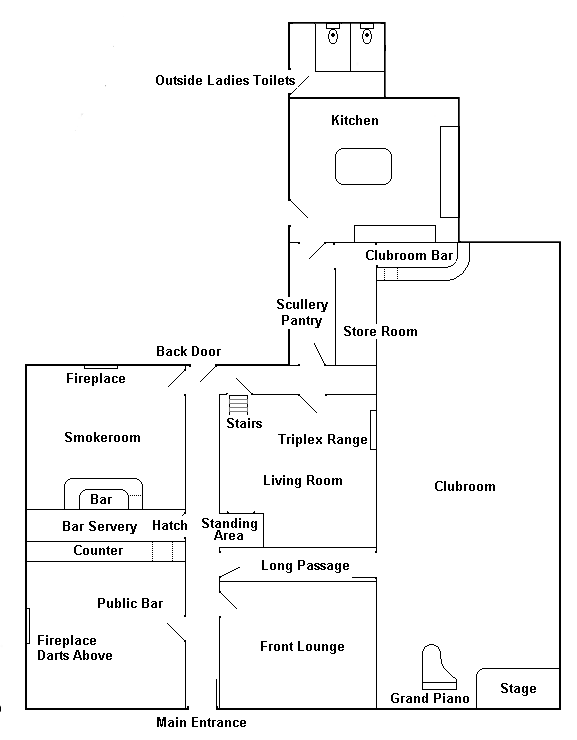


 Posted with Blogsy


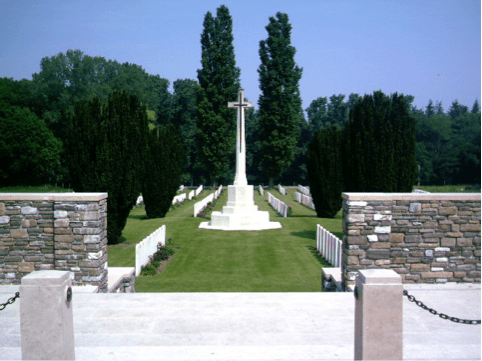
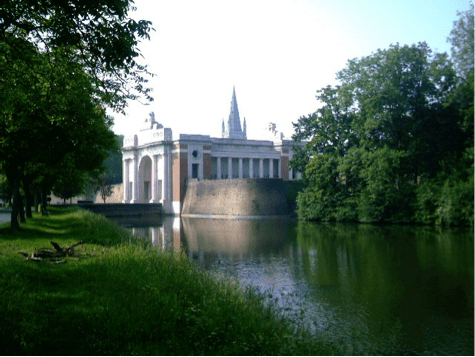


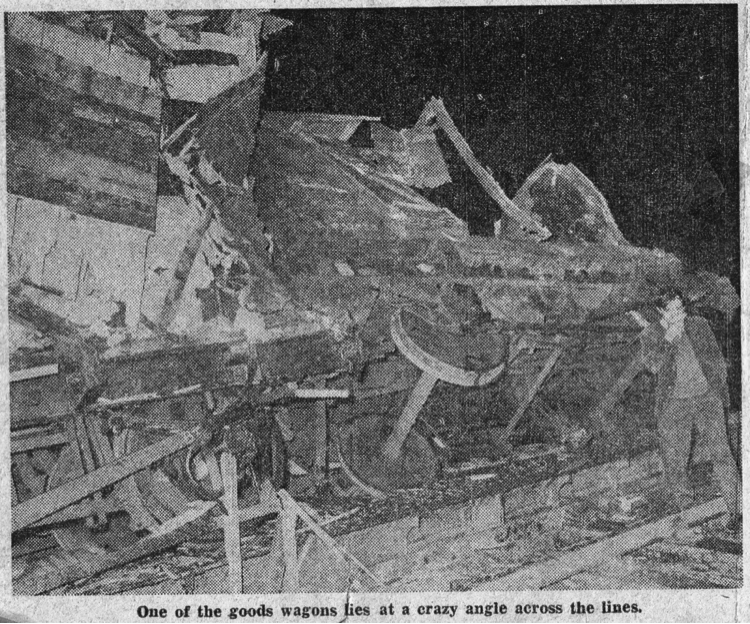


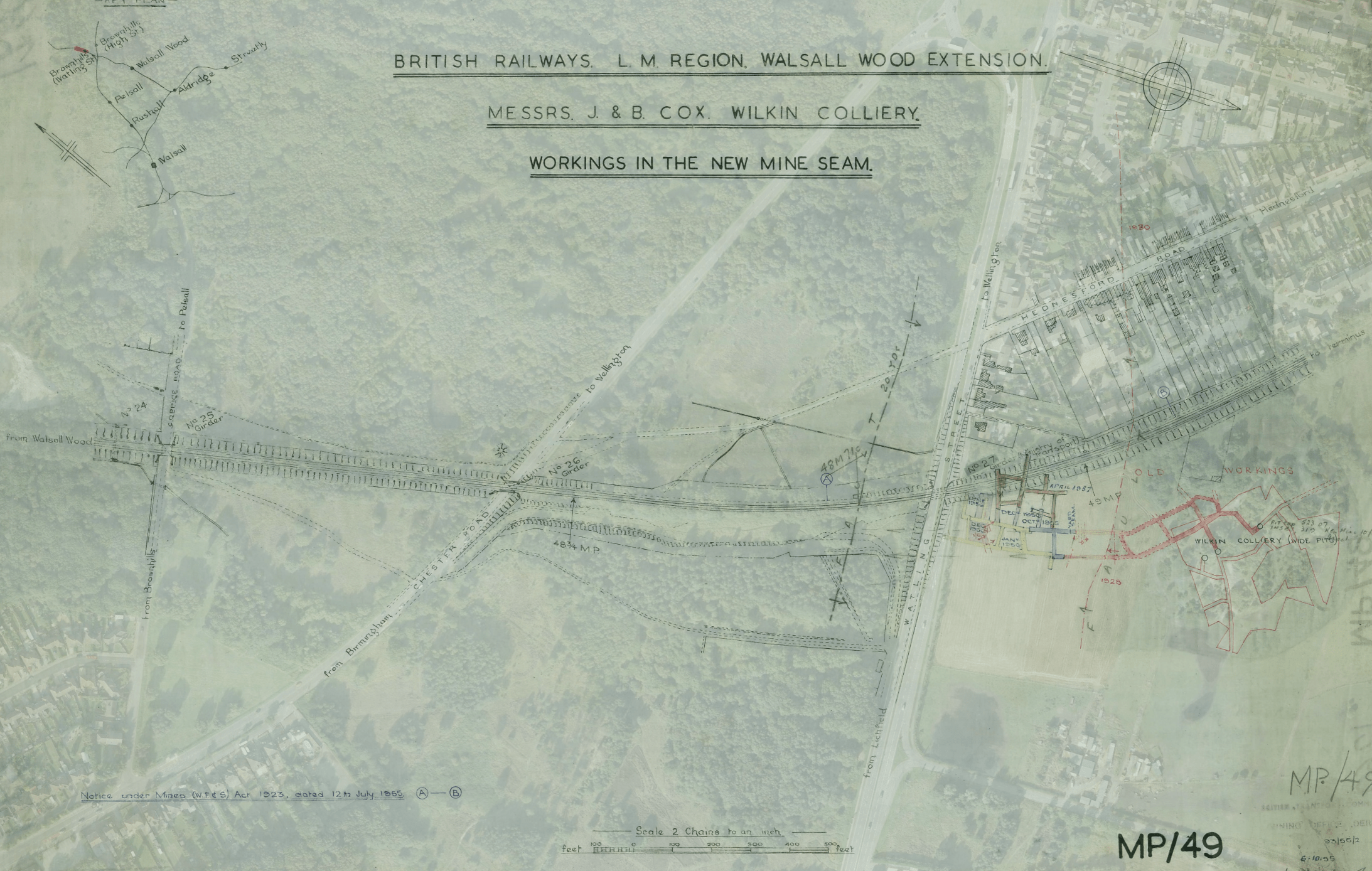


 RSS - Posts