Sorry to keep banging on but I’ve not given up on the Anglo Saxon Hoard just yet. Responding to the letter in last weeks advertiser I’ve got together with half a dozen supporters and have decided to call a public meeting in the Park View centre on the 9th Oct at 7pm.
The aim of the meeting is to try and kick start WMBC into action and encourage them to show some of the hoard in the New Art Gallery, Walsall. We’d also like to find some way of erecting some sort of permanent monument or plaque on or near the site.
The meeting should give us some idea of the support we may get, and possibly by raising awareness, put pressure on the powers that be, even if it is limited to just a response.
I’ve arranged for Dr. Della Hooke to come and give a talk, throw the floor open to the public to have their say, and listen to anything constructive they may come up with.
I know a lot of your bloggers may be interested so would be obliged glad if you could give us a mention.
Cheers Bob
Brian
Brian wrote to me again today, and posed this rather interesting question. Regulars will remember that I was a tad miffed at New Year when I found that a beacon had been lit on the site of the Hoard’s discovery near the Warrenhouse, unannounced to the people of Brownhills. It seems that this beacon was organised and erected by Hammerwich Parish Council.
Brian is appealing to readers to see if they know the owner of the beacon itself – still in the field, although now stood at a somewhat jaunty angle:
Hi Bob,
I wonder if any of your readers may be able to help. The public meeting on Tues the 9th of October is still on but before then I’m trying to find out who erected the Beacon on the site of the Hoard find, who it belongs to, and what if anything, they intend doing with it.
I’m told it may belong to Hammerwich Parish Council but I can’t seem to get in touch, and I’m sure someone who reads your blog could help.
So, not to put too fine a point on it, can you help? I’ll give Brian’s meeting a better plug closer to the event, but it the meantime, if you do know who owns the fire basket in the field, comment here or mail me on BrownhillsBob at Googlemail dot com.
Thanks.
The beacon – which can’t have been cheap to make – is central in this crop and blow-up from a much bigger picture, just above the two bushes. But who does it belong to?
Regular reader, commentarian and contributor extraordinaire Peter ‘Pedro’ Cutler sent me this article some weeks ago now, and I’ve been waiting to finish the Pelsall Boiler Explosion series, so it has a clear deck. This is a continuation in Peter’s investigations and ruminations on the Harrison empire, and his musings on the nature of employment in the coal industry.
I’d like to thank Peter here and now, not just for this fine and well researched post, but for all of his contributions, which are always a joy.
That said, on with the show…
It is very hard to imagine, from our position of comfort and relative security, the hell, danger and day-to-day pressure men like these endured to power the Industrial Revolution, all the time bolstering an emergent, new industrial feudalism. Image from ‘The South Staffordshire Coalfield’ by Nigel A. Chapman.
The Harrison dynasty entered into the field of coal mining in 1849, via the lease of Brownhills Collieries, on the land of Phineas Fowke Hussey. One of the questions I posed in the article ‘In pursuit of the Truth’ was…’Did they give employment to thousands?’
Firstly I need to check the state of affairs in the South Staffordshire coalfields around the time of the entry of the Harrison Dynasty, and the thing that sticks out like a sore thumb is the existence of the Master and Slave Legistlation (1834). This Act made employers and employees unequal before the law, if the employer broke the contract he was liable under civil action, but if the employee left work without notice he was subject to criminal prosecution. It was not until 1875 that equality was fully recognised.
The commission tells of trips to local mines near Dudley, and gives an idea of how Inquiries were carried out in those days. Like some in modern times it could be considered a whitewash, and even in those days the industry was being portrayed in a romantic manner…
‘It is a fine sight to see the miners congregated at dinner, in a large dining hall cut out of the coal. There they sit, naked from the middle upwards, as black as blackamoor savages, showing their fine, vigorous muscular persons, eating, drinking and laughing.’
Providing the fuel for a revolution was remarkably dangerous. Miners died young and suffered a myriad of health problems. Image reproduced from ‘The South Staffordshire Coalfield’ by Nigel A. Chapman.
Some proprietors ran the mines on their own account, but the greater let them to tennants on the conditions of royalties, the tennant undertaking to bring up a certain amount a year, and if not doing so would still pay the royalty. The tenant has the expense of sinking the shaft..
The contractors who do the work in the mines (Staffs) are charter masters or butties. They provide the capital to run the mines. the water is drawn off at the expense of the employer. The Butty is paid by the ton, and men paid every two weeks.
He (Butty) was a sub-contractor, and an intermediary between master and men. The butty contracted to deliver coals into carts and wagons at bank (surface) at a price per ton.
A butty was not recognised by law, and carried no weight with a government inspector. He took no responsibility – either for firing shots, or in the supervision of safety. His duties were to get the greatest amount of work out of the smallest number of men and to keep down the cost of coal and repairs. His work was sometimes not overlooked for months.
This meant the owners and managers did not supervise. It was just left to the butty, and his own devices as to the mode of getting the coal. He paid the colliers, putters etc., who were usually engaged by the week or by the day.
Many butties were notorious for paying wages in goods and not in cash. This practice was known as ‘Truck’ or ‘Tommy’. The goods were inferior goods at higher prices than one would normally pay in towns.
In evidence about butties one man said: – ‘Many accidents were caused by butties, to save a sixpence, and they will let men work, that are not colliers. There will be places that would make a collier’s flesh shake on his bones to go near and these men get knocked on the head, scores of them in a year.’
The Morning Chronicle Commission who visited Staffordshire in 1854 was also dismayed commenting:
The change from Northumberland and Durham to those of Staffordshire seems like going back at least half a century in the art of mine engineering. On the banks of the Tyne and Wear, science the most profound, and practical skill, the most trained and enlightened, are brought to bear upon the excavation of coal. The pits are worked under constant superintendence of regularly educated viewers, (managers) each of which has a staff of assistants, more or less scientific and with practical skill, to carry his directions into execution.
There were twice as many pits in Staffordshire as in Northumberland and Durham – 584 against 270 according to the mineral statistics for 1856 but they produced less than half the tonnage of coal.
After the 1872 Coal Mines Act the ‘butty’ system disappeared.
It was after this on September 1st that Colonel Clive, of the Worcestershire yeomanry, I (Lord Dartmouth) and Mr. Willett were at the Dartmouth Hotel at West Bromwich on ordinary justice business and the constable told us that a body of colliers perhaps a dozen were wishing to see us and we immediately desired them to be shown in… This deputation represented the complaints of the thick coal colliers. They were all bona fide colliers and not chartists. The spokesman was a Methodist preacher as were three or four of the rest.
Collier, in reply:
But our masters will not meet us because we are poor labouring men. Instead of meeting us they walk about the ground where we meet and talk to their butties. They cannot know the state of the case unless they talk with the men that have suffered. We want to go and send men from the pits to the masters to settle. There are 30 pits and we want to send a man from each.
Hughes, another collier:
The oppression, my lord, upon the colliers is very great. We are 12 hours in the bowels of the earth and that is too much. We are kept in complete darkness and our children will be the same. We have no means of learning, nor grace or light for ourselves. We hardly see daylight for the most part of the year.
Shelton then stated the grievances under which the miners laboured:
The masters employ butties to get the coal. These butties employ the men and pay them what they please. They make them work half a day for a quarter’s wages. The ale given them for drink is not fit for swine, though the masters allow the butties 3d a quart for it. The butties are tyrants and ill-use the men. If a man spoke to or offended one of them he told another butty and the poor man was sure to be turned away. Worst of all they have the truck system in many places so that a man could never count upon his wages. Now he thought the masters must be ignorant of all that and that was what they wanted to state and get removed.
Some of the evidence above is a little before the Harrison Family ventured into mining, but little could have changed, as change took place slowly. It can be seen that the market for labour was far from a free market. The ‘buyers’ had the weight of the law and the means to keep the upper hand, while the workers depended solely on their labour to feed their families. They sold their souls to the Company Store!
Today, I should have been posting about the Walsall Police Open Day event. I should have been, but I’m not. I’ll leave that to other local bloggers. I’m afraid the local police, or at least their management, have done something that’s lost them a huge amount of support in the online community.
As a young man, I was given to travelling on the train to Birmingham on a Saturday. Sometimes, I’d go on my own, other times, I’d be with a companion or two. In the late 1980s, society was a wee bit different. After years of Thatcher feeding and bolstering what she clearly regarded as her own private army, the boys in blue were like Bluebell and Jessie’s litter: a gang of state sponsored trained attack dogs used to menace those of considered dubious intent. The rozzers had practised years of cracking heads: football hooligans, miners, steelworkers, environmental campaigners and anyone who dared gather to protest. Most of the police had an outright belief that they were untouchable, and mostly they were.
This grey Saturday, I was with an asian companion, who happened to be female. It was match day, and the train was rammed. For some reason, the creaky old suburban EMU ground to a halt at Witton and we were all ordered out. Hanging back to let the football guys out, my companion an I emerged blinking in the daylight. All of a sudden I was grabbed bodily around the waist and neck, and thrown up against the train. A leather gloved hand covered my mouth, I felt a knee at my back and something hard banged the side of the train beside my head.
‘Is the wog yours?’
I don’t know why we were roughed over particularly. It went on for about ten minutes. We were both threatened, had our bags tipped out and were roughly searched. All the time there was racist, aggressive language. The three coppers who saw harassing a couple of youngsters as more important than herding football fans laughed as they walked off. None had numbers on their uniforms.
That experience stayed with me for years. As a left-winger, my contact with Her Majesty’s finest was always with a tinge of fear. I saw fellow protesters roughed over, beaten, abused. I saw times when coppers wouldn’t do their job. I grew to treat them not as law upholders, but as aggressive, menacing thugs with not much up top and a fondness for violence. I got used to being hassled and searched in the city.
Times, however, changed. The police came under more and more scrutiny. They lost respect. The West Midlands Serious Crime Squad was disbanded. Training got better. Pro-active chief constables weeded out the worst thugs, and controlled the bullies as best they could. I no longer feared the police, but I still treated them with deep suspicion.
As I started this blog, over three years ago now, my relationship with the police changed a little, gradually. Through social media, I got used to Walsall’s tweeting coppers, and police from the West Midlands generally. I learned, through their short updates, that coppers were working people too. I gleaned that, actually, people like Mark Payne were thoughtful, helpful guys with genuine love and concern for their communities. I felt things had changed.
This was a police force that was reactive, understanding and compassionate. Richard Stanley’s unasked for intervention when I was nearly wiped out by a bad driver was a case in point. I grew to like these people, keenly read their blogs and tweets, and became interested in their lives and day to day work. Such a long way from being thrown against a train with a hand on my mouth, terrified, listening to thugs racially abuse an innocent young woman.
It’s therefore with some sadness that I note the wind, in Walsall at least, has changed. One of the best tweeting coppers – Sgt John De Hayes – has found himself at the centre of a media brouhaha for ostensibly tweeting a picture of a recovered rifle, a war-relic received locally. It wasn’t involved in a crime and was merely of historic interest. However, this storm in an upturned helmet seems to belie something more sinister.
This is of warm, human interest. I’d have thought there were more important cases to prosecute than vilifying a good officer for posting this.
I have, for a while now, been detecting a change in the way Walsall Police use social media. Where formerly, officers were friendly, unguarded and honest, tweets now seem strictly formal, or meaningless fluff. The official line has gone from one of conversation and engagement to one of relentlessly broadcasting good news and pointless, feel good, cherry picked statistics. In short, they’ve turned into the blue serge-encased policing speaking clock, with all the personality of a truncheon.
Nowhere is this policy more evident than in the account of Superintendent Keith Fraser, with whom I’ve been trying to reason for some five weeks over his use of statistics. Like all modern, media aware managers, the Superintendent has been clearly trained to ignore, or avoid anything controversial, and just operates in broadcast mode. When he tweets statisticss, as he does most Fridays, he does so without context, without caveat or qualification. I’ve repeatedly asked him to show us his source data, so we can see what he’s referring to. Finally, after 5 weeks of challenging, I had contact last Friday evening from the press unit asking me what I wanted, even though I’d made this repeatedly clear.
70 percent over what period, of what total? What is Walsall defined as? What constitutes a hate crime?
In short, Superintendent, if you’re going to spread the good news via statistics, they need to be consistent, and we need to know what you’re talking about and how the numbers have been gathered. For asking, this does not make me a troublemaker, agitator or irritant: I am a member of the public, like many others, with some training in mathematics and statistics. Many of us know bullshit when we see it.
Clearly, the stat here wasn’t so favourable. So woolly generalisation is employed.
It’s simple. publish the paperwork you’re quoting as open data, so we can inspect it. We’re intelligent people, we can make sense of it.
This good-news-at-any-time policy seems to be extending to pressuring the lower orders. Several officers have disappeared from social media. Others, who were regulars, now only make occasional appearances. The one guy who used twitter to the best extent – Sgt John De Hayes – has found himself publicly denigrated by press release and a campaign of Chinese whispers, clearly in an attempt to bring him under closer control.
At the time when the recent furore broke out, John was involved in the #coverforGMP campaign, and tweeted about it extensively This is a voluntary campaign across the country whereby off duty officers offer to cover Greater Manchester Police duties while the Manchester force can attend the funerals of their two fallen officers. This is and act of compassion and humanity I think we call all respect. All of us, it would seem, apart from the bosses at Walsall who appear to have taken a dim view.
John De Hayes has been demoted from Acting Inspector back to Sergeant, had his name blackened by dodgy and conflicting press releases, and been dragged through the press by inaccurate reports claiming both he and his twitter account were suspended. John is still at work and he’s just taken his twitter account private so he can choose who’s following him. Why a matter that should have been kept private has been dragged out into the public by Walsall Police is a mystery. One can only imagine it’s to blacken the offer’s name, a dirty and unpleasant tactic.
This isn’t the first time John has felt pressure from above over his twitter account.
I can’t even fathom why you’d post this. How many clicked on the active link unawares? Bizarre.
Walsall Police need a valid social media policy, which they don’t seem to have, and they also need someone at the top who understands Twitter and Facebook, let alone statistics and how to quote them without being misleading. Walsall, and West Midlands in general, exemplified the use of such tools for several years – just look at the Solihull Police feed for the same thing executed with wit, warmth and aplomb.
Corny jokes, but solid information and a human face. That’s how to do it. Solihull Police, we salute you.
The upshot is this: I’m sure I speak for most of the online community locally in saying we support Sergeant John De Hayes, and stand shoulder to shoulder with him to support an honest, upstanding officer who has worked hard to put a human face to the police, and changed many minds – including mine.
Walsall Police have lost the plot, and are travelling backwards. Instead of throwing the public up against the train with a hand over their mouth, it now seems it’s their own officers with a truncheon in the knackers.
Here’s a quick one for the Lichfield historical buffs: John Snape’s map of the city and it’s environs, from 1781. This really is a wonderful work of art, and bears poring over.
If you’re into Lichfield’s fascinating and long history, check out the great Lichfield Lore Blog – quirky, funny and well turned out in a nice grey cardi. What’s not to love?
Lots of fragments and low quality versions of this are available online: here’s the complete document in big-res glory, scanned from a reproduction.
John Snape (1737-1816) was a surveyor and worked on mapping towns (Birmingham, Lichfield and Walsall) and canals. He surveyed the land for the Birmingham Canals in 1782 and in 1783 he became a member of the Society of Civil Engineers. In 1785 he and Samuel Bull surveyed the land for an extension to the Birmingham Canal to Dudley. In 1789 he mapped the Worcester and Birmingham Canal with Josiah Clowes. He worked on the Grand Junction Canal in 1802 and on improvements on the Birmingham Canal in 1805. In 1808 he surveyed the Walsall Canal.
Please fill your boots, and if you spot anything interesting, please shout. Bear in mind these are large images and will take a while to download.
A real historic work of art. Kindly scanned with the assistance of top local history wonk Howmuch? Click for a larger version. It’s quite big, so be patient.
Following on from the previous posts featuring the excellent 1963 aerial images kindly supplied by Gareth Thomas form Lichfield District Council, I today feature two more from the collection. These are rather special, so I saved them for the weekend.
These images are from Lichfield District Council’s archives, and have been very kindly scanned and supplied by top council officer Gareth Thomas. Gareth really is brilliant and I offer my profuse thanks for these. To an unreconstructed map and local history geek like me, these are a gift from above, their donation a great act of kindness.
I shall refrain from making too much comment now, as I’d like to see how the conversation goes; but look at Clayhanger, Walsall Wood Colliery, Central Brownhills. Observe a community caught during massive change.
If you have anything to add, please either comment here or email me on BrownhillsBob at Googlemail dot com. Cheers.
Central Brownhills – Shire Oak is at the top. Is that a caravan encampment in Clayhanger? Note the gasworks, Brawn’s Wood and lack of tower blocks. Taken on Sunday, 9th June, 1963, and reproduced by kind permission of Lichfield District Council, 2012. Click for a larger version. A full quality PDF can be downloaded below.
Shire Oak, Sandhills and Stonnall. Stonnall is at the top. The quarry boundaries are very interesting, as is the detail around Springhill. Taken on Sunday, 9th June, 1963, and reproduced by kind permission of Lichfield District Council, 2012. Click for a larger version. A full quality PDF can be downloaded below.
Wall Heath Lane, Lynn, near Stonnall at 6pm, Thursday 20th September 2012. I’m cycling home, and suddenly become aware of an over-revving engine behind me. A young woman in a red hatchback tries to overtake on a blind bend, but has to brake sharply behind me to avoid an oncoming car.
There’s a brief pause as I turn and look at her in astonishment, I was actually dumbstruck at the stupidity of the manoeuvre. She mouths some abuse, then clearly losing her temper, she floors it and continues t0 overtake, still on a blind bend, shouting and gesturing ‘Wanker!’ at me.
Much of the action takes place behind me, and so isn’t caught on camera, but you can clearly see the oncoming driver react, and the fit of pique in which the overtake is completed.
The driver clearly wasn’t concentrating, and I genuinely fear for her safety and that of any other unfortunate road user she may hit.
I trust Karma will sort that one out. Either that, or the front of a truck… in the mean time, look out for T7NKC around the area. She’s clearly a hazard to others.
Those who know me, or who have followed this blog for any length of time will know that I care passionately about the care of the most vulnerable in society. For anyone engaged in caring, social care itself, or working with those with disabilities, times are currently very dark indeed. A government apparently committed to the destruction of the social state has done much to degrade the conditions and respect for the less able members of our community.
It was therefore with interest and pleasure that I learned of the Lichfield Scrap Barn project, an initiative springing from the excellent Saxon Hill School in Lichfield. Spotting early promotions via social media, I asked them to write to me explaining what they were up to, and offered any help required with publicity and so forth.
In October, The Scrap Barn will be opening a unit at the Chasewater Craft Centre. Image supplied by Lucy Wood.
Lucy Wood found time out of her hectic schedule to kindly send me a wealth of information, which I present for you here. I feel this is a wonderful initiative, and support it wholeheartedly. With Remploy and day centres currently closing, schemes like this will become more and more important in providing meaningful activity, fulfilment and socialisation to those for whom such opportunities are sadly rather rare.
My best wishes (and I’m sure those of the readers, too) go out to Lucy and all involved, and I implore them to get in touch if there’s any thing they feel we can help them with.
If you feel you can help these wonderful people in their endeavour, contact details are at the foot of this post.
Lucy said:
The Lichfield Scrap Barn is a brilliant opportunity for young people with a disability to gain valuable work based experience by being involved in a friendly working environment at the heart of the community. These skills developed whilst at Lichfield Scrap Barn can be utilised later in life when applying for full or part time employment in the wider community.Our team of volunteers is fully committed to making Lichfield Scrap Barn as successful as possible and that dream is quickly being realised. We truly believe that what we are doing is making a difference to the lives of all the people involved, not only the young people developing new skills but also all of the people that have made your beloved Scrap Barn come to life.
We are currently in the process of kitting out out new premises at Chasewater. We are keen to make this a colorful, fun and exciting creative hub and have been very busy working with other local Scrap stores to help us find our feet.
Lichfield Scrap Barn was set up originally to help the Pupils of Saxon Hill School access Work based learning opportunites, as it is often difficult for our pupils to find employers willing to take them on, The Scrap Barn forms a new approach and alongside plans for a Community Cafe and our Partnership with Wyvale Garden Centre, The Lichfield Scrap Barn will offer in house training and experience We are also currently intouch with the local authority to discuss become a service provider for Disabled People and hope to offer training and volunteer opportunities for the wider community.
The Lichfield Scrap Barn hopes to be open for business in October 2012.
If you would like to come and meet with our Team or if you have any questions and would like to discuss things in more detail, please get in touch. Please feel free to visit our website at www.lichfieldscrapbarn.co.uk.
Following a busy few months for the Lichfield Scrap Barn, we are very pleased to announce that we have some very exciting updates.
We have been busy, forging relationships with local Scrap Stores, particularly Derby Play and Recycle Centre and also Scrappies Resource and Recycling Centre in Shropshire. This has given us some great ideas which will enable us to provide a great Scrap Store provision within the Lichfield area.
Lichfield Scrap Barn now has a Craft Unit at Chasewater Innovation Centre. This will become a “Craft Resource Centre” where we will sell craft resources in the form of scrap materials which were once clean waste items from local businesses. Scrap Stores are a wonderful way for schools, community groups and parents to pick up very low cost craft materials.
Lichfield Scrap Barn recently went live with its new website www.lichfieldscrapbarn.co.uk in July. The site was kindly designed by Stafford Company Offsight www.offsight.co.uk. The site offers many features such as News, Updates and information on how you can support us, either by supplying us with unwanted items for our recycle centre, Art supplies for our new craft centre or Volunteering to work with our team!
Wes Morris, Managing Director said: Lichfield Scrap Barn has gone from strength to strength and I am delighted to have taken occupation of our new premises. I would ask all local businesses to think about what clean waste items they produce and contact us if they feel it suitable. We may be able to save businesses hundreds of pounds a year by recycling their waste through Lichfield Scrap Barn as craft items.
For more information on The Lichfield Scrap Barn please visit call 07791428762 or email admin@lichfieldscrapbarn.uk
Brownhills Activity Centre, as photographed by John M and posted on Geograph under a Creative Commons licence.
Janet Davies from Brownhills Community Association contacted me last week to tell me about an event that’s happening at the Activity Centre this Friday.
Janet said:
Brownhills Community Association will be hosting an open day on Friday 28th September 2012 10 am – 1 pm.
This will be to celebrate the opening and re-location of the day nursery Little Green Dragons from Clayhanger to the Brownhills Activity Centre (the old Central Boy’s School, or Annex, just on the Miner Island in Brownhills).
Also a coffee morning will be held at the same time to raise money for the Macmillan Cancer Support when tea, coffee and cakes will be available for a small donation. All proceeds will go to the Macmillan funds.
We shall be joined by the Mayor and Mayoress of Walsall, plus many council members.
Only just found the pictures on the blog,thank you for the comments about the Community Association, we are trying hard to make the old boys school a place for all ages to come and spend time doing social and recreational activities.
Just looking at the pictures makes us realize how far we have come since moving out of the school in Deakin Avenue after 28 years, it is a pleasure to work here and I love to hear the comments from former pupils who attended the school, the day to day running of the Brownhills Community Association runs from Mr Masseys old office who lots of people can associate with (good or bad).
If anyone would be interested in holding a reunion here we could look to put something on, if anyone is interested could you please contact 01543 452119 or come through to Brownhills bobs blog.
I think a reunion would be a splendid idea. Anyone up for that? Please comment here, or drop me a line at BrownhillsBob at Googlemail dot com. Cheers, and thanks to Janet for getting in touch.
Unpretty. Recent retail history in Brownhills is a patchwork of takeovers. Image from Bing! Maps, which I still consider to be a ridiculous name.
Reader Mick Roseblade writes in with a surprisingly common email enquiry. I’m answering this publicly, as I must have answered this four or five times by email to different people over the last couple of years.
I’m not sure why it generates such interest, but here goes.
Hi Bob,
Another one of your avid readers. Wonder if you can settle an argument that has started regarding the presence of Hillards in Brownhills.
Argument 1
Hillards arrived in Brownhills prior to Tescos and occupied the area at the top end of Ravenscourt.
Hillards decided to expand and built the store adjacent to Brownhills Market.
Hillards moved out of Ravenscourt and into the store. The Ravenscourt site was then occupied by Tescos.
Hillards were then subsequently taken over by Tescos and Tescos moved out of Ravenscourt and into the store adjacent to the Market (current location). In Stores then occupied the Ravenscourt site.
Argument 2
Hillards has never had a presence in Ravenscourt and the first sight of it was when they moved into the store it built – adjacent to the Market.
Tescos were then in residence in Ravenscourt and subsequently moved out when they took over Hillards. The In Stores then moved into Ravenscourt.
Basically the nub point is was Hillards ever present in Ravenscourt?
Any information regarding this would be greatly appreciated.
Cheers,
Mick R
Hi Mick. The answer is largely Argument 2.
The current Tesco store opened in 1986 as a flagship Hillards Hypermarket. Hillards were, at the time, the supermarket du jour, mid range, but aggressively opening new, large stores in towns like Brownhills.
In 1987 Hillards were bought by Tesco, and Hillards was rebranded with the Tesco name and disappeared totally.
There was a pre-existing Tesco at the back of Ravens Court – itself originally a Victor Value, which had been a tenant since Ravens Court opened – they were the anchor store. Victor Value – who were a downmarket supermarket chain – were also bought by Tesco around 1968. If the name sounds familiar, Tesco tried rehashing it a couple of times.
For a time, Brownhills had two Tesco stores, until the one in Ravens Court closed. The overlap was at least six months – I can remember folk going into both and often finding some stuff cheaper in the Ravens Court shop. In this respect, the Wikipedia article on Brownhills is/was wrong.
After closure, the Ravens Court store was converted into an indoor market/arcade arrangement – this would be in the summer of 1988. It wasn’t originally owned by InShops, I think that came later. It was never a success as far as I can tell.
There was a Tesco ‘Home and Wear’ next door to the Ravens Court Tesco, last couple of units on the right hand side, that were latterly occupied by Latifs. That was a sort of precursor of Asda Living. I’m not sure when that closed.
Gerald Reece has a photo of the Tesco that was Hillards bearing both signs, taken during the changeover. Hillards one side, Tesco the other. A remarkable snapshot in time.
I’m unclear if the petrol station was part of the original development. Great Mills, the DIY chain, were the original tenant of what is now B&M. They then became Focus who acquired the Do-It-All stores. They closed in 2011.
Brownhills had various other large (for their time) stores – George Mason, which later became Cut Price. A fairly large Co-op, later bulldozed for a new Kwik Save, where Farm Foods is now, and up at Streets Corner was Meadowmarket, latterly Kwik-Save and, for a short period, Somerfield.
So, the final instalment. Regular readers will recall that we’ve been discussing the fatal explosion at Pelsall Coal and Iron Company, that took place in December, 1887. The inquest into the deaths, having been adjourned, was resumed, and this is the account of the second day, published in the Birmingham Daily Post of Saturday, 7th of January 1888. It’s a very sobering thing indeed, and says much about the view of workplace safety of that period. Sadly, in some respects, we seem to be currently winding the clock back.
I’d like to thank three great readers and friends of the blog for their work on this series of articles. Both Richard ‘Wee ginger sausage’ Burnell and Andy Dennis have undertaken what must have been mind-numbing transcription duties, Andy manfully stepping in when Richard was otherwise engaged with a new arrival. I doubt either chap realises just how much I appreciate their work – Transcribing stuff to text makes it machine searchable, so Goole can find it, and makes it easier to read and digest. It takes me ages to do even simple transcriptions, so I’m eternally grateful.
I’d also like to thank Peter ‘pedro’ Cutler for his research too, which adds greatly to the story. From not knowing much of this incident at all, we now have an extensive record available to anyone who comes looking. That can’t be a bad thing.
Finally, I’d like to express my thanks to all who’ve commented and entered the debate. This process would be very dull and unrewarding with you guys. Cheers.
Right, on with the show…
Image and following accompanying text from the Flickr photo stream of local photographer Gary S. Crutchley. Click on the image to visit his photo stream. Pelsall North Common Sunset, Pelsall, Walsall 30/01/2011 A too-good-to-miss winter sunset over Pelsall’s North Common. This area of common would have been used for rough grazing until 1794 when the Wyrley and Essington Canal was built. The canal provided a vital link between local coal fields and the Black Country. Between 1832 and 1888 a large area of the common was taken up by a huge iron works which was of great importance to the people of Pelsall village, providing over 100 jobs. The Cannock Extension Canal was built in 1863, and the iron works thrived. However, a sudden slump in iron prices forced the Pelsall Coal and Iron Company into liquidation. Towards the end of the 1920’s the buildings and chimneys were demolished. A huge machine called ‘the cracker’ was used to break up mounds of foundry waste known as cinder and tap. This gave the common its local nickname ‘the cracker’. The machine was demolished after the Second World War. Today apart from its historical importance, Pelsall North Common is extremely valuable as a nature reserve. Its rare plants and varied wildlife make the comon a wonderful place to visit.
THE PELSALL BOILER EXPLOSION.
ADJOURNED INQUEST AND VERDICT.
Yesterday, Mr E. B. Thorneycroft, deputy coroner, resumed an enquiry at the Swan Inn, Pelsall, touching the deaths of Thomas Elwell, William Lever, and Thomas Ledbury, who were killed by the explosion of a boiler at the No. 9 plant of the Pelsall Coal and Iron Company (Limited), on the 14th ult. The company was represented by Mr L. W. Lewis, solicitor; Mr. J. H. Bullock, general manager; Mr J. Binns, chief engineer; and Mr J. Davies, C.E. There were also present Mr. W. B. Scott, Inspector of Mines; Mr E. B. Marten, C.E., Mr J.F. Wills, C.E., for the Staffordshire Boiler and Engineer Insurance Company (Limited); and Messrs. John and Henry Ledbury, two sons of one of the deceased men. The following additional evidence was called:-
James Ward, boilersmith, Pelsall, said he had been in the employ of the Pelsall Coal and Iron Company, and during the whole of that time had known the boiler which exploded. When he came it was in use in the forge. About seven years ago he placed it at the No. 9 colliery plant of the company, thoroughtly repairing it with a whole-size plate in the casing and one patch. In was then in his opinion a good boiler, and capable of ten or twelve years’ reasonable work without repairs, and without a removal of the brickwork, unless there was something to excite suspicion. About two years ago he further repaired it by putting three rivets in the top of the flue over the fire bridge. The he made as thorough an examination as he could without removal of the brickwork; but it was not possible to make an absolutely thorough examination of such a boiler without the removal of the brickwork, and that he should not think necessary to do so in so short a time, unless he saw something suspicious. The corrosion along the side of the boiler he should not have expected to find in so short a time. The damp which must have existed to cause this corrosion would not be observable from the outside, becasue the brickwork which was over it would be dried by the fire. The corroded part could only be lightly struck in the inside to test it, beacsue there would be a space of only four inches for the movement of the hammer. — By Mr. Scott: The patch, which was put on about seven years ago, was put upon a larger and earlier patch, but he did not know when that earlier patch was put on. — By Mr. Marten: The boiler rested upon the brickwork and not upon the brackets. — Mr. Marten remarked that in that case the removal of the brickwork for the purposes of examination would be much more difficult than he stated last week. The plan of seating was prepared by Mr. Slack, who was then chief engineer. The quality of the iron with which the repairs were done was very good, as was the quality of the original plates.
Joseph H. Bullock, general manager for the Pelsall Coal and Iron Company, said Mr. Binns’ duties were to take charge of all the company’s engines and boilers, and to appoint persons to assist him. If repairs were wanted he had power to do them without going to witness; and it was his duty primarily to see that the engines and boilers were in good condition. The daily external examinations under the twenty-eighth special rule were, however, delegated to Ferriday, but there was no rule compelling an internal examination. There was, however, a regualtion that every engineer in the company’s service should examine his own boiler. He found from the books that this boiler was supplied new between the end of June, 1869, and the beginning of July, 1870, by Messrs. Wright of Goscote. The boiler was therefore about seventeen or eighteen years old. For ten years it was worked in the ironworks at a maximum pressure of 40lb; but he should consider that it was made to carry a pressure of 70lb or 80lb. The highest pressure at the colliery would be 40lb, or certainly not more that 45lb.
John Hough, certificated colliery manager, said Ferriday was responsible for the external examination of the boilers, but the internal examinations were made at the discretion of Mr. Binns. Both were competent men. Ferriday was engaged with his approval, but Binns was in the service of the company when witness came. — By Mr. Scott: The responsible person under the 28th special rule was Ferriday. — By Mr. Lewis: Smith and Elwell were accustomed to make the internal examianations, and he had never had occasion to suspect that they did not properly discharge their duties in that respect. Ferriday had also discharged his duties very thoroughly.
William Holland, aged fifteen, a “nipper,” or coupler of the tube together, said Elwell, at the time of the explosion, was on top of the boiler, with a spanner in his hand, as if he was just going to turn the steam on to go down the pit.
Mr E. B. Marten, in answer to jurors, said he could see no signs of the boiler being overheated at the time of the explosion and cold water being let in. Indeed, it was a moot point whether the turning in of cold water necessarily caused an explosion; but such a state of things was a trial to the boiler, because it suddenly brought down the temperature of the plates. The opening of the cock to let the steam go down the pit would reduce the pressure; and if the cock had been suddenly opened and shut, the effect, he believed, would simply have been to cause the original pressure to be regained, but not increased. The valves were ample: but for the corrosion, the boiler was quite strong enough for all the purposes to which it was put. This completed the evidence.
The coroner than read over the main parts of the evidence, and, with regard to the cause of the explosion, said that in the absence of Elwell, the engineer in charge at the time, they would miss important evidence. He was the person who was responsible for the pressure and the mode and manner in which that pressure was applied. The duties of Smith, his fellow engineer, were similar. Supposing the jury considered any person or persons responsible for the explosion, they would have to consider in what degree. Those persons would be Elwell, Smith, Binns and Ferriday, and what their duties were and how they had discharged those duties the jury had heard. Mr. Marten had told them that the defective part of the boiler, which was corroded about 6ft. by 1ft. along the side, was the cause of the explosion, and that the valves and other appliances were in order. The men who examined the boiler did not find out the corrosion, and a question for the jury was whether they ought to have found it out upon a reasonable examination. The evidence went to show that, as men of experience, they would not have expected that corrosion to have taken place in seven years, and would have no suspicion of it; and unless they could find in some manner that the defect existed they would consider it unnecessary to remove the brickwork. It would, however, be for the jury to say whether the examinations were fair examinations, and whether enyone was responsible in relation to them. If any of them were guilty of gross carelessness or palpable negligence,they would be guilty of manslaughter, and would have to take their trial accordingly; but if, as competent and skilled men, they conducted their duties in a fair and reasonable way — and he did not see anything to the contrary — they would only be liable to that extent and in that way. Men in charge of boilers should be careful to see that all was in order, everything depending upon them, and it would be for the jury to say whether these man had to the best of their abilities discharged the duties devolving upon them.
The jury deliberated in private for about an hour, and on the repopening of the court they returned a verdict to the effect that the explosion was not caused by any deficiency of water, but by a weakness in the plates of the boiler in a certain part due to corrosion arising from damp. Such corrosion could not be easily detected by an ordinary examination of the boiler, and they therefore found that the causes of death were from an explosion, and were brought about accidentally. They added to their verdict a rider “strongly recommending that a better system of examination, both externally and internally, should be made, boiler to be thoroughly overhauled by a practical man other than the engineers employed in the works, at certain fixed dates, recent events showing that the usual mode of examination is both unsatisfactory and insufficient; and legislation is urgently needed to this effect.”
Mr. Bullock, on behalf of his company, said they shold be glad to carry out the recommendations of the jury. — The Coroner, in discharging the jury, said this rider showed that they were thoroughly alive to the situation, and thoroughly understood the enquiry.
Sadly, the fence stops me getting a good shot, but… wow. Castings are really looking after their cyclists! Before anyone says anything, this was at 6pm on a Saturday, when few were at work…
To see how a cycle facility for visitors should really look you need only cycle along Lichfield Rd to the last building on your left before the canal. Castings PLC have provided their staff with a superb facility. It is a very strong structure the shape of a small ‘nissen hut ‘. But the frame is solid and painted to match the factory building. It is completely roofed with clear plastic sheeting and therefore has all round weather protection. And, proper parking for what looks like about 30 plus bikes. It’s ‘champion’ as they would say where I come from.
The only sad reflection of our times is that they have had to stick a security fence round with a padlock. No doubt, opened at start/finish time or shift changes or on demand by request. As I don’t have the facility, perhaps you could arrange a quick photo for posterity if you think fit and for all to see, particularly someone in authority from Tesco. By the way, I am an observer purely from travelling Lichfield Rd regularly – I am nothing to do with Castings PLC.
Well, it gives me great pleasure, and well spotted. Castings, of course, have been featured here before for their remarkable promotional video. They are one of the largest employers locally, and it’s good to see them looking after their biking staff so well. I like it very much, and best of luck to them.
I also noticed that St. James School (formerly Ogley Hay) have a similar bike shed. How fantastic is that?
Nice to see a local school promoting cycling for a change. A very des-res.
Here’s another ride video of Walsall Wood and Brownhills for the expats, exiles and vicarious cyclists, but especially Trevor in Australia. Hope all is going well, old chap, and that the treatment isn’t knocking you about too much. We’re all thinking of you.
I enjoy making these immensely, but have no idea why they’re popular. As long as you folks keep liking them, I’ll keep making them. If there’s anywhere you’d particularly like me to go – on or off road, providing there’s a track, no problem. Just ask…
I’m aware I have an outstanding order from Mr. Porktorta in San Antonio. I’m waiting for the right conditions. I have a cunning plan. Sit tight.
This is a journey from Kingshayes Farm on Northgate/Salters Road, down Vigo Road, King Street, Beechtree Road, and to Brook Lane, around the rear of what used to be United Carriers, but is now a housing estate.
For Mr. Flodders, who’s interested in such things, it’s smack on 4 miles and took me just over 20 minutes. I say, that Makers van wasn’t taking any prisoners, was he?
This is a post for top reader, contributor and friend of the blog David Evans. A couple of days ago, he emailed me asking if I had any old maps covering the general Walsall Wood area. Well, it took me a day or so to get my backside into gear, but here goes.
I know David to be working on some really good stuff about Walsall Wood right now, and I include a teaser. I know that image will generate some discussion amongst the readers.
Meanwhile, I’d point out to all readers and contributors that I’ve had a sudden rush of articles to get up in recent weeks. These are all welcome, and please keep them coming, but please be patient as prepping them and getting them online may take a while. Your work is massively appreciated, so please don’t feel snubbed. I just have to sleep and work sometimes, too…
1884 1:2,500 draft of Walsall Wood. Click for a larger version.
1919 1:2,500 draft of Walsall Wood. Click for a larger version.
In the period between the issue of the above and below maps, this aerial phot was taken by Aerofilms. It has been scanned and kindly supplied by David Evans. I believe it dates from 1926. Try and spot the differences – Walsall Wood Bridge is centre bottom and the Coppice Road/Brookland Road junction is at the top. Click for a larger version. More to come later…
1938 1:2,500 draft of Walsall Wood. Click for a larger version. I’ve learned that the railways aren’t shown on this series because a whole bunch of surveying detail was lost for the entire series, and was later resurveyed. Oops..
Local history wonk [Howmuch?] has found this rather intriguing plan of land plots being auctioned along the Pelsall Road, Brownhills, hiding in the archives. The only snag is, we don’t know who was selling, when, or why.
My guess would be about 1890-ish.
I’m interested particularly in the house marked ‘Ivydene’ and the square, close or farmyard next door to it on the Brownhills side. Looking at it’s proximity to the bridge, I’d estimate that it stood where Taylor’s Cafe did, now new build housing.
Auction plot plan found in the archives by history operative Howmuch? – Click for a larger version. When studying this, beware that north is in different orientations for each draft; lord knows why.
There’s something even more interesting hidden away on this plan, and I have no idea whatsoever what it means, or relates to. Marked at the foot of the railway embankment, just where it crosses the canal, there’s a feature marked ‘Ventilator’:
What’s that all about then? Anything still there? Mineshaft beneath, or something else? Click for a larger version.
Any contributions are invited here. The auctioneers seem to be a company called Lomax, but that may be the printers. The surveyor is listed as Richard J. Barnes, of Lichfield.
Please comment here, or BrownhillsBob at Googlemail dot com. Cheers!
I notice from Twatter that Walsall Area Partnerships have a fun day running in Kennet Close, Brownhills West, tomorrow Sunday 16th September 2012. There’s also an open event at the refurbished Brownhills West Community Hub at 92, Cherwell Drive, too.
A note to the area managers: please send me copies of your promos, I’ll post them up. Rooting round for publicity materials is a pain in the backside, and I’m actively looking for it. Your punters won’t bother. Please get it together, I’m trying to support you here.
Hundreds of people are expected in Brownhills this weekend for a Sunday Funday which has been organised to embrace and spread community spirit.
Activities and entertainment for all the family will feature at the event which runs from 12-noon to 3pm in Kennet Close.
Walsall Area Partnership is supporting the occasion alongside partner organisations like NHS Walsall and Brownhills Children’s Centre and Brownhills Police.
The Sunday Funday is the brainchild of Jackie Hewitt, Community Play-bus Co-ordinator with Walsall Council Community Development.
Councillor Ian Shires, portfolio holder for Community Engagement with Walsall Council Coalition, said: ‘This is just the sort of event we want to see more of, organised for the public, with public paticipation.
‘This is how we can showcase the strength of a community, highlight and celebrate the work being done to benefit and improve the lives of people living there and give residents new, positive experiences.’
Attractions at Sunday Funday include Zumba workshops and demonstrations, face-painting, basket ball, football, tennis, volley ball, Wigwam building and badge and key-ring making.
This is also occurring at the same time. Why not pop in and have a look? It’s nearby. Click for a larger version.
Pop along – all welcome. Click for a larger version.
Volunteers admire their handywork at Norton Bog – Image from Chasewater Wildlife Group.
The Friends of Norton Bog – the area of wetland lying northeast of Chasewater – are taking a special interest in their particular protected habitat, and are holding their May event this Sunday, 16th September, at 10:00am.
I was contacted by Graham Evens of Chasewater Wildlife Group recently, who pointed out that these work parties are increasingly popular and making a huge difference to the environment of the bog, and anything that encourages community contact with the environment has to be a good thing.
If you’ve nothing better to do on Sunday, this could be the thing for you. Families are welcome. This is a hugely important habitat in our area, and this is a great chance to help manage it for future generations. The chance to chat and learn a bit about it’s incredibly diverse inhabitants from some old hands can’t be a bad way to spend a Sunday morning, either. Meet at the car park on the Burntwood Road. Wear outdoor clothes and be prepared to get a bit grubby.
The dates for 2012 work parties on Norton Bog are as follows:
September 16th, October 28th, November 17th.
All are on Sundays and run from 10:00AM -1:00PM, meeting at the car park on the Burntwood Road (which is the little one with the horses nearby)
Rob Davies, Staffs County Ranger Service – contact number 07855 336 907
Steve Archer, Community Volunteers Project Officer 07817 863303
Norton Bog is a remarkable wetland habitat bordered with urban development. The importance of such sites cannot be overstated. The Burnwood Road car park is highlighted in red.
Do you know this man? If so, you might soon be going to a funeral. His.
This is an appeal on behalf of a fellow cyclist, who tragically appears to have a very short life expectancy.
I am very concerned for his welfare. If he continues in the vein he’s going, he’s not going to last long at all.
I spotted the cyclist in question on my homeward commute on Wednesday, 12th September 2012. It was about 5:45pm, and as I was waiting behind a taxi in the bus/cycle lane of the A461 out of town, he passed both me and the taxi on the inside, proceeding to blow the lights on red and cross the junction.
If that wasn’t bad enough, he continued to cycle on the inside of vehicles all the way up the Lichfield Road to Walsall Wood. He hopped on and off the pavement at will, never once looked behind him and seemed completely oblivious to what was going on around him. He had no lights when visibility was very poor, and seems ignorant of the rules of the road. I think he’s from the Brownhills area, as that’s the direction he headed off in.
My apologies for the video quality: it was raining quite hard. Click through and watch the video fullscreen at YouTube if you can’t see it very well. That’s the icon bottom righthand corner.
It’s OK though, because he’s wearing a helmet, and everyone knows, they make you immortal. Personally, I’m beginning to see a correlation between riding like an absolute twat and wearing a lid…
This not the recklessness of a young man, he’s in his forties I’d tenure. If you know him, or indeed, if you are this cyclist, study the clip. This kind of idiocy gets all cyclists a bad name. I drew parallel to you at Navvie’s Bridge, and what I actually shouted was ‘You’re going to get yourself f**king killed, you idiot!’ – I stand by this. If you know this man, please give him a clue.
Road use of this level of inconsideration and stupidity will cost you. Please sort it, for all our sakes…
A remarkable and fine image from Tony Turner, showing the Committee of the Castle Street Club, Tony’s father (Joe Turner) centre back, and Mr. & Mrs. Doody on the extreme right. Click for a larger version. Thanks to Tony for the photo.
I had only heard (not seen written) the nickname for Castle Street Brownhills. I believed this to be ‘The Fort’ but looking at the map it must have been ‘The Fault’. Apologies for this oversight.
Tony, it’s not an oversight, and there’s no need to apologise whatsoever!
It appears censuses record both The Fault and The Fort. My understanding as I’ve been following it is that The Fort was a block or terrace of houses near The Fault. Undoubtedly, in my opinion, one is a linguistic corruption of the other. Try saying out load ‘fault’ and “fort’ in what, at the time, would have been a thick local brogue.
Tony continues:
However you expressed an interest in the Castle Club on Watling Street. I recall this was one of my Father’s watering places. The stewards were the Doody family at the time, and the club was run by the Committee. The first attached photo I believe shows the committee, with my father (Joe Turner) tall chap centre back, and Mr. & Mrs. Doody extreme right. Access to the club I recall was via a car width entry between the club and a row of houses. There was parking for perhaps 3 or 4 cars at the end of the entry.
On a different subject, the second attached photograph is obviouslyy a Mines Rescue team. It was taken by Fred Parsons, 45 Mill Street Cannock, so I guess it would be at Cannock Chase No.3, 5, or 8 pithead.
Perhaps the readers could verify or add to these items.
Best wishes
Tony Turner
Thanks for your contributions, Tony, always appreciated. I really think we need to recall all that we can, even if it’s though to be erroneous. It’s only by discussing such stuff that we get to the truth, or and accommodation of the possibilities; it’s all about the oral record, after all.
We’re all taking our community history forward, a bit at a time. Thanks for helping with that, always, always welcome.
An incredible shot of a mines rescue team, assumed to be from the Cannock area, from what I’d estimate to be the early 70s. That looks like a Ford Transit from the period (air louvres and side rib?). Note the Davey Lamp and birdcage – presumably, the bird was only mustered for real emergencies. Can we identify where this was taken, and who is in it? Picture generously supplied by Tony Turner. Click for a larger version.
These images are from Lichfield District Council’s archives, and have been very kindly scanned and supplied by top council officer Gareth Thomas. Again, I can’t thank him for his wonderful act enough. All eight images in the set are fascinating, and there will be more to come.
Interestingly, the image of Chasewater’s northern shores – showing, if I’m honest, a shockingly deserted and mining-scarred north heath – was actually taken the day after the one featured last week, on Monday, 10th June 1963. Nobody appears to be around, although it’s clearly midday, as the only shadows being cast are shallow and to the north.
In contrast, the photo of Ogley Hay and the south-west corner of Hammerwich was taken on the same Sunday as the Southern Chasewater one, which seems to suggest the pilot was sweeping from east to west, or vice versa. It seems to have been taken in the afternoon, and again, contains some great triggers for discussion.
I thank Gareth for his wonderful donation, and please don’t hesitate to have your say; either comment here of BrownhillsBob at Googlemail dot com. Cheers.
Northern Chasewater and Chasewtown. Taken on Monday, 10th June, 1963, and reproduced by kind permission of Lichfield District Council, 2012. Click for a larger version. A full quality PDF can be downloaded below.
Hammerwich and Ogley Hay. Taken on Monday, 10th June, 1963, and reproduced by kind permission of Lichfield District Council, 2012. Click for a larger version. A full quality PDF can be downloaded below.
A fine film, and I thank Desmond for allowing me to use it here. Trapped in Facebook, not as many people would see it as perhaps should, and I’m sure many locals remember Selwyn and his fine confections.
Thanks, Desmond. Just love Sandy, looks like a fine hound.
Anyone remember an alley from the A5 to Waterside Way? Imagery from Bing! Maps, click for a larger version.
An interesting question comes in from reader Mike Leonard, about the Wilkin Estate and Brownhills West in the 1970s. I’m not a Brownhills West man, so I’m hoping readers from that part of town can help. I vaguely remember a shortcut between Shannon Drive (isn) and the car park of The Crown, but that’s all.
I have a question that you may be able to answer,its one of those nagging questions and won’t go away. When as a teenager back in the 70s we used to knock around the Wilkin and Chasewater on a regular basis, the girls were prettier on the Wilkin.
I recall that there was a gully that took you from the A5 and cut through onto Waterside Way(?) and a short walk later brought you out on the Wilkin Road opposite Shannon Drive, bit of a short cut to get to the Wilkin Inn.
Having driven passed there a fair few times the gully appears to have vanished or closed off or was it there at all? There appears to be some fencing and conifers where the gully was… I have tried looking for older maps,but no joy so far.
Keep up the good work, Brownhills will always have fond memories for me and a lot of others, it may not be the place it was, but where is ?
Kind regards
Mike.
Thanks to Mike for making me think. Anyone with any ideas, BrownhillsBob at Googlemail dot com. Cheers. What do you know?
I have been contacted by a resident of Friezland Lane, Walsall Wood, who understandably would like to remain anonymous. They have noticed that a CCTV surveillance camera has appeared in the lower end of Friezland Lane, mounted high on a lamp post. It apparently appeared one day without warning.
The resident doesn’t know who installed the camera, or why, and who’s watching the pictures, and is understandably somewhat concerned. I share their concern. I’d also be a bit worried that it’s at bedroom height in a residential street.
I’m appealing here to whoever may be responsible – Walsall Council, West Midlands Police or whoever – to come clean with the local community. I had a quick scoot round, but couldn’t find any more such devices, but if you know of any, please do drop me a line.
Big brother watching you? High up on a lamp post in Freizland Lane, Walsall Wood, there’s a surveillance camera. But who installed it, who’s watching the output, and why? 6:36pm, Sunday, 9th September 2012.
The device is a 360 degree, apparently wireless camera powered from the lighting column, capable of viewing anything in the surrounding street. Wonder if the people opposite are happy for it to be peering in through their windows? 6:37pm, Sunday, 9th September 2012.
Well, it was a nice day, and bikes were welcome, so I toddled along to the Bandstand Marathon in Walsall Arboretum. I can honestly say it was a cracking event. The restored Arboretum basked in the autumn sunshine, and Walsall, in all it’s diversity, came out to enjoy an afternoon of music and fun. This was a fine thing, well organised, and I had a thoroughly good time.
I hope this is the start of something, and that future events can happen here – the acoustics are great, the bandstand superb – even the catering was excellent. But the one thing that shone most of all, was the character and humour of the borough.
It was a day for all ages and styles. From the dapper…
…To the daft.
Some folk brought their friends.
Local band Arbor Lights came to rock (That’s WV11’s James D. Clarke on drums).
James D. Clarke and his partner Steph Jennings run a fantastic local site for Wednesfield – WV11
Most importantly of all, Walsall came together, for a wonderful afternoon of fun, music and entertainment in the sunshine.
Finally, a Brownhills connection. Folk of a certain age will remember a teacher called Dave Calcutt. He taught locally in the late 70s/early 80s. That’s him in the blue shirt.
Another ride video for the exiles in far away parts. The sunset last night was amazing, and to be out around Stonnall in it was just magical. This is a journey down Main Street, up through Thornes, Gravelley Lane to Lower Stonnall, then back towards Stonnall itself. All in real time.
There’s a great forum discussion on Boatmad about the famous Chasewater 24 Hour race in 1968. This image from that thread is of Peter Unwin’s team and prizes won on the day. Click on the image to visit the discussion.
The aerial image of Chasewater I posted on Thursday evening really has spurred on some creative consideration of the park’s history. I’ve been surprised and delighted by the memories and theories that have emerged relating to the stunning image, taken in June, 1963. I don’t think we’re any closer to identifying a specific event that was taking place, but local historian Clive Roberts from up The Wood has found some interesting material about the speedboat racing, which features at the bottom of this post.
Top reader, contributor and newspaper archive dredger Peter ‘Pedro’ Cutler came up with some interesting bits from the newspapers, not from the era of the image, but things he found in an effort to nail the naming history of what was formerly Norton Pool and/or Cannock Chase Reservoir. One thing he found was the following, splendid advert:
From the Lichfield Mercury, May 1899. I think this helps nail a myth.
Readers of the long-in-the-tooth variety will remember, no doubt, the ongoing myth of the paddle-steamer that once operated on the lake. Several times in pubs locally over the years, I’ve listened with wry amusement to some raconteur who can recall it; it was the myth that refused to die. When Chasewater was drained, many folk idly speculated as to whether the wreck of the boat – which in the legend, always sank – would be revealed.
Sadly but predictably, the only boat found on the dry bed was a wooden rowing boat. Like many good myths, there was a basis in truth. Graham Evans brilliant history of Chasewater records in 1899 that:
‘A local publican launches a steam boat and makes a few unprofitable cruises until the boat is left in the pool until it disintegrates.’
Well, is seems our man was J. Donaldson, and his venture didn’t sink without him trying some pretty audacious advertising…
Not quite the wrecked paddle steamer many were expecting, but a remarkable find. Image posted on Flickr, by JanCruick.
Peter also lists some news stories he found in the archives:
May 1899: Chasetown Temperence Brass Band give sacred concert at Norton Pool Dam, the weather was cold but 700 to 800 were present. (In 1900 there were an estimated 2000 there).
August 1899: Boat race, in front of large gathering, starting from the steamboat landing stage to the dam on the N side and back, a distance of 3 miles. First was Handcock and Boonham in a time of 55 minutes.
July 1901: Midland Sailing Club first Annual Regatta (they had a corrugated iron building on the north shore, around where the sailing club is now). Also after a fatality during the bathing season, it was suggested that a special area be set aside, and swimming barred from the rest of the Pool.
November 1901: Chasetown Fishing Club contest on Monday afternoon, but a strong gale blew and the contest was abandoned.
February 1902: Considerably over 1000 people could be seen on the large sheet of ice covering Norton Pool on Sunday, many travelling by train to enjoy the skating. A football match was played. Some indulged in ‘scorching’ on bicycles. (And again in the winters of 1903/4/5).
July 1903: It is rare that the water on Norton Pool is quite calm. The advent of the motor car will make the place less difficult to access, and the accommodation of the Sailing Club pavilion enables visitors and members to pass their time in comfort.
November 1903…The gale on Saturday raged the whole day, happily there was no loss of life. Norton Pool presented an unusual sight as waves dashed over the dam.
January 1911: Brownhills Urban District Council recommend the canal company should be advised to lower the overflow weir at Norton Pool to prevent flooding.
June 1911: Accident by a pony and trap moving along the dam caused two injuries.
Between 1899 and 1916, on average, there may have been one fatality a year in Norton Pool.
There was shooting and hunting around the perimeter, with quite a few foxes being lost!
Local history ferret [Howmuch?] picked up on an interesting one about Chasewater the other day: he’s been told that during the Second World War, chains or ropes were laid over the pool, binding long series of wooden railway sleepers, as a floating barrage. The idea was, apparently, to stop ‘Flying Boats’ landing on the water.
I have a number of problems with the above, not least of which being the fact that railway sleepers don’t float. Does anyone know if this new myth has any basis in truth? Has anyone else even heard it? This isn’t the only wartime myth about Chasewater: another suggests that bombers returning from raids would dump excess ordnance on Chasewater on the way back from Germany. Plainly specious, this one still persists. Whilst practice raids were held on Cannock Chase, only a complete idiot would return with undropped bombs (it took extra fuel to carry them, and fuel was tight in those planes), and secondly, risk blowing up the dam? Really?
it’s odd how persistent that last one is, again beloved of pub storytellers…
1968 magazine article about the 1968 24 hour speedboat race at Chasewater, found in Graham Stevens Powerboat Archives by Clive Roberts. Click for a large version.
1968 magazine article about the 1968 24 hour speedboat race at Chasewater, found in Graham Stevens Powerboat Archives by Clive Roberts. Click for a large version.
Here’s a real find. I recently acquired a couple of railway plans from my favourite map dealer, and bought them blind. I actually thought one was of Walsall Wood, and the other was Brownhills West, due to the drawing titles. When I received them, they were far better than that. These are gems. I’ll post the other one in a couple of days.
One of the problems with old drawings is getting them scanned. These were particularly challenging, as they were drawn on cotton vellum paper – a fabric like, thin material that’s incredibly soft and difficult to machine feed. Imagine a drawing printed on a cheesecloth shirt. Thankfully, I found a wonderful, very competent scanning company who did an excellent job.
Today’s drawing is a 1960 British Railways Board plan of mining activity in the Yard Seam under the Norton Branch Railway at Brownhills Common, and shows the railway path above them. This was necessary for the structural and geological engineers to assess the strength of the land beneath the trackbed. If the specialists were unhappy with ground conditions, the British Railways Board could insist on the installation of girders and props in the shafts to provide additional support. This was a serious business, and was enabled under an act of parliament.
Workings in the Yard Seam under Brownhills Common, between Engine Lane and the A5, as recorded in 1960. The scale is 1:1,250, and the plan seems to have been drawn by one M. Fletcher. This shows one layer of workings, with shafts – most likely from the Cathedral Pit. As is the case, north isn’t upwards; the level crossing at Engine Lane is on the left, the A5 Watling Street on the right. Click for a larger version.
You’ll note the plan shows several shafts, progress markers, ‘protection boundaries’ – buffers of non-working to ensure overland stability – and a building near the level crossing, on Engine Lane. I’d really, really like to know what that is. Both myself and [Howmuch?] have been looking for any trace of that on several occasions, but there’s no remnants extant that we can locate.
Bear in mind that this is only workings in the Yard Seem, and there were other workings in other seams that aren’t detailed, which would be on other plans. I can’t imagine how hard surveying was in these conditions – a positive warren of old and current workings from multiple pits. Lost shafts, bell pits and infills. Imagine trying to visualise the interactions of all these voids in a time without three-dimensional simulation. An incredible, and somewhat onerous task.
As usual, I’ve created a Google Earth Overlay for you to download, which will also work in current Garmin graphical GPS units. The original seems very accurate, but don’t place too much faith in the geolocation, which I guess would be to about three to four metres. Please don’t use this as a basis for anything technical. Paper stretch, optical distortions and other errors may well make this rather inaccurate in places.
The same plan overlaid in Google Earth. Click for a larger version.
If you want to have a play with this overlay, it can be downloaded at the link below. Instructions on how to use it with Google Earth are in this post – you must have installed the Google Earth application. If you haven’t, go here to get a copy. As usual, the overlay is hosted at box.
A chance to see Walsall Arboretum, currently beautifully refurbished and restored
It looks like being a great day, so why not pop down and take a look? I know that all concerned have worked very, very hard on this, and my thanks to the team for that.
Bandstand Marathon is the official closing event to the London 2012 Festival, a spectacular 12 week nationwide celebration from 21 June and running until 9 September 2012 bringing together leading artists from across the world with the very best from the UK. http://festival.london2012.com/
The Bandstand Marathon brings live music performance to bandstands and outdoor performance spaces across the UK, all at the same time on the same day.
Ruth Mackenzie, Director, London 2012 Festival said: “The Bandstand Marathon is encouraging local music groups to showcase their talents and be part of the London 2012 Festival. I am proud that we are delivering our vision to use the power of the Olympic Games and Paralympic Games to boost participation in creating a cultural legacy post-London 2012.”
Seb Coe, Chair of the London Organising Committee of the Olympic Games and Paralympic Games said: ”Bandstand Marathon is encouraging local music groups to fulfil their potential. I am proud that with the help of partners such as Superact we are delivering our vision to use the power of the Olympic Games and Paralympic Games to boost participation in creating a cultural legacy post-London 2012.”
The London 2012 Festival is the culmination of the Cultural Olympiad, bringing leading artists from all over the world together from 21 June 2012 in this UK-wide festival – a chance for everyone to celebrate London 2012 through dance, music, theatre, the visual arts, film and digital innovation and leave a lasting legacy for the arts in this country.
The London 2012 Cultural Olympiad is the largest cultural celebration in the history of the modern Olympic and Paralympic Movements. Spread over four years, it is designed to give everyone in the UK a chance to be part of London 2012 and inspire creativity across all forms of culture, especially among young people.
Taken on Sunday, 9th June, 1963, and reproduced by kind permission of Lichfield District Council, 2012. Click for a larger version. A full quality PDF can be downloaded below.
The images are from Lichfield District Council’s archives, and have been very kindly scanned and supplied by top council officer Gareth Thomas. I can’t thank him for his wonderful act enough. All eight images in the set are fascinating, and there will be more to come at the weekend.
This image was taken on June 9th, 1963. It was a Sunday, and Chasewater – then I think still called Norton Pool – was packed. A big funfair is on the go, boats are on the water and there are cars and people everywhere. I note the water level to be quite low. It’s quite late in the afternoon looking at the shadows, which are being cast to the east.
Does anyone have any ideas as to what the event may have been?
Turn your gaze from Chasewater to Brownhills. Railways in full, pre-Beeching glory. Factories, mines and spoil heaps. Lost buildings. Brownhills before it entered the modern age.
Enjoy, and thanks again to Gareth. You can download a PDF version of the image (1.4 megabytes) by clicking the below link. It’s slightly better quality than the PNG linked by clicking on the small version above.
What I found was like the Curate’s Egg – good in parts.
Not a bad stand, way better than a wheel bender, but how are you supposed to use it without the back of your bike overhanging the kerb? Amused to see it’s only held down with three bolts, too.
The actual location is great – right by the store entrance. But way too close to the kerb and why render one side of it useless by butting it up against that bollard?
It’s way better than what we had before – i.e. nothing at all – but there could have been a bit more consideration in the installation. It’s good that the rack is located close to the entrance and not tucked away in a corner, and it’s a heavy stand that’s easy to lock to securely. Shame it’s too close to the edge of the kerb, though, a little more care could have gone into the installation.
On the whole, it’s better than before, but bears all the hallmarks of an afterthought. Cheers to whoever pushed it through – it clearly wasn’t part of the original plan.
One wet Sunday over the summer – 3rd June, to be precise – I featured the now-empty Laburnum Cottage on my 365daysofbiking journal. This house, which stands on the corner of New Road and High Street, Brownhills, just opposite Silver Court, was a printing shop for as long as I can remember, but now seems to be empty. At the time, I wrote the following:
June 3rd – The weather was atrocious today. It rained solidly for most of the day. Finally hauling myself out in heavy waterproofs late evening, I took a spin round Brownhills and noticed that Laburnum Cottage was now empty. This building, stood prominently on the junction of New Road and High Street, was built in 1871 and has served a variety of purposes, it’s last being as a print shop, which it had been for at least three decades. The long lost – and much missed – local free sheet, ‘The Brownhills Gazette’ was produced here in the late 80s and early 90s by Brian Stringer.
I note now that the building is empty, with all signage and even the advertising hoarding on the side removed. There’s no planning applications outstanding, so it’s fate remains a mystery. At 141 years old, I hope the building is accorded the respect it deserves in any future use.
Well, it seems something is happening. I was recently contacted by Matthew Bedworth, who emailed me the following question:
Do you know much about the history as I have been trying to look for some with no success as we are only very local.
So, the question is simply this – what do you know or remember of this building? Whilst I can only recall it as a lithographic printers, I’m sure older readers can recall it having other occupants. Does anyone know who built it, and any of the folks who may have lived here at all?
As usual, please comment here or mail me at BrownhillsBob at Googlemail dot com. Cheers.
Laburnum Cottage is quite a large property. Doesanyone know who built it, or why? Imagery from Bing! Maps.
I’ll look into this a bit more, but, as you can imagine, Alphonso Ferriday was not hard to find in the censuses! In 1881 he was at Wombridge (a district of Wellington, Salop), colliery engineer-driver. 1891, after the explosion, at Sedgley, rope splicer. 1901 at Aston Manor, colliery engineer out of work. 1911 at Lozells, colliery engine wright, with a son Bertram born Pelsall about 1888 – born 24 Jan 1888, so poor Mrs Ferriday was heavily pregnant when the explosion occurred. The coroner’s verdict will be interesting!
I’d like to find out more about the deceased, but they are not so straightforward.
The final article in the series will be featured in due course.
THE PELSALL BOILER EXPLOSION.
ADJOURNED INQUEST.
Yesterday, Mr E.B. Thorneycroft, deputy coroner, resumed an enquiry at the Swan Inn, Pelsall, touching the deaths of Thomas Elwell, William Lever, and Thomas Ledbury, who were killed by the explosion of a boiler at the No. 9 plant of the Pelsall Coal and Iron Company (Limited), on the 14th inst. The company was represented by Mr. L. W. Lewis, solicitor; Mr. J. H. Bullock, general manager; Mr J. Hough, colliery manager; Mr. J. Binns, chief engineer; and Mr. J. Davies, C.E. There were also present Mr. W. B. Scott, Government inspector of mines; Mr. E. B. Marten, C.E., Mr. J. F. Will, C.E., for the Staffordshire Boiler and Engineer Insurance Company (Limited); Mr. S. H. Whitehouse, miner’s secretary; and Police-superintendent Barratt. — The witnesses assembled at the previous sitting were recalled, and their evidence was read over to them, and in some instances corrected or supplemented. John Smith added to his previous evidence that Elwell, his co-engineer, had cleaned out and examined the boiler on the Sunday three weeks before the explosion, and witness cleaned it out and examined it three weeks before that. He saw no signs of leakage or corrosion. — Alphonso Ferriday, colliery engineer, said he was in the boiler three weeks before the explosion, but did not examine it with a hammer. — In answer to the Coroner, her said he still considered the boiler was a good one, and quite sufficient for the purposes to which it was put, except where corrosion had taken place. — John Binns, chief engineer, who was cautioned that his evidence might be used against him, said all the machines, engines, and boilers belonging to the company were under his supervision. Elwell and Smith, in addition to working the engine, were required to clean and examine the boilers alternately every three weeks. So far as he knew, the boiler that exploded was a perfectly good one. Since the explosion he had seen the corroded plates, and did not think it possible for Elwell and Smith to have discovered the defects there, because the defective part rested upon the brickwork. He did not think that there would be anything to indicate to Elwell or Smith that a removal of the brickwork was desirable. He did not consider that a boiler like the one in question could be examined properly without the seating being removed. It had not been removed during the six or seven years since he had been there. The cause of the explosion, in his opinion, was a combination of pressure of steam and the weakness of the plate since discovered. He believed that the pressure must have been 60lb. per square inch, and Elwell would be responsible for that. Witness said that there was more corrision in one part than the others. By Mr. Scott: He did not think that arose from leakage, but from ground damp. He considered that the boiler had been properly examined. He had not told Ferriday that it was his duty to examine each boiler internally every time it was empty, because Ferriday knew what his duties were. Ferriday did not do his duty in simply getting into the boiler and out again on the third Sunday before the explosion. The boiler should have been examined internally as well as externally as far as the brickwork was concerned. — By Mr. Lewis: There was never any delay or hesitancy on the part of the company in doing whatever was necessary. — Alphonso Ferriday, recalled, said he considered that Elwell must have put too much pressure on suddenly, and that that caused the explosion. He had previously warned Elwell to put on the steam quietly, in consequence of new joints having been put in the pipes down the pit.
Edward Bindon Marten, C.E., presented a report of an examination which he had made of the exploded boiler, by the coroner’s orders. He also presented a model and sketch. The boiler was a Cornish one, but not quite of the usual form; 18ft. 6in. long by 6ft.4in. diameter; made of 3/4in. plates, arranged diagonally, with ends cambered about eight inches. The internal tube was 2ft. 10in. diameter in the front, tapering in the middle, and 2ft. 3in. at the back. The fire was in the larger front part, and the heated gases divided at the back, returned by the side places, and rejoined under the bottom at the front end, passing by the central bottom flue to the chimney. After describing the valves, &c., and stating that the pressure was likely to be 40lb. at the time of the explosion, he said the first rupture appeared to have taken place on the left hand side of the shell, towards the front end, and the rent then extended each way for about 6ft., and then ran along the line of rivets, allowing the shell to be torn off nearly in one piece. The piece fell flatted out to the right rear. The front end and a short piece of the bottom of the shell were thrown to the front and fell in two pieces. The back ends of the tube were thrown a little to the left rear, the tube remaining intact. One small piece, forming part of a patch near the first rupture, was thrown a long way to the right rear. The cause of the explosion was very plain to see, as the plates where they had rested on the left side wall were wasted by external corrosion until little if any thickness was left in some places. The corroded part was about 6ft. long and 1ft. wide, the rest of the plates being little altered. The side flues were too small to enter, but the bottom flue could be traversed, and although the corrosion could not be seen from either flue it would have been detected by the removal of the bricks touching the boiler, as the weight was taken by the brackets and not the flue walls. The corrosion was not to be seen from the inside of the boiler, but the thin parts would most likely have yielded to a moderate blow of a hammer if it had been struck fairly at them. The corrosion must have been caused from dampness of the brickwork, either from the drainage of a small tramroad on the side, or from the leaking of the patches near it. The patches pointed to probable strain in the shell of the boiler, most likely from the cambered ends being more rigid and unyielding than the usual flat ends, which allowed for expansion of the tubes when heated. It was very probable that the firing up for high pressure work expanded the tube and caused the strain on the weakened part, which led to rupture at the particular time. The explosion confirmed the opinion that however good the general appearance of the boiler its real condition could only be ascertained by examination of every part at short intervals, and without sacrifice of efficiency flues could often be better arranged to facilitate inspection. In the present instance a central wall making only two large flues would be allowed, all the flues to be traversed, and the contact of brickwork reduced to a narrow-topped wall, easily removed, as the boiler was otherwise supported. The cause of the explosion, as he had already said, was local corrosion under the brickwork on the left side of the front, as shown on the sketch and the model. The rent was in the line of the brickwork, and the corrosion did not extend into the flue near the bottom or the side. The plates of the boiler were generally good, and were defective only at the part resting on the brickwork. The wasting from corrosion must have been going on some time – more than a year. The thinness of the plates might have been discovered, but not very surely, by the use of a hammer inside, but it was difficult to get at the corroded part to give it a fair blow, or it might have been discovered easily by the removal of a small part of the brickwork. He did not think the bottom of the flue could have been traversed without signs of the dampness having been discovered. The corroded part was about 6ft. long by 1ft. wide, and unless that particular part had been struck on the inside there would have been no indication of the weakness. The plates on the other side of the boiler were nearly as good as when they were put in, pointing to the conclusion that there must have been extensive leakage on the side which exploded. The nominal bursting pressure was 60lb., but the real bursting pressure was six times greater, without taking into account the diagonal plates. He thought there was nothing to complain of here in the matter of pressure, the valves, &c., being all in good order. — By Mr. Lewis: There might have been sufficient leakage to cause the corrosion without its showing inside. If the examinations were made in dry weather there might have been no dampness in the flues.
William Slack, mechanical engineer, said he had known the boiler about thirteen years. It was first used in the ironworks, but was laid down at the colliery about seven years ago under his (witness’s) supervision, he being then chief engineer to the company. It was then put in thorough repair. — The enquiry was then further adjourned for a week.
In this one, I’m coming from Chasewater along the canal, and the journey picks up on the towpath near Catshill, heads past The Anchor on the cut, over Cathshill Junction, Clayhanger Bridge, leaving the canal at The Black Cock Bridge. From here, I nip down Hall Lane, loop through Walsall Wood High Street, hang a right up Brookland Road and over to the old area of Holly Bank. Travelling full length of Holly Lane, including the alley where the lane used to join Lichfield Road. From there, over Shire Oak Hill and down into Brownhills.
In order to make it a bit more parable, sections are at normal speed and 3.5x speed. The soundtrack is ‘Tuesday Afternoon’ – to me, possible the Moody Blues finest moment.
My apologies for the rough edits. I’ll get better at it I guess, but Final Cut a huge program to get used to…
The route I took, highlighted on Google Earth. Click for a larger version.
Interesting that the houses were’t faced, like they are today.
No, not the infamous and somewhat notorious housing estate in Tipton, but Brownhills. These photos are postcards currently for sale on everyone’s favourite tat bazaar, eBay, interestingly, all the way from a seller in Australia. Both cards are used, and date from the mid-1920’s.
They unquestionably picture the Avenues Estate in Brownhills, I’d tenure not long after construction. What’s interesting to me is that both cards describe the location as ‘Garden City, Brownhills’. The same photographer clearly took both pictures at the same time, whilst stood on the corner of Lichfield Road and Chase (Ogley) Road, Brownhills, otherwise known as Co-op corner – it’s clear he just rotated 45 degrees.
This estate – together with the Hussey Estate, would have been the beginning of the social housing boom, and probably the first steps Brownhills took as a town towards decent, affordable housing for it’s growing population.
I’d be interested if any readers have heard the term ‘Garden City’ used to refer to the Avenues estate before – I certainly haven’t. Was it a general term for such new build at the time, or was this peculiar to Brownhills? Was the name official, and why did it die?
As usial, please comment here, or BrownhillsBob at Googlemail dot com. Cheers.
Edward Alexander Burnell and unnamed rabbit pal. A wee gem, or what? Picture by Richard.
The Brownhills blog has just potentially expanded it’s readership by one. Richard and Rose Maria Burnell tonight welcomed new arrival, Edward Alexander Burnell, a healthy nine pounds. Both mum and baby are doing well.
Both Richard and Rose have contributed to this ramshackle pile of writing and old maps over the years, and I regard them as great friends of the blog. It’s with great pleasure that I congratulate them on the birth of their son, and wish them all the best in their new adventure.
I’m sure all readers will join with me in sending the Burnells our best wishes and perhaps raise a glass to the next generation…
Here’s one for the Knaves Castle/The Fault/The Fort inquisitors out there. It’s been a while since I raided the mapping archives, so I thought I’d go rooting through the cartographic record, and see if I could find ‘The Fort’. Sadly, no luck, but the maps are interesting anyway.
First up, here’s how the area looks today, from Google Earth – a dense mix of largely postwar estate housing and open heathland. I always think of this area as being called ‘Newtown’, but other than being recorded on recent maps, I have now idea where the name originated, or who with. I see the name appears here on the 1962 plan, buried amongst the maisonettes of Castle Street. Anyone know any more about that?
Sorry about the rough way these maps render – click on them and they’ll become clear.
As usual, comments, catcalls and corrections welcomed. Comment here, or BrownhillsBob at Googlemail dot com. Cheers.
The approximate area covered in Google Earth. Note the setates nound by the canal – that line retains Brownhills from spreading east. It’s like a frontier, sometimes. Click for a larger version.
Ordnance Survey 1884 1:2,500 draft. Note the area is really densely populated, probably as thickly as anywhere in Brownhills at the time. Note Knave’s Castle, and every single well seems to be marked. Click for a larger version.
Ordnance Survey 1902 1:2,500 draft. The Fault appears, although the 1884 didm’t record the street names here. Note that as in the 1884, there appears to be Knave’s Castle the antiquity, and a building bearing the same name. Interesting also is Craddock’s Building, an odd name. Click for a larger version.
Ordnance Survey 1919 1:2,500 draft. I see Craddock’s Building is now Watling Street Farm – it was, of course, obiterated by the construction of Brownhills Comprehensive School. Knave’s Castle the building still exists with a small orchard, but the antiquety is no longer drawn, and marked ‘Site Of’, which suggests it was flattened for farming. Click for a larger version.
Ordnance Survey 1938 1:2,500 draft. Much development has taken palce, and The Fault is now Castle Street. A nascent Deakin Avenue is forming, leading to Watling Street Farm. The antiquity is no longer marked, and has been overbuiltt, but the name still persiats in the nearby building. I’m also interested in Sutton Road Wharf. Why Sutton Road? There’s no road bearing that name near here? Click for a larger version.
Ordnance Survey 1962 draft. Knave’s Castle – the building – still recorded, and later preserved in the street name ‘Knave’s Castle Avenue’. I’m interested in the ‘Works’ marked just west of Howdles Lane, off the track from the Watling Street, also the building opposite it on the south of Watling Street. Also note the “Castle Club’. Click for a larger version.
Click on the screen shot to visit the agent’s site.
There’s a sales brochure available for the site, too, which contains a site description and development statement by Walsall Council. You can view that by clicking here.
I wish the sellers all the best in their endeavour, and look forward to the next chapter of the history of Bullings Heath opening up. I’d like to thank Val, Ron and family again for allowing us to record the history of this historically fascinating building before it was lost. If only more folk were as considerate to our history.
I make this appeal to anyone engaged in the development of new projects, no matter where they may be: If you can, please take a few hours out to connect with your local historians who will make any effort necessary to record old buildings before their loss. It’s now easier than ever for folks like myself, David Evans or any number of local history enthusiasts to photograph and document a place, thus preserving it’s memory. This also works in favour of the developer, as it shows them to be thoughtful, considerate, and mindful of the community.
If you’re involved in such a project, please consider following the excellent example of Val and Ron. Due to their generosity, there’s now a permanent and evolving record of a part of history few of us suspected had existed. Thank you.
Knaves Castle, in Newtown, Brownhills no longer exists, but it’s still the subject of much interest.
Kate said:
Hi Bob
I came across an interesting section in one of the old online versions of the Victoria History of the County of Stafford. It begins with a map of known earthworks in Staffordshire and then goes on to discuss some of them in more detail with lots of diagrams. I thought you might be interested because not only does it have snippets & diagrams about Knaves Castle & Castle Old Fort at Shenstone, it also has lots in the north of the County, an area I know you are familiar with.
This is the fascinating plan of Knaves Castle, mentioned in recent posts. It was lost under new housing sometime around the time of the Second World War.
The lane heading south, centre of image I think is Dawes Lane. Click for a larger version.
There is a text description, too:
Ogley Hay: Knaves Castle.- The remains of this work are situated on Watling Street at a level of 500 ft., but they are very slight and near to the line of a roadway leading south from the Watling Street.
The Road in question appears to be Dawes Lane. This is How the area looked on the 1948 SK00 map:
Extract from the 1948 1:25,000 Ordnance Survey sheet SK00 showing Knaves Castle and surrounding area. Click for a larger version.
The book covers a whole host of places, including Castlefort, it’s description of which is excellent.
My thanks to Kate for putting us on to such a wonderful book.
Jan Davis and Paul Baylis outside Brownhills Activity Centre. Image supplied by West Midlands Ambulance Service.
Tuesday 28th August 2012 – 1.00pm – Claire Thomas.
A new community ambulance station has gone live in the Black Country.
The new station, at Brownhills Activity centre situated on the ‘ironman’ island off Chester Road North, opened for business at the end of July and provides ambulance crews in the Black Country a comfortable place to wait for their next 999 call.
The community ambulance station is a self-contained facility which is part of the activity centre. Fully equipped, modern and complete with toilets, a kitchen, TV and IT facilities, the standby point has everything ambulance crews need.
Jan Davis, Community Centre Manager for Brownhills Community Association, was approached by the Trust at the start of the year when a location for a community ambulance station was being sought in the area. She said: ‘It’s fantastic and looks really good.
‘Everything has just fitted together perfectly with private access, dedicated parking spaces and a secure building. We’re really pleased to be able to help the ambulance service plus it’s a real bonus for us in case we ever need their help!’
Paul Baylis, Black Country Area Manager North, said: “We’re really grateful to Jan and her team as it means we’re able to provide ambulances where they’re needed most.
‘This new station means that the Black Country is one step closer to completing the ‘Make Ready’ plans to overhaul and modernise the ambulance service in the Region.’
Step into another world. I love the rendering of the dog. So much of it’s time. Click on the image to download the whole program in PDF format(about 2 megabytes, could take a while on a slow connection).
Now, here’s a thing. It is probably the most complete illustration of Brownhills in that peculiar, post Second World War twilight hangover period I’ve ever seen. Found by local historian Clive Roberts, it’s both a sad, and joyful thing. It’s the complete scan of a program for the Brownhills Sixth Annual Music Festival, held on Saturday, October 7th, 1950.
This is a large booklet, consisting of some 36 page scans, containing both program detail, listings, participants and most interesting to me, adverts for local businesses. This is the sad part – if you read the testimonials for butchers, for example, several refer obliquely to the then ongoing rationing. Note the Poxon & Sons copy says with some ennui:
We shall be pleased when once again we can give you unrestricted quality.
Bradshaw’s similarly note:
We endeavour to please you under present conditions
And even the trusty Co-Op tailors are circumspect:
Whilst we must admit there is an acute shortage in men ‘s & boys’ clothing, we realise that this shortage is no excuse to be any the less courteous to our friends.
Our endeavour is to find you just what you require, and with that thought in mind we have built up our stock as far as the prevailing restrictions will allow.
Call and have a look around – we would like to help you in your clothing problems.
This is a town under the same immense pressure economically as the rest of the country, and appearing to consequently let off steam in the art of music. Scholars of Brownhillian history – and indeed local street nomenclature – will notice many names here that are familiar; Patterson, Bradbury, Roberts. Seedhouse, Simmonds, Harrison (yes, that Harrison). George Fullelove, the great Brownhills chorister, was recorded as conductor of the Brownhills Male Voice Choir.
To make things run smoothly for all concerned, will you please note that :-
The Schools arc situate in Great Charles Street and Church Road.
Competitors arriving by train proceed down the Bridge, turn left along the Lichfield Road, off which is Great Charles Street (sharp right).
Competitors arriving by bus or charabanc from Walsall or District proceed along Main Road to Railway Station entrance ; turn righl along Lichfield Road.
I thank Clive immensely for sharing this wonderful find with us, and emailing me such wonderful scans. Just when you think you must have nailed every gem the Brownhills history cannon has to offer, up pops another…
A snapshot of a lost place. Click on the image to download the whole program in PDF format(about 2 megabytes, could take a while on a slow connection).
I was born at a terrace house in ‘The Fort’ as it was known. Proper name was Castle Street. It is just off the A5 Watling Street west of Newtown bridge
I have a vague recollection that the remains of a fort were shown in that area on an old map you published.
Maybe just a coincidence but hope it helps.
Great blog, having moved north many years ago, reading the blog really helps me to keep up with the history of the Brownhills area as it is uncovered.
I have forwarded your blog on to my brother, he still lives in Brownhills. Not far from the avenues, nearer to The Chase Inn (which he uses).
I have had another look at the census page, but what I said originally is the only information on it apart from grandad. The civil parish being Hammerwich, and his job being a miner holder hewer.
Thank you for your prompt reply, in this regard please thank Andy too. I may be in touch after John has got back to me.
Regards
Mike
My focus moves more naturally now to how The Fort got its name. I’m thinking, as Andy suggests, that it’s an allusion to Knaves Castle, the long lost earthwork nearby,thought to be a fortification of some sort. In one of those fortunate acts of happenstance, the wonderful Kate from Lichfield Lore has sent me some excellent material on this subject which I shall share later in the week.
Tesco: Always noted for their attention to detail… image spotted on Digitalspy, posted by L.P. Robinson.
So, the Tesco Brownhills turd polish – known by Tesco fans as a ‘refresh’ – has apparently concluded. We have nice new wooden benches for the drunks, vagrants and teens; charming flower beds, new signage and a patched-up car park. The store has had a lick of paint, and everything smells of new plastic, including the olives on the new deli counter. Designers even went to the extent of erecting costly wooden fencing around the perimeter of the site, in what is a presumed to be an attempt to hide Ravens Court, lest the denizens of Brownhills remember the fact that the now derelict central precinct was supposed to be site of a new store, long since abandoned.
There’s just one snag – there’s still nowhere for cyclists to park their steeds. Tesco Brownhills remains the only major supermarket in the area without a single cycle parking space or facility. I rarely shop there except out of necessity, and when I do, I park my bike in the porch, where it marks the shiny new white paint and looks untidy. Hardly a good solution.
Lee received no reply. The curator of the page, known simply as ‘Tesco Brownhills’ continued to broadcast the good retail news, soullessly gushing over relaunches and point-of-sale fluff. Lee was clearly ignored.
Lee was told the racks were on order, in a post which demonstrated the wholly innovative approach of the store, not just to retail but to the wholesale bastardisation of the English language.
Several weeks passed with nothing said, and I thought I’d keep the issue live. After all, I don’t want my bike nicked, and I really don’t enjoy marking the lovely porch paintwork. I asked again on the 12th August. Nothing.
I have asked again today. I find this bizarre; I know Tesco have a dismissive attitude to cyclists – the remote and somewhat bizarre position of racks at the new Walsall showcase store demonstrates their contempt admirably – but isn’t our money as good as anyone else’s?
Just in case the retail behemoth is having trouble procuring the hardware, there are models available in stock at the following companies:
This is the second of a multi-part epic. Researched painstakingly by David Evans, top bloke and stalwart of this blog, he wrote this up some months ago, and I’ve been working on bringing the information out in the best way possible.
The former Royal Oak from a late 1980s aerial photo. These were all the rage locally in about 1988; a student was flying over the area, taking pics and then selling them door to door. I see a few still surviving – there was one in Mario’s Fish bar and a couple in local pubs. We really ought to see if we can gather these in an article sometime, as a sort of ‘Pre Google Earth mashup’. Image supplied by the Smith family.
This whole story came about way back in March of this year, when I was contacted by Hilary Little. Hillary sent me the following email on the 11th of that month:
Hi Bob
The end of an era is about to happen. The house in Green Lane, Walsall Wood that was many years ago the Royal Oak at Bullings Heath, is now empty with the passing of its last occupant. The family would love someone to be aware of the history of this place before it disappears into the mists.
It has been owned by the Smith family for the last 71 years, and my Mum, who grew up there, has lots of information about old cottages that used to be in this area… And their old residents. My Grandmother always said the drive way was called ‘Pepper alley’.
It would be great if my mum and her brother could talk to someone about the house and its history.
Please let me know if you or David Evans might be interested.
Kind regards
Hilary Little
I immediately knew this was a job for David. He loves the local history, talks well, and like a dog with a bone, won’t let go. I put the task to him, and David jumped at the chance. Over the subsequent months, he has met with Hillary and the family, and documented everything beautifully.
A re-roofed Royal Oak, as captured by David Evans, 15th June 2012.
In the exploration, this history has turned out to be very complex. David has approached, and interpreted, what has become somewhat of a mystery. Pepper Alley is listed on census records and newspaper reports, but emerges and disappears from the historical record. We know it was in the Bullings Heath – Hall Lane area, but conflicting oral and official records have muddied the water.
The story continues…
In 1911 A Mr William Turner aged 49 was the licensee of the Royal Oak where a total of nine people were living at that time.
From deed documents we can see more of the history of the premises, and of the business arrangements which Joseph Wright and his fellow shoe-maker Charles Cliff Ashmore embarked on in 1857; the procession of indentures and counter indentures indicating serious financial problems, which resulted in the property being divided in to two sections, effectively separating the Royal Oak house from the surrounding Messuages and tenement, which consisted of six dwellings with sitting tenants.
At a later stage the Royal Oak seems to have finally ceased to be a beer or ale house, probably in the 1930s, and the house was subdivided into two dwellings. One of these was occupied as a home until the 1970s, and the other half of the building was occupied until very very recently.
Faced at a later date, I’m struck by how much the building resembles others built in Shire Oak. Perhaps the same hand built them all. Image from David Evans, captured 15th June 2012.
The building today shows the modifications that were made after 1893, likely by Mr Noah Creswell, where a large barn-workshop at the rear of the original hose was demolished and a large lounge and kitchen was built on. In 1941 Mr and Mrs Smith moved into one half of the house and later bought the whole property in 1950.
The former Royal Oak retains little of its original character, as over the years windows and windowframes have been replaced, the front face has been rendered, a complete new roof was fitted some years ago, but I have been able to visit the building recently, and Mrs Smith’s son in law showed me around the house. There is a huge cellar, sadly now flooded up to two feet below the ground level, some original cupbards are still to be seen, brickwork shows where the blackleaded kitchen range once stood, the ceilings are very high, and I was shown some original wallpaper, saw the deep skirting boards, climbed the one set of stairs (the house now has two sets – each home had its own stairs!) and then climbed the second set of stairs up to the floor-boarded, plastered loft!
Some of the interior woodwork remains. Picture from 15th June 2012, by David Evans.
Perhaps of greatest historical interest is the surviving outside privy, the one part of the building that seems to have escaped from renovations, modernisation, repointing, etc. This is a two-roomed facility, the one surviving door is boarded, the Staffordshire Blue bricks are crooked but not worn even though the mortar (made from lime from Goblins Pit, perhaps?) is well-worn. The well in the front garden has been covered over, the stables, barn and pigsty were demolished some years ago, but post 1950. The outhouses and workshops were demolished in pre-war years and were not mentioned by anyone during conversations and discussions
Privy office? Built like a brick outhouse. Those are serious facilities. Image again supplied by David Evans, 15th June 2012.
In the overgrown side garden there had been a urinal, remembered by Ron Smith during one of the conversations.
This is the brickwork on the privy; I’m intrigued that it seems to have been modified. Phot by David Evans, 15th June 2012.
I was given a souvenir of my wonderful visit there. A clay pipe bowl, with the pattern of an oak leaf on it, found with many others, in the ash tip by the old building , by Tony.
The clay pipe bowl. I think reader Howmuch? has found one similar somewhere. Clay pipes were, of course, the smoking weapon of choice for many of the working class. Image by David Evans, 19th June 2012.
But there is one remaining artefact from the glorious days of the Royal Oak, and that is the galvanised tub used for washing the glasses, which Ron rescued from the cellar of the pub when the water level began to rise, and he and Tony lost one of their subterranean playgrounds for ever.
This tub was used to wash glasses in the pub, and was rescued by Tony. Wonder how it was made? Image supplied by David Evans, and taken 16th April 2012.
How Ron Smith remembers Bullings Heath. Click for a larger version. Coppice Woods are at the top, the Black Cock Bridge at the bottom.
Ron drew a plan of the Bullings Heath/Pepper Alley community of his childhood and recalled some of the events which stood out in his memory. A night-time air-raid which saw three bombs land in the field behind Grange farm, and which show a shadows in the 1945 AirForce photo in Google Earth; the mare in the fields, its injuries sustained in the bombing. He mentioned where he believed Goblins Pit had been. Ron had been a farm lad at the Grange farm during the war years, and knew the pit as a depression which often flooded, and was linked by a deep ditch or channel running parallel to the lane, in the Coppy Woods.
Ron said that he had seen the tanks training in the distance at Shire Oak during the war. His opinion was that they were ‘Matilda’ tanks. Both he and his sister Val remembered well the Saturday and Sunday night fisticuffs outside the Black Cock pub, Ron saying that they were really ‘bravado, taking a punch for a dare, or for half a crown’ (toeing the line?). They had often collected coins that had fallen from pockets the next morning. Both had been told by their mother, that the community had had an Irish element ‘in the old days’.
I would like to express my sincere personal and abiding thanks to Hilary Little who sent the initial e-mail to Bob, to her mother Val Francis and her husband Tony, and to Val’s brother Ron Smith, retired headmaster, for their kindness and generosity of spirit. Val, Tony and Ron still live in Walsall Wood, by the way. And, perhaps most of all, to that cyclist, Brownhills Bob, for his backstage work and effort in this unique blog.
David Evans
June 2012
Ron Smith, without whom this valuable piece of local history would have passed unknown. My thanks go out to him. Photo by David Evans, 16th April 2012.
A final footnote from Bob:
I’d like to express my sincere gratitude to David, Ron, Val and the Smith family for taking the time and effort to share something very precious with us, that might otherwise have been lost forever. David Evans in particular has put body and soul into this and I remain in his debt.
I’d also like to thank everyone for their patience, too; these articles are a mare to edit and put together, but very enjoyable, too. They take so much time that sometimes, it’s difficult to fit them in. Cheers all for waiting while I got my backside into gear.
‘I used to work for Barrett, but this is more fun’ – the crew of our local police helicopter, from the West Midlands Police Flickr photo stream.
Along with the rest of the town, I noticed the West Midlands Police helicopter hovering over Brownhills late this afternoon (Staurday, 25th August, 2012). Out and about at the time, as I rounded the bend in the canal, I happened upon two coppers on Catshill Junction who told me they were looking for a burglary suspect – a grey haired man on a silver bike.
Click for a larger version. Thanks to Tim Lewis for the headsup.
Reader, gentleman and fellow cyclist extraordinaire Tim Lewis let me know about this fun day, going on at the White Horse pub, in Green Lane, Birchills, Tomorrow. It looks like a cracking afternoon of high jinks and entertainment, all taking place at a great community boozer. The White Horse is getting deservedly great reviews from local pub aficionados lately, and it’s good to see a pub so focussed on its community.
A friend just messaged me with your link, so I thought I’d email you about an event I’ve organised to help raise much needed funds for a local baby recovering fron meningitis.
I’ve attached some of the flyers and posters I’ve done, some of the items I’ve got have been donated, most I’ve bought myself, oh did I mention I’m also having all my hair shaved off!
I look forward to your reply although I most deffinatley looking forward to raising lots of money to help a brave, wonderful little man!
Thank you for your time
Shelli George
Plenty to do and see, and fine time at a great community pub.
This one in from Andy Hollyhead, Walsall Wood resident and top brainy bloke of this parish – looks like great fun. Why not pop along?
Looks fun! Click for a larger version. Feel free to print copies and put them up where you see fit…
Travel back in time for a special outdoor screening of 1980’s classic Back to the Future at Walsall Wood Football Club, Oak Park, Walsall Wood on Sunday 26th August.
The first of its kind in the area, this is a fundraising event to raise money for Walsall Wood FC so whether you’re a big fan of the film or you’re a BTTF virgin (shame on you!) come along and show your support. Tickets cost £6 in advance or £8 on the night. Starts 8.30pm.
Walsall Wood FC are a registered charity, and all proceeds raised will go towards improving grounds and facilities at the club, and providing opportunities that will benefit the local and surrounding communities in Walsall.
We’re looking for helpers, sponsors and volunteers of all sorts so if you’d like to be involved let us know!
In the words of Marty McFly himself…Rock ‘n’ Roll!
The Shire Oak: A great community boozer at the top of Shire Oak, Brownhills.
I mentioned it in the last post, and I’m still yet to get full details, but there’s a beer festival running at The Shire Oak pub, at the junction of Chester Road and Lichfield Road in Shire Oak, Brownhills, all this weekend from the 24th – 27th August 2012. In a nutshell, that’s from now until Monday night.
According to locals, the pub keeps an excellent pint and is becoming well known for good beer and entertainment in friendly, comfortable surroundings. Brownhills own brewery, The Backyard Brewhouse, tweeted this morning:
Beer festival this weekend at The Shire Oak, Chester Rd Brownhills. 19 excellent ales over the next 4 days. Get yourselves along and enjoy!
It seems there will be a barbecue and live music, too, so it looks like a good time is to be had by all. Might even pop up myself. I’m sure local Beer Hunter Stymaster will take a gander… he really rates the place.
Just a quick note to point out that if you've an event going on this weekend that you'd like to publicise, just drop me a line and I'll push it here on the blog, free of charge.
Send me an email to BrownhillsBob at Googlemail dot com with as much info as you can, and pictures or copies of flyers if you have them. On receipt, I'll pop them up as soon as I can.
I know there's a beer festival going on at the Shire Oak, if anyone has details, please drop me a line…
Please join with me in thanking Peter for this wonderful work, and for his continued contributions to the blog, including this utterly astounding comment from yesterday.
Peter wrote:
Park Lime Pits was once a series of lime caverns, but you’d not know it now from the peace and tranquility. The industry peppered Walsall and fuelled the industrial revolution. Picture by VerybaldEagle and posted on Panoramio.
Most of the groundwork for an an attempt to trace the beginnings of the Harrisons family’s involvement in the area has been done by Andy, in the (POST Eliza). The first mentions in the post of William Harrison Jnr are in 1825 with his marriage to Mary Bealey Stanley at Walsall. Also the record from British History Online of his involvement in Butts Limeworks in Walsall in 1826. He was then in partnership with George Strongitharm and John Wagstaff, taking a lease of the land from a John Walhouse. It is the name George Strongitharm that may hold the key to unravelling the early years.
Below is the early parts of the trees of the Harrison and Strongitharm families. It could be considered circumstantial, but the name Strongitharm is unusual and there is a lack of suitable alternatives.
The early Harrison – Strongitharm family tree, as compiled by Peter Cutler. Click for a larger version.
Are Sarah and George Strongitharm brother and sister, or at least related? Are William and George cousins? Well at least it could give evidence of a close enough link to forge a future partnership. The later connections around the name Bealey?
Andy had discovered that William Harrison Jnr had been born in Middlewich in Cheshire in around 1798. There exists a Cowdroy’s Directory of Cheshire [1] dated 1789 with details of Middlewich and surrounding towns, but no mention of the families could be found.
The first mention of George Strongitharm is his marriage to Ann Williams at Rushall in 1800. So what of Ann Williams? Well the is a candidate of similar age to George, whose father was a Benjamin Williams and listed as Church Warden at St Mathew, and elected a Constable of Walsall Borough Foreign around 1775. [3] Rushall had of course been the site of Limestone extraction for some years, but a description [3] gives no mention of the families at that time of 1813. However there is a mention of John Walhouse, and also that, at this time, there is more demand for lime than can be supplied!
So did George Strongitharm Snr make his way to old Walsall Town sometime before his marriage in 1800? He may have given the nod to his sister/relation as there is a record of a William Harrison as Church Warden at St Mathew in 1810.
Just before the partnership, in 1825, William Harrison Jnr was married Mary Bealey Stanley. Her father may have been a Joseph Bealey Stanley mentioned as Church Warden in the year around 1810 alongside a William Harrison! [3]
So it appears that the involvement in limestone started in 1826, and Andy finds that in the 1841 Census Wiiliam Harrison is living in Stafford Street with his family, as a Lime Master at the age of 35. William Bealey Harrison is just 3 years old and has an elder brother by 10 years, John Harrison. (I am puzzled why the the first boy was not called William!)
13, Stafford Street, is one of these stores on the left.
Around 1830 they also possess a Baskerville Wharf in Birmingham. And on the 30th April 1830 their engine house, situated near to Stafford Street, was broken open and quantity of brasses belonging to the engine were stolen…as other robberies had taken place “there can be little doubt that a daring gang of thieves infest the town and neighbourhood, and in too many instances they commit their depredations with impunity.” (Staffs Advertiser). [5] I have a note, but cannot confirm, that it was 13 Stafford Street and must have been close to the actual Works. It seems that the family home and offices were at the same location.
January 1836: George Rutter between 70 and 80 years old, went one evening to the offices of W Harrison, Lime Master in Stafford Street in Walsall, for the purpose of being paid for some work. He went up a flight of 10 or 12 steps by which the office is approached, to see if Mr Harrison was in; finding he was not he turned, and there being no light, he fell from top to bottom. He died on the following Monday. [5]
October 1839: On Monday night a ewe lamb, belonging to Mr Harrison, Lime Master, Walsall was feloniously slaughtered in a field adjoining Long Wood Lane, and the carcass taken away. No trace has yet been had of the offenders, but a reward is offered on conviction. [5]
April 1841: William Harrison, Lime Master, appointed church warden at St Peter’s Church Walsall.
It could be said that the above information is chosen to fit appearances, but for me, and I may be wrong, there are too many coincidences. I believe when the Harrison family hit the streets of Walsall they were not particularly well off, but when William Harrison Jnr died in 1877, Andy found that he left just under £100,000. On the death of WE Harrison in 1937 he left a gross estate of about £1.25m. It would be quite correct to say that, of the Harrison family, ‘they provided way of life and finance to the community from 1849 to 1947, some 98 years’ [4]. I am now intrigued as to how the money was gained!
[1] Cowdroy’s Directory of Cheshire (1789)
[2] A Topographical History of Staffordshire, William Pitt (1817)
[3] History and Directory of Walsall, Thomas Pearce (1813)
[4] William Harrison Company Limited, CCMHS (2006)
Here’s another wonderful local newspaper report, found by the diligence of local history ferret [Howmuch?], and transcribed by the wonderful Richard Burnell. Richard is proving indispensable lately, for he’s a whizz at typing and a great chap, to boot.
Richard and his wife, Rose, are expecting a new arrival very soon, and I’m sure all readers will join with me in wishing this great Brownhills couple well. I certainly owe that man a beer…
This report was spotted in the newspaper archives, and comes from the Birmingham Daily Post, of Thursday, December 15th, 1887. This must have gone with one hell of a bang, and just goes to show the hazards working folk faced back then. This ties in nicely with an article I have to come from Peter ‘Pedro’ Cutler, who’s very concerned with the accurate understanding of working conditions of our forefathers.
The image above is taken from the wonderful Pelsall History site, and is a painting from the photographic record by Steve Dent. The Pelsall History site has this to say: ‘The painting shows Pelsall Iron Works as it would have looked when it was a going concern in the 1860s, with a locomotive crossing the bridge , horse drawn Shropshire Union barges and furnaces burning bright.The scene is set towards the end of a cold December day after a few light snow flurries, the sun going down and the full moon on the rise(signifing the end of an era).With not much to go on in the way of photographs I had to use my imagination somewhat, anyway I hope it will keep an important and almost forgotten part of Pelsall history alive for a while longer’. I realise this isn’t where the accident occurred, but it’s the same company, and not many folk know about the history of the foundry.
BOILER EXPLOSION AT PELSALL.
THREE MEN KILLED, FOURTH INJURED
Shortly after mid-day yesterday, a boiler explosion occurred at one of the pits of the Pelsall Coal and Iron Company (Limited), Pelsall, which resulted in the loss of three lives, serious injuries to four other persons (three men and a boy), and some damage to property, two horses that being also so badly hurt that in mercy there were ordered to be shot. The pit where the disaster occurred is known as the No.9 plant, and is one of the smaller pits belonging to the company, raising only about 100 tons of coal per day. The boiler which exploded was one of three which lay side by side on the bank, and was the outer one on the side furthest from the engine house. It was known as a Goscote diagonal, was about 2ft. by 7ft 6in. in diameter, and was constructed of iron seven-sixteenths of an inch in thickness. When it was placed in position on the bank some seven years ago it was thoroughly overhauled, and was considered capable of bearing any amount of pressure that was likely to be put upon it when in use there. Ordinarily it was used simply for ventilating purposes to meet the requirements of a steam jet in the shaft, and then the pressure at which it was worked did not exceed 20lb, per square inch, but sometimes it was also required for driving a pair of pumps used in throwing water a distance of about sixty yards from the mine to the surface, and then it was said it might be worked at a pressure of perhaps 40lb. What the pressure was at the time of the explosion has not transpired, nor is it quite clear what the engineer- Thomas Elwell, of the Town Road, Pelsall- was doing at the moment. But he was on the top of the boiler, and his fireman, William Lever, of Pelsall Wood, was in his place at the stoke-hole at the end nearest to the Wolverhampton Road; whilst a third man, named Thomas Ledbury, surface foreman, was by the side of the boiler, and other men and boys were engaged on different parts of the bank, or were in the hovel. Suddenly the air was rent by the noise of the explosion, and filled with clouds of steam, dust, bricks, and general debris ; and the work people who had survived, as well as all the residents in the locality, were terror-stricken. As soon as the air had cleared a little it was seen that the place which the outside boiler had occupied was vacant. The body had been lifted up, carried to the left and a little backwards between the engine house and the stack, and deposited, almost flattened out, some twelve or fifteen yards from its original seat ; the tube and the two ends – one still adhering to the tube and showing signs of overheating – had gone to the right and a little backwards, falling about twenty-one yards from the original seat of the boiler ; a third piece had shot forwards seventy or eighty yards, and demolished the front of a house in Wolverhampton Road, occupied by a young man named Ray ; and a fourth and smaller piece had taken a direction a little to the right of the last and fallen in the yard at the back of the house or Mr, A. Snape, so injuring a valuable horse that it had to be shot. Another Horse which was on the pit bank was also so injured that in mercy it too was ordered to be destroyed. A further examination showed still worse consequences, Elwell, Lever, and Ledbury being all dead ; and four other persons – three men and a boy – being injured. Elwell’s body was in the reservoir just beyond the body of the boiler ; Lever’s terribly knocked about lay in Wolverhampton Road, a few yards away from the piece of the shell which had demolished the front of Ray’s house ; and Ledbury lay on the bank. The names of the injured are Thomas Meakin, Goscote ; John Rowley ; Pelsall ; Wm. Hutchings, Brownhills Road, Pelsall ; and a boy named Edward Morgan, otherwise Sedgwick. Fortunately Mr. Houldsworth, assistant to Dr. Somerville was passing near at the time, and he at once attended to the suffering people, the ambulance corps connected with the works also being of much service. Morgan was removed to the Cottage Hospital, Walsall, his right arm being broken ; and Meakin, Rowley, and Hutchings were taken to their respective homes. They were all suffering from the effects of the shock they had received, and Hutchings from injury to the spine also ; but when they were seen at a later hour by Dr. Somerville they were found to be going on as well as could be expected. The two remaining boilers were not seriously damaged, the three being disconnected from each other, and the engine and winding-gear are, strange to say, almost intact ; but the windows of the engine-house are completely smashed, the roof is broken through in places by the flying bricks, and in addition to Ray’s house, some damage was done to the tenements in Wolverhampton Road. The miners in the pit – only about twenty – passed in to No. 10 pit, and came to the surface up the shaft of that pit. Mr. Bullock (general manger), Mr. Hough (Colliery manager), were present immediately after the explosion, and Superintendent Barrett attended, from Brownhills, with a body of constables.


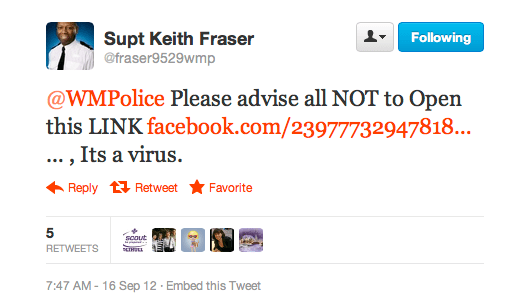

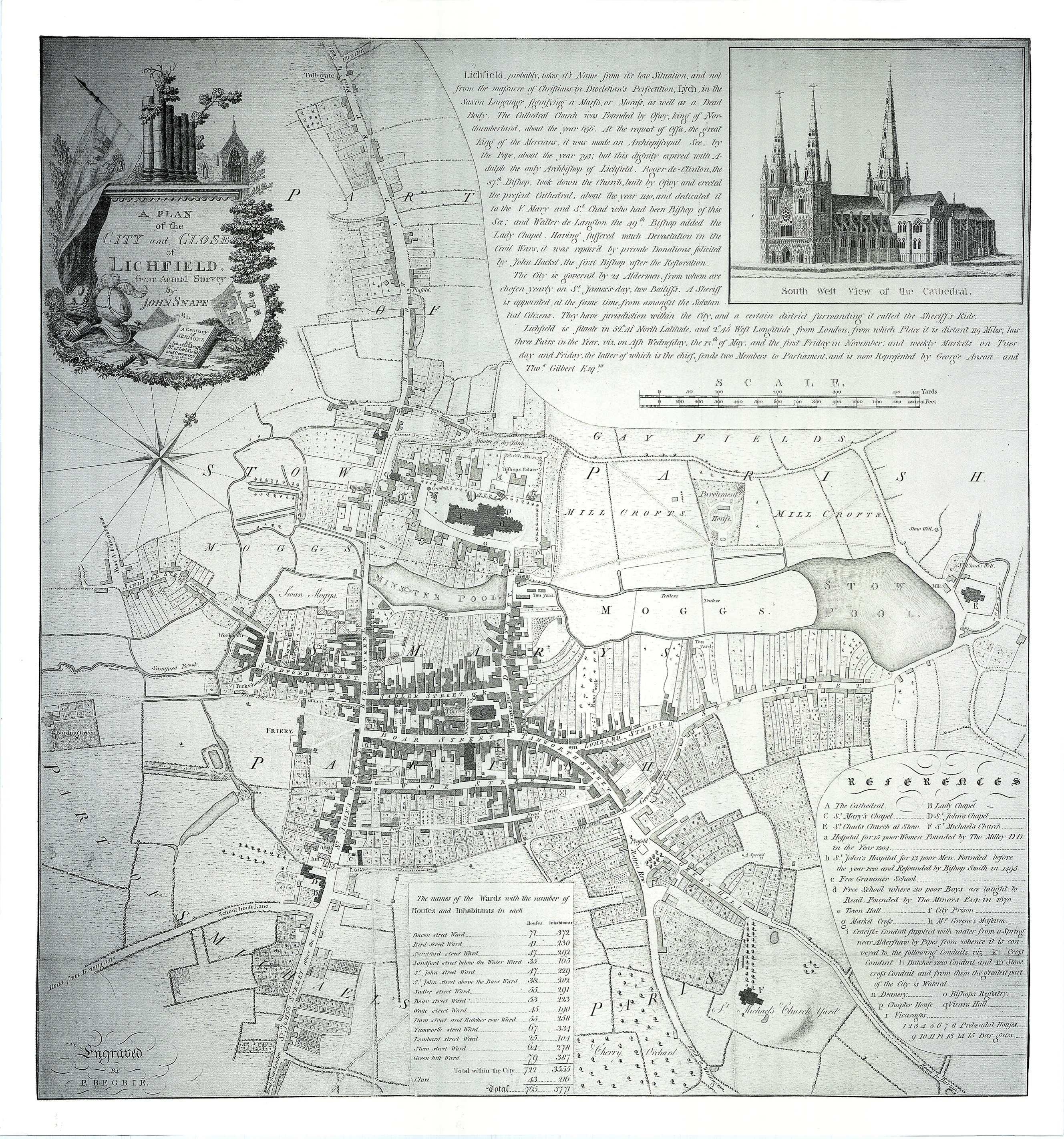


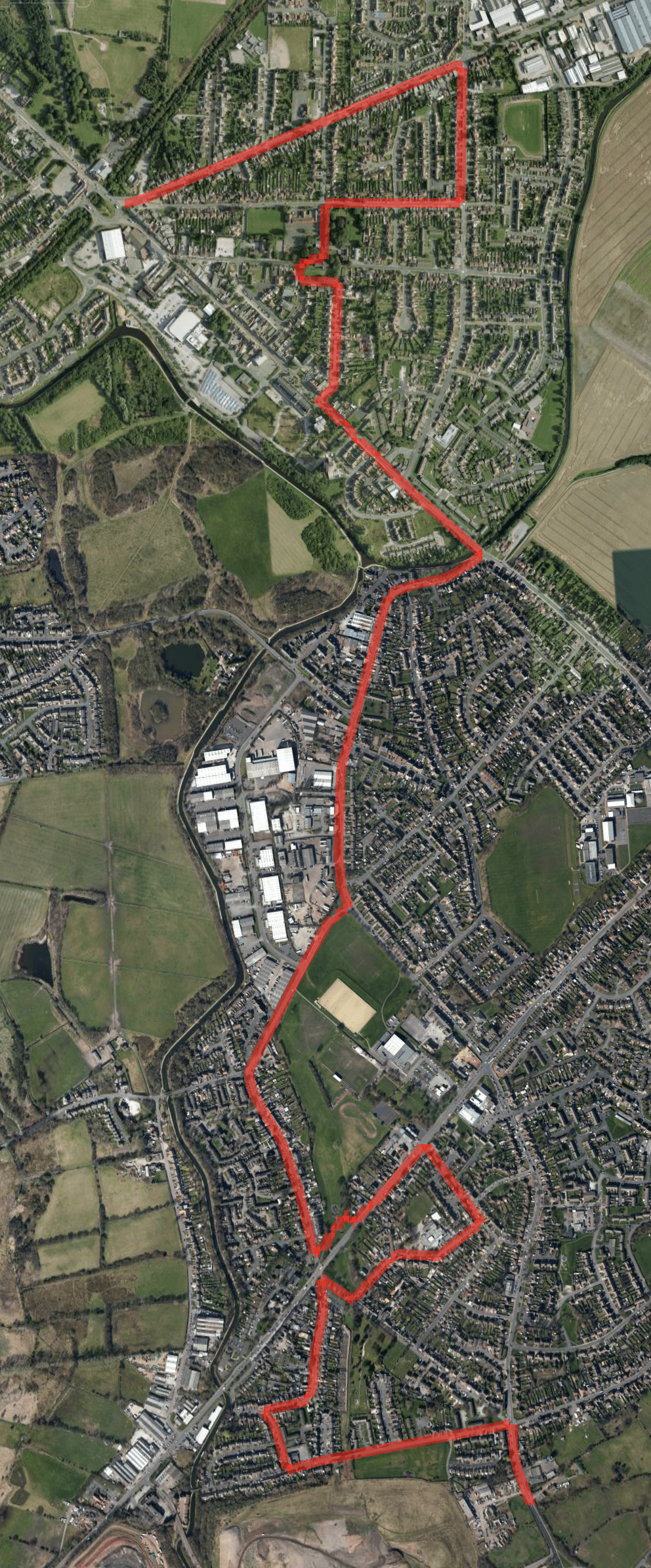


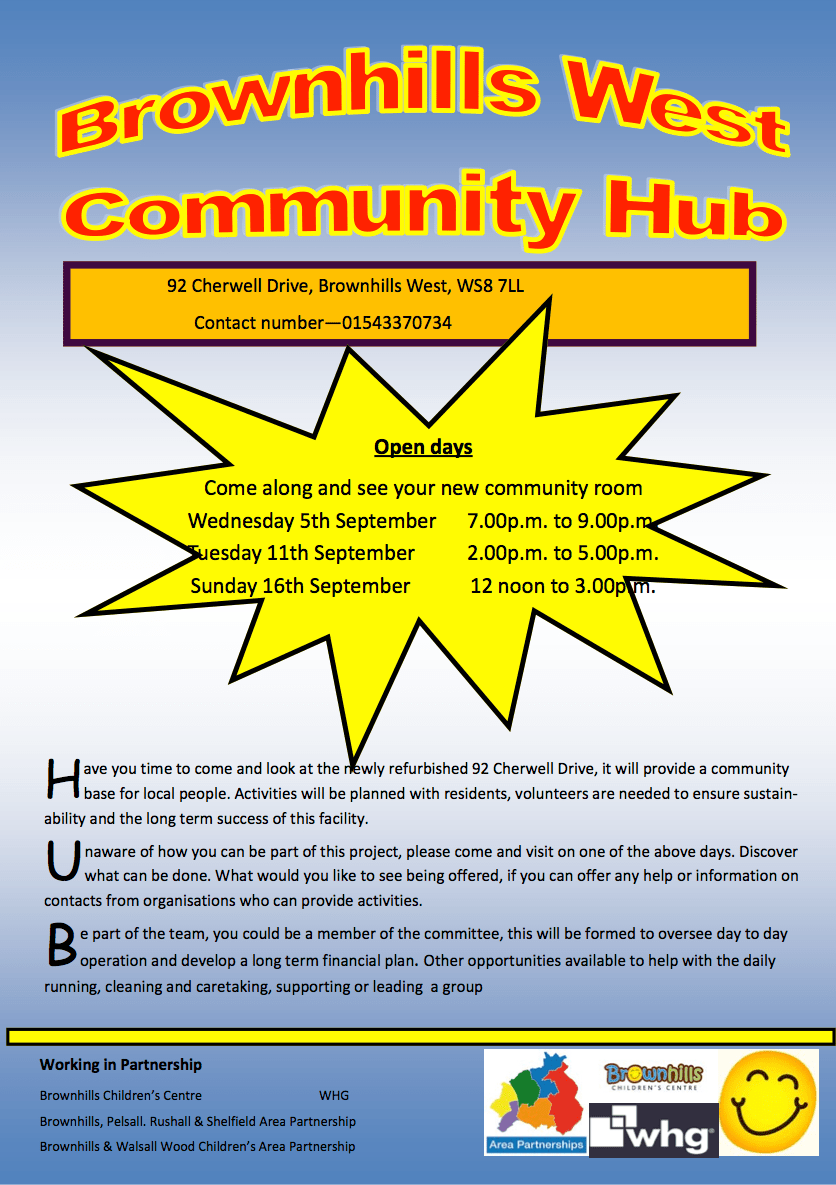
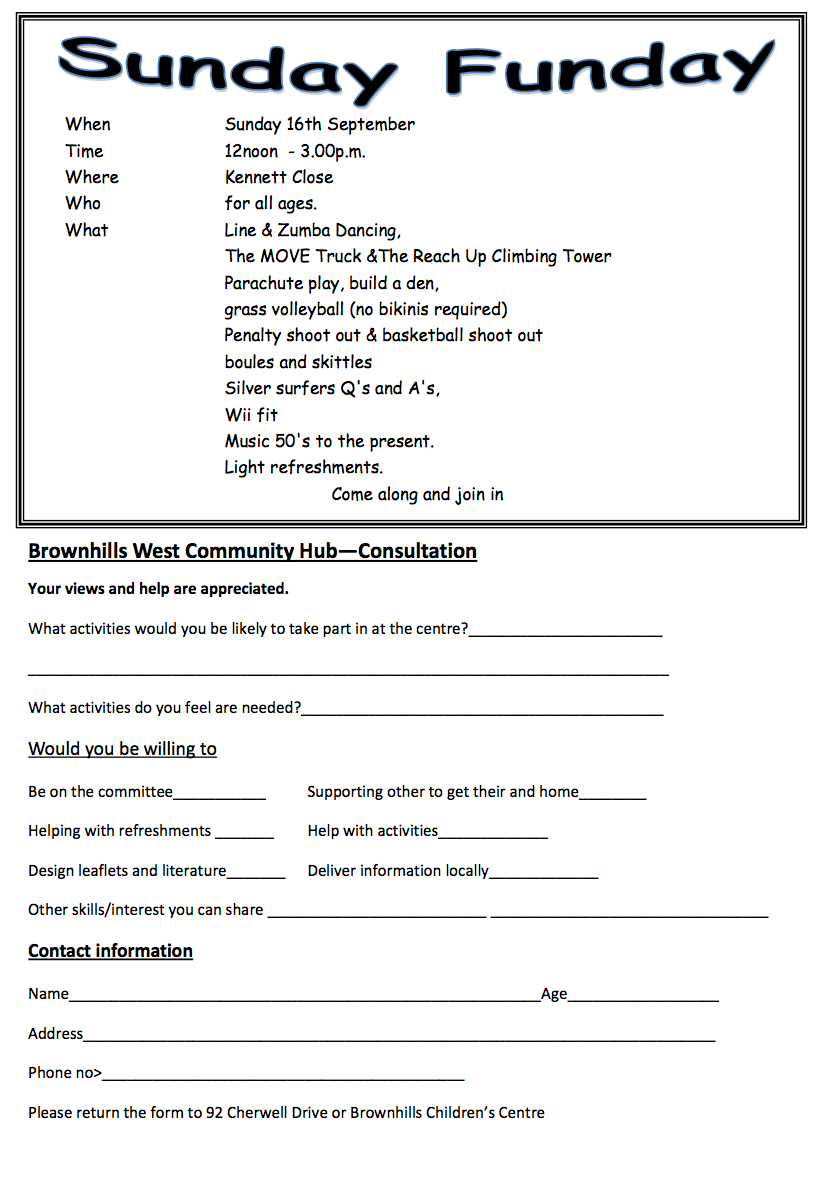





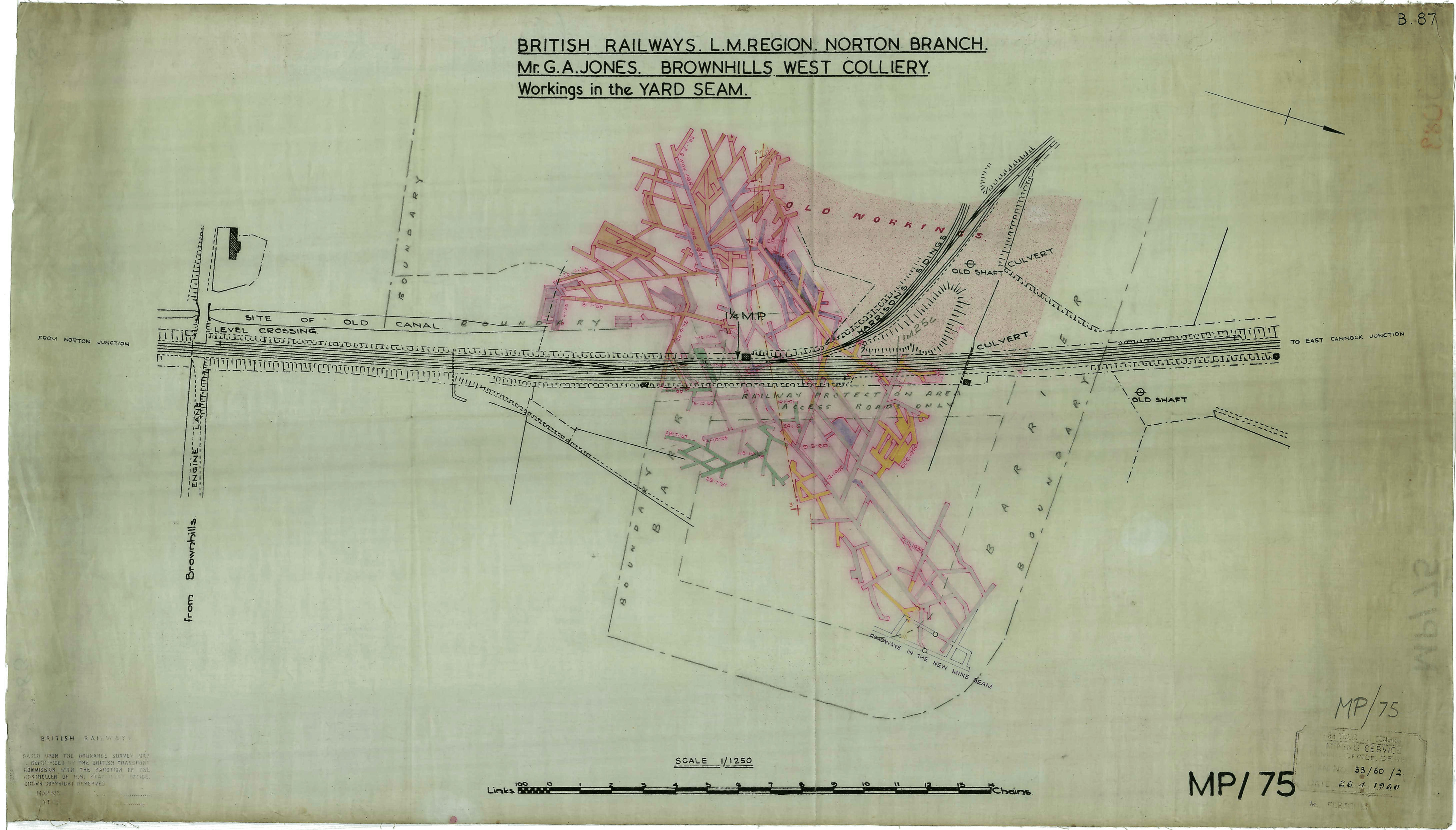
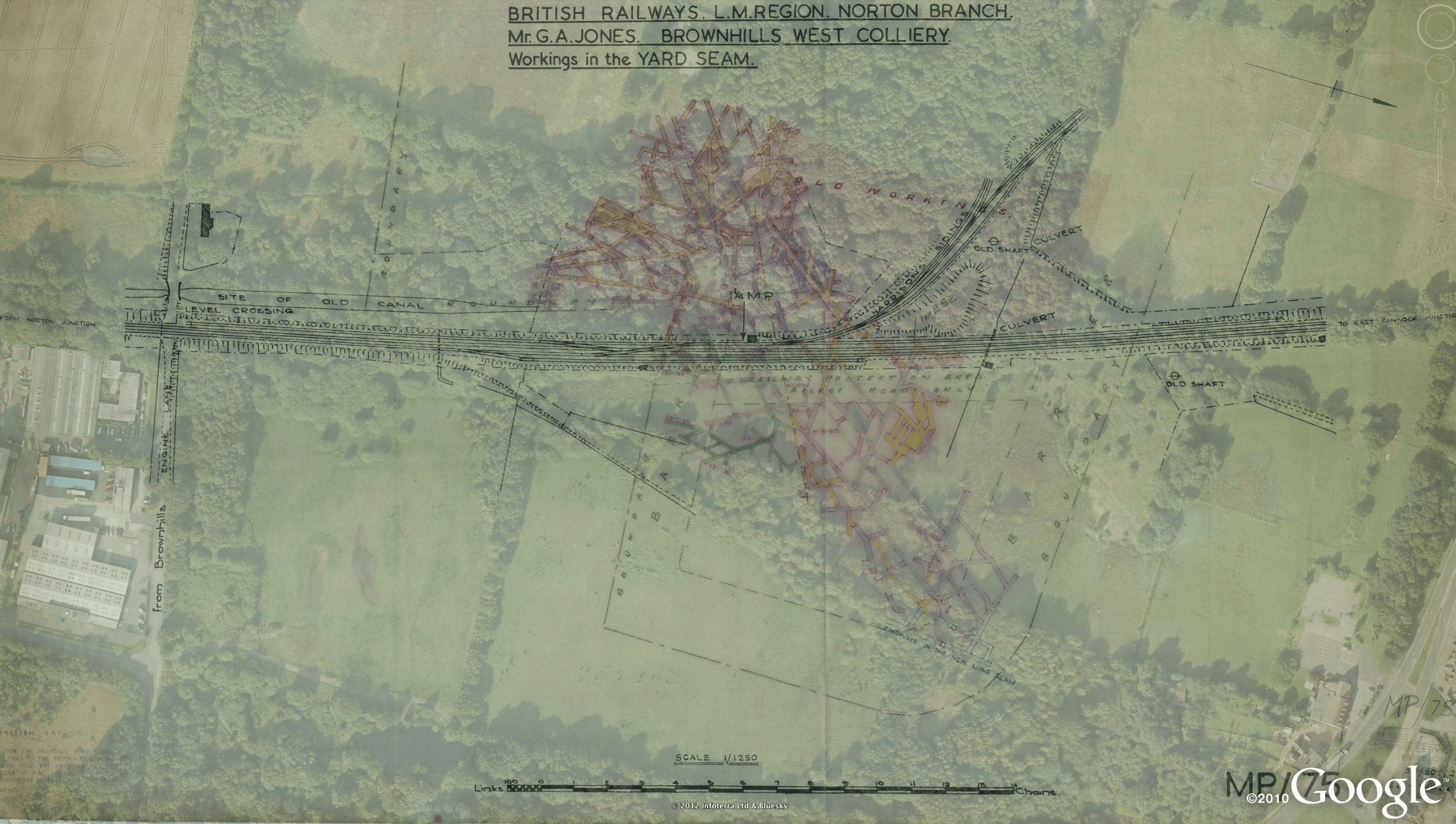


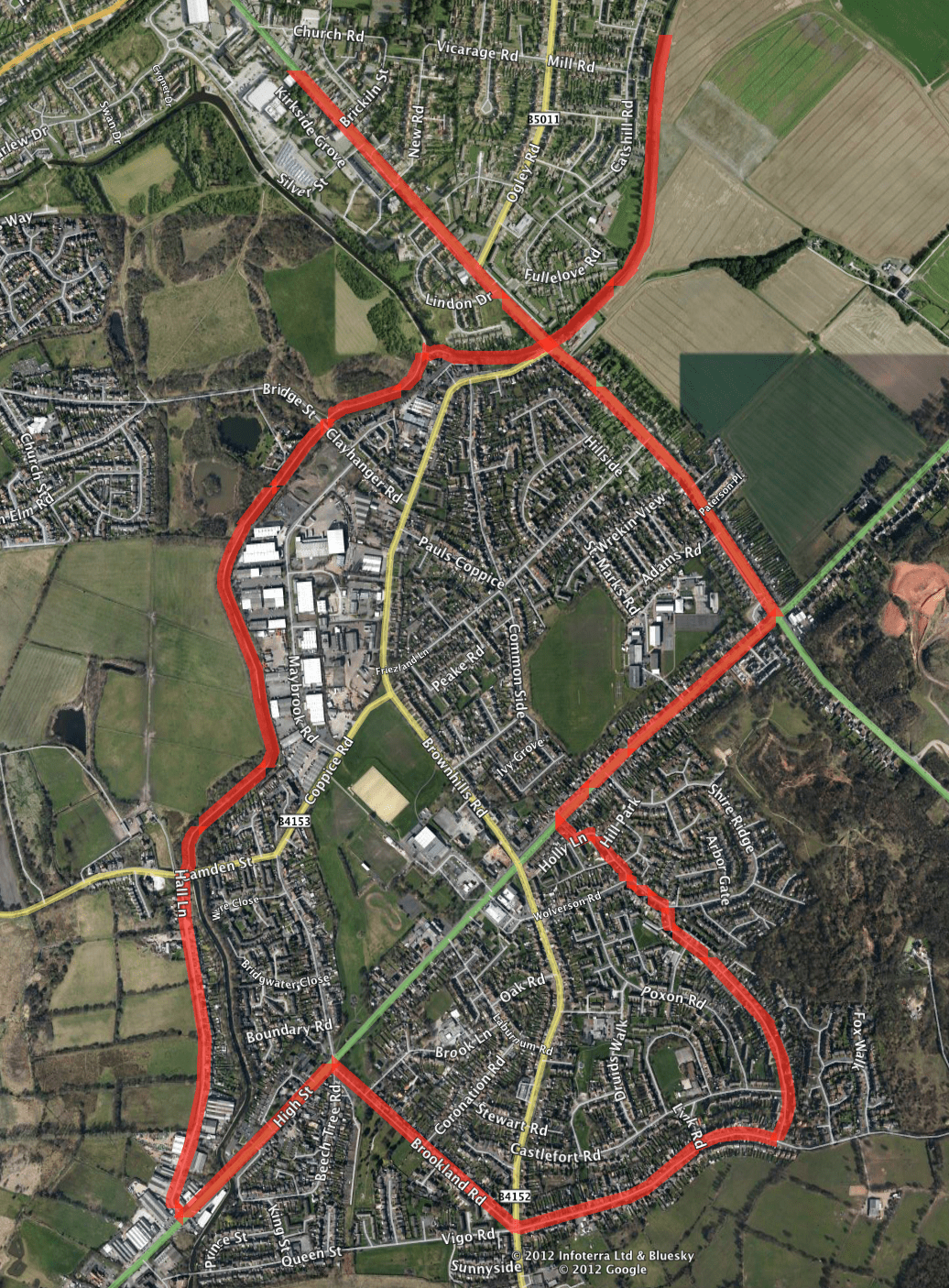

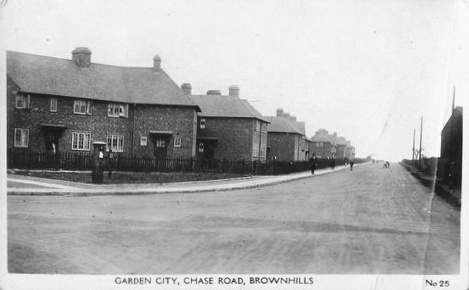


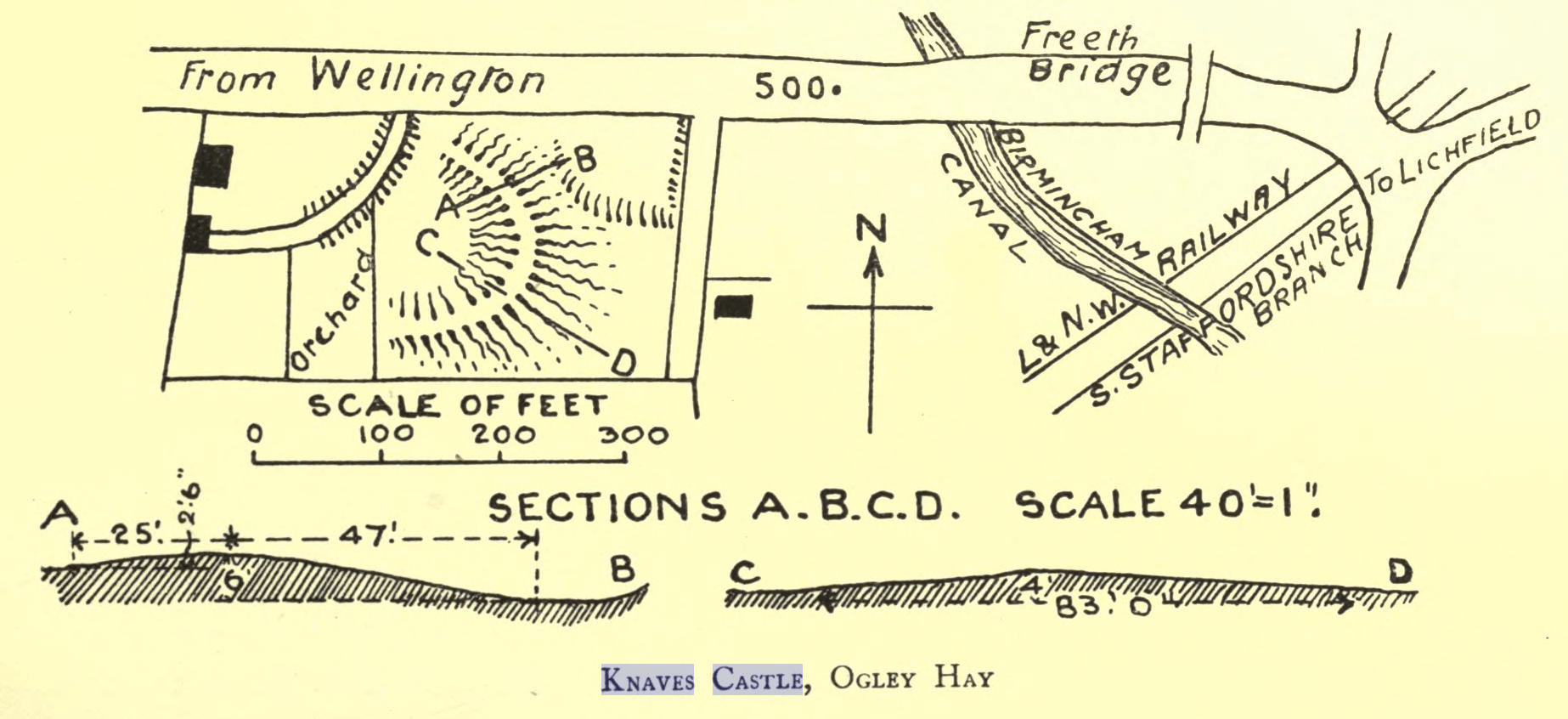



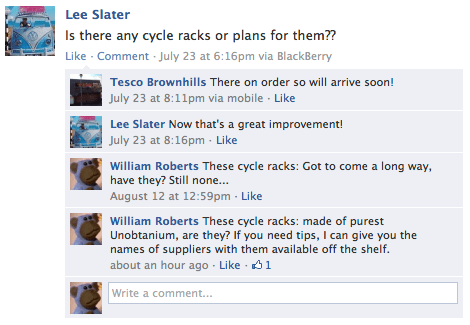


 Posted with Blogsy


 RSS - Posts