This article is part of an effort by top reader, commentator and contributor David Evans to chart the growth of Walsall Wood, towards the turn of the last century. The first article in this series was published a couple of weeks ago, and generated quite a bit of debate and interest.
In this one, David finds a community bursting at the seams, yet becoming a little more prosperous. The modern age of the telegraph and post seems to be coming in, and some of the well accepted social pillars we know today – schooling, heath, religion – seem to be becoming more established.
As ever, a huge thank you to David for all his hard work.

David wrote:
The population of Walsall Wood in 1891 had risen to 4582. British History online tells us that Walsall Wood had yet to become a civil parish within the urban district of Brownhills. This would happen in 1894. The village is described as ‘consisting of colliers, brickmakers and a few small farmers’. From other sources we know that Clayhanger Brickworks had opened in 1882, and that (weekly?) coal production from the Coppice Pit (Walsall Wood Pit) would increase to 4000 tons by 1899. The village Post Office had opened by 1880, though not shown as such in the 1881 census. Brownhills Gas Works had opened in 1872, the sewage works in Green Lane had started to function in 1882. The local mineral railway line had opened in 1882, and had opened to passenger traffic in 1884. The Wesleyan Church, by Hall Lane, had been built ‘by 1882’. The Primitive Methodist Church had just built a larger chapel, by the side of the original chapel, which had opened in 1863.
St. John’s Church had had its first extension, in 1886, and it is recorded that in 1885 ‘men from Walsall Wood who attended Sunday morning classes in reading and writing at the schools built a new classroom’ An Infants school extension had opened in 1882.
Brian Rollins’ book Coal Mining in the north east section of Walsall Metropolitan Borough, page 10 reveals:
‘In the late 1870s and into the 1880s (coalminers) wage cuts tied to the price of coal continued. In 1893 the coal owners announced a 25% reduction in wages. The miners who had families to feed could not accept this level of reduction and were then ‘locked out’. Times were therefore hard.
Time to look at the 1891 census, and the taking of it.
The route of the census appears to be…
Starting in ‘Lichfield Road’, outside St. John’s church in present-day High Street, Walsall Wood the enumerator walks down that side of the road toward the canal.
We pass Reverend Thomas Reakes in the vicarage (the third house in the road, two were by the corner with Coppice Road), the Barber and local preacher’s house, the butchers, to arrive at the Red Lion Inn. Immediately next door, in the Yew Tree Cottage which, with the School House in Beech Tree Road had been sold off, now lived A Mr Whitehead, chemist and druggist. He would later move to new premises across the road and by the canal. We pass a boilermaker, a butchers, Henry Jackson’s chain-making premises, and a hairdressers (perhaps a sign of growing affluence in some quarters of the village?). After passing 27 houses we meet the first sign of the overcrowding and poor standard housing that featured largely in this part of Walsall Wood.
This ‘Fold Yard’ as it is listed, had five or six dwellings around a yard, one 4 roomed dwelling housed 7 people, a 2 room dwelling housed 4 people, two 3 roomed dwellings housed 3 and 5 people, a four roomed dwelling housed 10 people, the last dwelling in the yard had four rooms and 6 inhabitants. They all shared one yard, I believe.
Crossing the canal and turning into ‘Canalside’, (part of Hall Lane) with the Beehive Inn, the 4 roomed dwellings had 7 or 8 to each home.
The overcrowding continues back in Walsall Road but amazingly, there is one unusual boarder in a 2 roomed dwelling, a registered physician and surgeon, from Scotland. His neighbours, in their four roomed dwellings, were families of 9, 7, 8 and 4 people respectively. We pass the Coach and Horses Inn, the only other building before reaching the Horse and Jockey Inn, Mr Deakin being listed as the ‘farmer and publican. Next, his neighbour in the direction of the canal, a Mr William Jackson, in Deepmoor Farm. The main occupation noted so far in this part of Walsall Wood is coalminer or labourer.
Boatmans Lane speaks of yet more overcrowding. Here the nine dwellings had 8 or 7 people per home. The main occupation here was ‘brickmaker’.
Back on Walsall Road and heading to the canal, on the opposite side of the road, the clutch of houses around the Old Boot Inn, four roomed dwellings have 7, even 10 people per home. We pass the Travellers Rest Inn, see Mr Joseph Whitehead the landlord there, and walk past the rows of for roomed houses where occupancy is 7 or 8. One interesting entry is the local Policeman who has moved out of the Police House in Occupation Road (Beechtree Road). He now had a family of 8 children, and lives near to the canal bridge, just by the Inn.
Crossing the canal bridge back to the centre of the village, we leave Walsall Road to head to Lichfield Road. The first building on this side of the road is the Yew Tree Inn (what is the ‘Drunken Duck’ today)
Three houses further along a Mr Cooke, chemist, and his family dwell. The village has two chemists. There is also a grocer’s three doors away, Mr Emery, clothier manager living next door. There is another grocer’s, a draper, then a few coal miners cottages, and, brace yourselves. Miss Betsy Moreton, aged 41 and born in Wednesbury is the Post Mistress, whilst Miss Annie Reeves, 19 is the Telegraph Clerk in the same building. Was there a Postman?
The good ladies of the Post Office had a Mrs Julie Snape living next door. She kept the coffee shop. Her son, Fred was a castrator (the mind truly boggles). He came from Pelsall. In the same part of the Lichfield Road there was a clothier and boot dealer (not Mr Whitehouse), a railway plate-layer, a milk seller (first mention of this in Walsall wood censuses to date), Fred Davis was a ‘Certified teacher’ – still a requirement in today’s world of education, and then we come to Mr Batkins shop (Roadrunner, opposite the derelict old school building in Lichfield Road). The ‘excavators’ from 1881 census had all left.
More evidence of overcrowding appears in the census. One entry shows two dwellings ‘back of’ the house, with dwellings of two rooms.’Back to back’ houses. Even the Royal Exchange Inn, licensee a Mr Welsh, had three two-roomed dwellings ‘back of’ with four people per home.
The rest of Lichfield Road is equally distressing. These four room homes had 5, 6, 8, or 10 people per home. The main occupation? Coalminers. Two houses are listed as ‘Commonside’ here. This is at Streets Corner, very likely the thatched cottage where Mr Street had previously lived, and the cottage by it.
Brownhills Road was called ‘Colliery Road’ in 1891. The first three houses from Street’s Corner (Mr David Oakley and family of 8 being the first listed) show that the next house had a very interesting feature; a ‘Cot’. This two room single-storey addition appears in one of the photos of the old village. There were now ten houses in this road to its junction with Friezland Lane. The enumerator ‘turns’ left into Coppice Road where the records show major housing problems. The three roomed dwellings here had 10, 9, 8 inhabitants. Mr Abraham Harrison, the village’s last horse-shoe maker, was living here in his four roomed home. He was 65 years old in 1891.
The enumerator turns right into Black Cock Road, previously known as Commonside, yet to be called Bullings Heath, known as Camden Street nowadays. In 1891 there were 39 houses of which only 16 were four roomed dwellings, each with up to 12 people per house. 212 people lived in 39 houses. The main occupation in the street was coalminers, boatmen, and one blacksmith.
The census taker makes this interesting entry. It is for the part of the road immediately by the canal:
’4 broken down places in this road of one room each with old railway carriage for sleeping in’
In previous census records, 1851 and 1861, there is a mention of ‘Jigs Nook’ Walsall Wood, in the road then known as Commonside. I think this is where Jigs Nook Walsall Wood was.
Brian Rollins defines ‘Jig’ as ‘a steeply inclined roadway (tunnel)’. Perhaps it had another local meaning, too.
Occupation Road (Beechtree Road) appears to be less overcrowded.
In this road there lived the local schoolmistress, stationmaster, railway signalman, an assistant schoolmistress. Thomas Cresswell, master builder, lived in Beech Tree House (many years later, this was Dr Roberts’ House). This fine building still stands with all its beautiful brickwork and bonding, its chimneys and ridge tiles. The local chimney sweep, a Mr Sivorn, was here also, as was another master builder, an Elijah Cresswell. The railway porter, a Mr Henry Gabbitas, born (remarkably) in ‘Shire Oak, Nottingham’ was Mr Cresswell’s neighbour. I hope each could understand the other’s accent!
Hollinder’s Lane (VIgo Road and Queen Street) showed the same housing overcrowding. Coalminers and brickmakers lived here.

The Vigo Stores in 1963, image supplied by David Evans and Marjorie Hadley.
Over at The Vigo, we find the village postman. Except, it’s a postwoman. A lady named Ann Woolley. The telegraph messenger lived nearby – Lucy Haydon, aged 17. Louisa Cresswell was the grocer, possibly in the corner shop at Vigo corner, mentioned in previous articles. The Vigo homes had 7 people living in each home. Kingshayes and Vigo farms are mentioned.
Hollybank (Castle Road) had its own farmer, a Mr Hale. There was a blacksmith, plasterer and a carpenter among the coalminers who resided there.
Accommodation Road did exist (it’s location and very presence has been the cause of much debate for years). It was in Holly Bank, further along the road from Hale’s farm. This road had two dwellings, and two tents with Mr Stevens and his family, and Mrs. Ambrose Sharlott living in each tent. In the adjacent caravan a family of 8 lived there. All three heads of families were listed as ‘hawkers’.
Salters Road appeared in name. There were 11 houses of 4 rooms per house, Each home was overcrowded with up to 12 people living in a house.
This census ends here. There are 400 dwellings listed in this document. The abiding impression is one of mounting pressure, perhaps to imminent bursting point. Many families, especially newly arrived and recently settled coalminers’ families had young children born in the village. There was still no permanently resident doctor, no nurse, no evidence of a resident midwife, no bakery, no dentist. It is not evident how many homes had gas lighting or still used oil lamps. The insurance agent who was listed in the 1881 census seems to have left the village. There was no bank.
David Evans
September 2012
Sources:
British History online. Walsall Wood
Brian Rollins. Coal Mining in the north east section of Walsall Metropolitan Borough
Margaret Brice. A Short History of Walsall Wood
Walsall Wood in History. Walsall Council
Sue Lote
1891 census: Staffordshire/Walsall foreign/Aldridge/district12. Enumerator: Mrs T Reakes
Like this:
Like Loading...








 Posted with Blogsy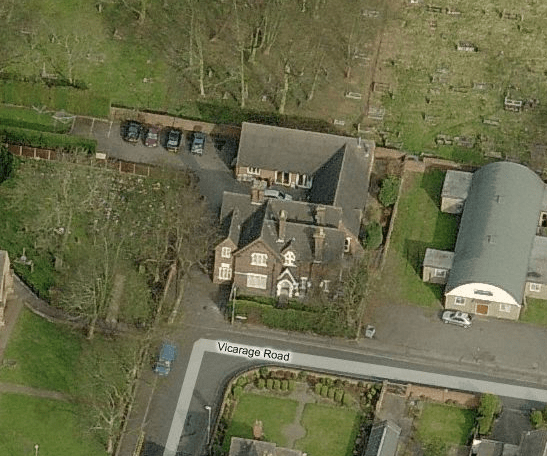






 RSS - Posts