A decent proposal

Lindon_Drive_site_layout

A proposed development at Lindon Drive, Brownhills, on the site of the old Bailey House, as released by Walsall Housing Group (whg). Note that this is not a planning proposal, but a consultation document and things could well change. Please click for a larger version.

I’d like to express my apologies for not being on the ball. I only noticed last Monday morning a twitter announcement from Walsall Housing Group advertising a consultation on a new Brownhills housing development that afternoon, but sadly there wasn’t time for me to announce it:

Lindon Drive Public Consultation.
Humphries House community room.

Total of 45 new homes; 27 for rent and 18 for sale.
Mixture of two and three bed apartments and houses. There is also a small percentage of one bed apartments.
View the proposed site layout.

I’ve been trying to get around to covering it all week, but time has beaten me. Sorry.

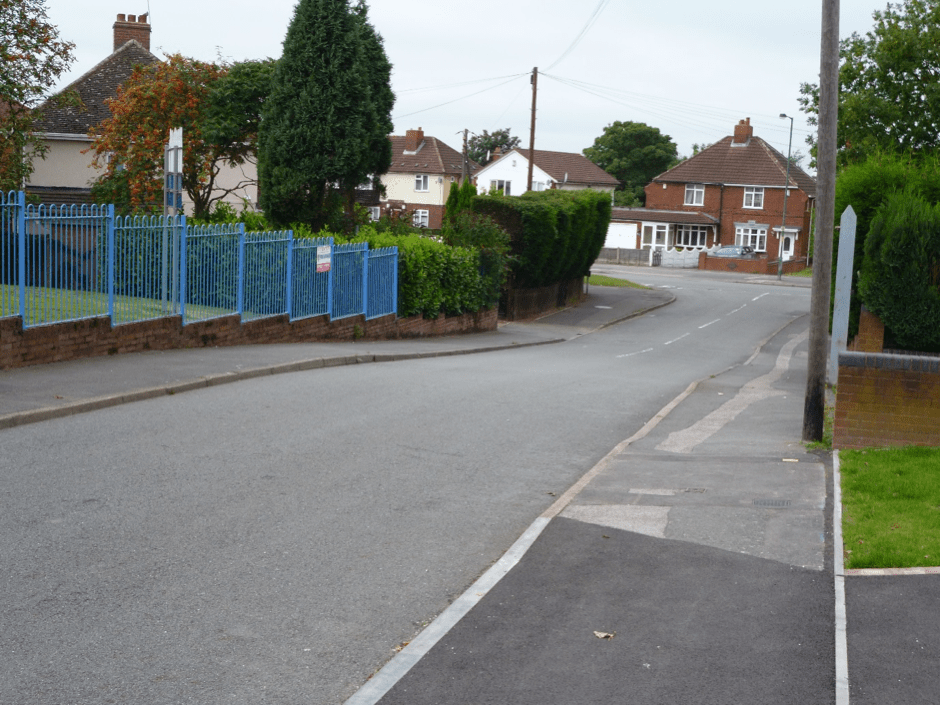
This seems like a decent and worthwhile development, again rebuilding on land cleared of social housing nearly a decade ago. From the plan, it seems like a pleasant enough design, too; so I can’t really see much objection – utilising former land is great, and also clears up some of the wasteland we’re saddled with after the demolitions.

Bear in mind that this isn’t a planning application yet, and this may not see the light of day in the form described; Walsall Housing Group are consulting with the community and I’d expect further events may take place based on feedback.

If anyone strongly objects, there will be plenty of opportunity to do so if and when it goes through the planning process.

My only criticism so far is the consultation seems a little limited in both notification and scope, but that’s by the by. It’s good to see proposed social housing in the current climate and the schemes constructed so far – Ogley Court and the one up on the A5 at Deakin Avenue – seem to have been well received and look decent.

I do hope something will soon be forthcoming for the site of Silver Court Gardens, but that’s a much larger parcel of land to work with.

WHG seem bang on the money with this, and I wish them well – but I do wish they’d do something about the annoying lower case logo, it’s really irritating.

Did you attend the consultation or have a view on this development? Comment here or BrownhillsBob at Googlemail dot com. Cheers.

Untitled 6

I couldn’t mentally place it at first, so chucked the plan over Google Earth imagery. That’s Catshill Junction centre-lower left. Click for a larger version.

Posted in News | 5 Comments

Strike up the band!

This is a huge post, but it’s just so wonderful I couldn’t butcher it. Wendy Jones has been working hard and supplying me with loads of material relating to her time in the Burntwood Blue Birds Marching Jazz Band.

Wendy, you’ll recall, came up with the remarkable treasury of images of Wharf lane and surrounds before the motorway came through, and has been working incredibly hard to get as much of her father’s cinefilm and scrapbook collection online as possible.

Wendy’s dad collected photos, clippings and video, and the task of getting this on to youtube and over to me has been no mean feat, and I’d hereby like to thank Wendy for putting in the immense effort an no little time to share a remarkable fragment of history.

There are a whole host of films on Wendy’s YouTube channel. This one is Chasewater in 1992. Memories flooding back. 

I show just a snapshot of her films in this post; do pop over to Wendy’s YouTube channel and check them out. Even if the marching bands aren’t your thing, as with many local history films, revel in the backgrounds and what they reveal.

Many of the films are in and around Chasewater – a few are at the old trotting stadium, others overlooking the lake and cafe. The one at St. Matthews Hospital is particularly interesting.

Finally, the old chestnut of the Cliff Richard film ‘Take Me High’ – infamously filmed in Brum and mentioned here often – now has a local link; little did I know but the Burntwood Blue Birds are in the film. Wendy has sent me a whole tranche of related material which I shall explore in a later post.

The kids in that film must still be about. Please, if you were in ‘Take Me High’ do shout up. The wonderfully witty Jon Bounds latched me on to this 70s cinematic gem on Birmingham, It’s Not Shit (latterly the artistically serious* Paradise Circus) years ago and I’ve had a grim fascination for it ever since.

*pretentious gits

Please don’t steal material from this post and post it on Facebook; please link to it instead so the whole thing is kept credited to Wendy and maintains context. Since being banned from yet another ‘history group’ on Facebook last weekend for having the outrageous temerity  to point out ownership of nicked stuff, my patience is wearing thin. Please have some respect. Doing this stuff is bloody hard work and I’m getting very weary of seeing it stolen, bastardised and misrepresented by people who don’t even have the grace to post acknowledgements.

I credit and respect my sources. I expect you to do so, too.

Banning one of the busiest and most resourceful local history sites in your area from your  group also isn’t the brightest move, but you’ll work that out in time.

Wendy wrote:

1374601_10201282923413678_1689447942_n

Wendy Jones looking rather dapper in her marching band days. Image from her collection.

Burntwood Blue Birds Jazz Band

I would have been about 13 years of age when I joined the Blue Birds Jazz Band around 1970, the band had gathered as a group the previous year. I think it was more my Dad that wanted me to join and he promised me 50p a week pocket money if I joined the band (50p was a huge amount of money back then). I attended the practice sessions and soon started to pick up the routine and had made good friends. However, I was soon hooked and stayed in the band for almost ten years. The jazz band was made up with approximately 40 members of boys and girls, but predominantly more girls aged between 5 and 20 years of age. It was a marching band that had drummers, symbols and kazoos/

Practice sessions could sometimes be gruelling but also good fun and good company, in the summer months we would practice outside in front of the old wooden pavilion twice a week for about two hours. During the winter months we would practice inside the old Burntwood baths, in the large dance hall upstairs, we had to wear pumps so we didn’t scratch the floor, these would be once a week on a Sunday. Every year we would learn a brand new routine and have a brand new uniform which was always red, white and blue.

Dad became a committee member and attended lots of meetings with Albert Hollingsmode. Margaret Stokes used to train the band members their routine and used to think up lots of clever ideas we could put into an entertaining display that the judges and members of the public would enjoy watching. This was fun being part of a team. We started our travelling life using H&M Coaches from High Street, Chasetown. This was a huge cost so the band raised enough money to be able to purchase their own coach painted in blue and white with Blue Birds written down the side with matching blue headrests inside. Margaret’s husband Ron used to drive the coach to all the events.

Over the years the band visited many places all over England and Wales and made many friends with other bands and their members and would occasionally stay as guests in their homes. 1973 a group of majorettes from France came to stay in Burntwood and took part in the Chase Wakes and we had the opportunity to be their hosts in later in 1973 taking part in their local carnival.

When we attended carnivals the band was always expected to take part in the street parades, some of these parades could be extremely exhausting and demanding especially if it was a hot day. Some of the parades could be a couple of miles long and we still kept up the pace with much enthusiasm and zeal. In the carnival parades would be dance troops, majorettes, military bands and floats. After the street parades with other bands from all over the country, there would be a draw to determine which order the bands would perform their routines. We would put on our practiced display with keenness. We would stand to attention and the drums would beat, we would all start marking time in perfect precise synchronisation together, we could now only do our best.

The displays usually lasted for about 20 minutes and the crowd would cheer and applaud us on.

At the end of each event, there would be grand finales, where all the bands taking part would march into the arena to wait for the results. Over the years the Blue Birds have won many titles including the World Championships twice. The first time the band won it was at Alexander Palace, London in 1974

We once visited the Blue Bird toffee factory and had a guided tour of the factory and everyone was given a large bag of Blue Bird toffees. We went to hundreds of functions all over the country, way to many to name them all.

The band started getting status and was on television a few times and was asked to be guard of honour at special events, including some royal occasions. However, by this time I was working and my employer didn’t like me having time off from work.

When I was 16 years the Blue Birds jazz band was in a film with Cliff Richard, ‘Take me High’ when we paraded around the streets of Birmingham. The band went to the opening night in Birmingham a few months later were we all met Sir Cliff. We were also invited to the opening night at Sankeys Corner picture house and we lined the steps as customers passed to watch the film, we were all allowed to watch the film after everyone was in the cinema, this was our first viewing of the film.

[You can see the bit of the film the band were in by clicking this link. Sorry, couldn’t work out how to embed the film to start from a set time – Bob]

Jazz bands in the 1970s used to be a big passtime for children and adults in the Midlands and there were many local jazz bands and often we would attend each others functions. The jazz bands used to put on a lot of displays for charities. Often we met someone famous who was opening the functions and we would collect their autographs. Being a member of the jazz band it was difficult to have a serious boyfriend unless he was interested in jazz bands too! During the summer months carnivals would be most Saturdays and Sundays and practicing sessions twice weekly, Tuesdays and Thursdays, the band used to take up a lot of our spare time.

It was a good part of our life.

Posted in Brownhills stuff, Chasewater, Environment, Events, Followups, Fun stuff to see and do, Interesting photos, Local Blogs, Local History, Local media, Local music, News, Reader enquiries, Shared media, Shared memories, Social Media | Tagged , , , , , , , , , , , , , , , , , , , , , , , , | 7 Comments

Gimme shelter

JS26465779-6115362

Local historian and legend Jack Haddock still has the remains in his garden of the air raid shelter he used in the war. Click on the image to read the story at the Birmingham Mail.

Peter ‘Pedro’ Cutler has dropped me a line with some interesting stuff about wartime precautions in the area during the Second World War, in particular air raid shelters.

This dovetails in nicely with recent stuff about evacuees, and the effects of war upon the local area.

This clipping really gives a feel for the fear and daily threat people were living under, and I’m curious to know where local shelters were, at schools, businesses and private homes. I imagine there were a few communal ones around – so where were they located?

I’ve heard recollections of pupils from Watling Street and Walsall Wood schools being led to cover during alerts, but it’s unclear where the hideouts they used were.

Since we’re interested in the bombs and other effects of war, it seems reasonable to also discuss the precautions.

Any readers taken to task for bike lighting, for instance, or striking a match in the blackout? How severely do you recall this being policed?

As usual, I welcome comment and discussion. Please add your comment here or BrownhillsBob at Googlemail dot com. Thanks.

Cheers, as ever, to Peter for the spot. He’s doing some great stuff behind the scenes at the moment and this blog wouldn’t be a fraction of what it is without his, and all the other contributors tireless efforts.

Peter wrote:

Hi Bob,

A few more observances from the Lichfield Mercury of 1940…

SAFETY IN AIR RAIDS

This is what happened in regard twenty-four Anderson shelters reported by ARP experts investigating bomb effects. In one case a bomb 75 feet from the shelter—no covering—large splinter hole in back sheet. Fortunately no one inside. Another 90 feet from bomb, poorly covered—perforated badly and distorted.

In another, six people were seriously injured by splinters which went through both ends, there was no earth covering at the back where the splinters entered. 

A double shelter 19 feet from bomb, penetrated four thlcknesses of steel. Six people inside were O.K. But scared stiff!

THE OTHER SIDE OF THE PICTURE

Bomb fell 19 feet from reasonabty covered shelter, no damage and four occupants safe.

Two well-covered shelters 50 feet from bomb—two people in each did not even feel any shook! Shelter 18 feet from bomb, screened at the back by a wall, and a brick traverse in front. Shelter occupants unharmed.

Five children in a well-covered shelter were so near the bomb crater that the shelter was burled In earth. The children were got out unhurt.

Sir Alexander Rouse, Chief Surgeon to the Home Office, who gives those instances, adds: ‘These facts require no commentary. Those of you who have not covered their shelters properly or protected the entrance, do you not think you are incredibly stupid? Go to it and get the Job done!’

Surface brick and concrete are shelters that also came out well in the test of actual bombing shelters only 10 or 20 feet from houses which have been hit and another only 25 feet from the crater have been undamaged.

In a raid on two towns, of 33 casualties, 30 were in the open and 13 in buildings. 17 injuries were due to flying glass and 6 to bomb splinters.

In one town about 100 incendiary bombs were dropped on houses and streets, but the 14 fires started were extinguished by the inhabitants with stirrup pumps and other means. 

shelter

Air raid shelters took many forms, but what were those of our area like? Image from Sussex History Online.

HAVE YOU EMPTIED YOUR LOFT?

Lofts and attics in dwelling houses in urban areas must at once be cleared of all movable articles as a precaution against fires caused by incendiary bombs. An Order to this effect has been made by the Minister of Home Security. A dwelling house under this Order means a building either constructed or adapted for use wholly or mainly for human habitation, and includes hospitals, flats, hotels, and other residential buildings. A loft includes any space between a ceiling and a roof. The Order will not apply to lofts or attics where there is a fixed staircase, or where they are used or furnished for living in. Local authorities are empowered by the Order to enter and inspect premises to see that the Order is complied with. But even where the clearing of attics is not made compulsory, householders are strongly urged to clear their roof spaces. Apart from minimising the danger of fires, the junk thus removed will contain many articles, especially paper and metal articles, which are urgently required. These should not be destroyed, but should be made available for collection by the local authority under the National Salvage Scheme of the Ministry of Supply.


Posted in News | 13 Comments

Support Walsall Wood FC against Alvechurch this afternoon!

P1000426

Walsall Wood FC have a great reputation for entertaining football, and a keen, loyal and friendly bunch of supporters! Come join in the fun this Saturday and see some cracking football.

Saturday 12th October 2013

The Wood are at home!

Walsall Wood FC versus Alvechurch.

Kick off is 3:00pm

entrance fee: £5 adults and £3 concessions (kids go free with an accompanying adult)

Hopefully, a match report will follow…

For the Good of the Wood!


Posted in Brownhills stuff, Environment, Events, Followups, Fun stuff to see and do, Local media, News, Reader enquiries, Shared media, Social Media, Walsall community, Walsall Wood stuff | Tagged , , , , , , , , , , , , , | Leave a comment

Unearthed

Over the past few weeks a remarkable archeological project as been underway near Brocton, on Cannock Chase. When I first heard about it, I was a little sceptical, as although I had known about the existence of the Messines Model Village for a couple of years, I had grave doubts that any of it still remained.

How wrong I was. Over the course of what has been an astounding dig, mainly performed by volunteers, the model has revealed itself.

Readers who follow the blog closely will know that contributor David Evans has a great knowledge of, and interest in the history of the Great War, and has been up to Brocton Field to find out about this wonderful piece of history.

The model will be reburied very soon, I believe, so if you want to see it, get up there quick. It’s up off the Chase Road, near the Glacial Boulder. To get there, drive up past the Pye Green radio tower, past Springslade Lodge and the war cemeteries and turn off right onto Chase Road.

Messinesheader

The model as it looked before abandonment at the end of the Great War. Image from Staffordshire Archives.

Hi Bob

I wonder if your readers have been able to visit the archeological dig that has been ongoing at the site of the First World War New Zealander’s Army camp in Cannock Chase? This amazing scale model of the area surrounding the village of Messines in Belgium was constructed in the Army camp itself by German Prisoners of War, and was used to familiarise the soldiers with the terrain, German trenches, and lines of barbed wire that they would face in the major offensive of the summer of 1917.

This slideshow requires JavaScript.


I had known that such a large battlefield model had been built and used during the conflict, but thought it had been lost forever and destroyed when the Army Camp had been demolished after the end of the war. Purely by chance a few days ago, I came across the dig on Brocton Field, and was able to talk to some of the team of archeologists who had worked so hard to reveal this scale model.

I have visited the village of Messines on many occasions in the last thirty years or so, and could recognise the features in the model that had been painstakingly unearthed. The nearby beck in the shallow valley; the road which lead from Ploegsteert to the South; the village buildings standing high on the ridge.

The official records of that major offensive make grim and terrifying reading, and the model could not give an accurate warning of the final slope of the defenses or the hidden machine-gun posts.

As we know, the battlefield was a hellish place for all the combatants and even nowadays this is a cold, desolate corner of Belgium. Now all is at peace, with the fields returned to agriculture, the road to the village open and wide, lush hop fields by the roadside all the way from Ploegsteert woods, and the little beck flowing steadily as it always did. To the west the line of trees is there again, the only signs of this awful battle being remains of the huge craters, now filled with water.

Unexploded ordnance is still being unearthed, after nearly a century this land is still dangerous in places.

There is now a Peace Park on the edge of the village, a tranquil space with a tall, slender Irish tower. From here it is a gentle stroll around the slopes to the new Zealand Military cemetery, inside the last line of defenses.

800px-George_Edmund_Butler_-_Messines_Ridge_from_Hill_63

Messines Ridge from Hill 63 by war artist George Edmund Butler. Image from Wikimedia Commons/New Zealand National Archives.

The model in the former New Zealand Army Camp, high up on the windswept Cannock Chase, is a sight which brings a coldness and an unexpected shiver to the spine, and yes, a sadness and anger too at the human conflict and waste of life it embodies.

This is a wonderful and unusual archeological project, soon to be re-buried when the dig ends on Monday.

To the entire team of archeologists, helpers and other volunteers who have toiled so hard to bring this piece of history to our eyes, I salute you all. A valuable and amazing thing.

Kind regards

David

94706935

Brocton Field keeps its secrets well. This is a wide, beautiful, cinematic landscape; like Messines itself, once echoing to the sounds of soldiers, but now at peace.

Posted in News | 7 Comments

Can anyone help Bill?

plaqueunveilingbrownhills

Military men, and a patriotic gathering on a doorway. But where, and when? Image supplied by David Evans from the Bill Mayo collection.

Here’s an interesting enquiry from the Young David Evans to see if we can help local historian Bill Mayo. Bill is the wonderful man and collector of local photos who co-wrote great books on Brownhills, Walsall Wood and wider borough history. Without Bill’s work, local history would be very much the poorer.

Bill would like to know more about the above mystery image. Can anyone fill in the blanks? David recognises the cleric as the Reverend Eric Richardson, but who are the other two soldiers? Who are the other folk, dressed for the occasion? The plaque and wall – a pub perhaps, village hall maybe?

The image is a little on the small side. Hopefully we can get a bigger scan.

Please, any help we can offer Bill would be wonderful. Please comment on this post or mail me on BrownhillsBob at Googlemail dot com. Cheers.

David wrote:

Hi Bob

I was recently given this photo by our own wonderful local historian, Bill Mayo, whose books will be known to many. He has asked for help in identifying the people, location and date that this photo was taken.

I certainly recognize the Reverend Eric P. Richardson, who was a local Methodist Minister in the early 1950s, and is mentioned in the Walsall Wood Ebenezer booklet of 1951. I was not aware of his military service background, though.

Please, dear Bill Mayo has been so generous and supportive of local history research , and has helped me personally in my own research, I will be delighted if your blog readers can help in this quest

kind regards, and many thanks

David

Posted in News | 23 Comments

Urgent appeal – Brownhills camera theft – can you help?

9a9b021c52d6221026c4b373f74894c0

Brownhills rozzer PC Simon Bytheway – successfully feeling collars to keep us safe. But can we find the nicked camera? Image from the PCs twitter profile.

Listen up folks, Brownhills Community Association and Brownhills Police need our help…

On Monday, 30th September 2013 a walk-in theft occurred at Brownhills Activity centre in Brownhills – that’s the old Annexe, or Central Boys School, the home of Brownhills Community Association.

A suspect was arrested and has been charged in connection with the incident.

Sadly, though, the photographic kit lifted – which is used for the community education and photography courses – has not yet been recovered. That’s where we come in.

The camera is a Cannon EOS 7D camera with the following lenses:  EF-S 18-135mm 75-300mm and a 150mm Sigma lens. They were in a large canvas bag.

D3S_4675-1200

A Cannon EOS 7D Camera – nice bit of kit. Know anyone who’s suddenly got one that seems a bit shady? Image from Ken Rockwell.

PC Simon Bytheway, of the local neighbourhood policing team is understandably keen to trace the stolen equipment. He said:

This is specialist equipment. If you’re offered it, or know anyone that’s suddenly acquired and expensive looking camera without good reason, please do contact Walsall Police by dialling 101 or speak to Crimestoppers anonymously on 0800 555 111.

Please, lets see if we can get the Community Association it’s kit back. My thanks to the police, particularly PC Bytheway and PC Stanley for doing a great job.

Posted in Brownhills stuff, Clayhanger stuff, Environment, Events, It makes me mad!, Local Blogs, Local media, News, Reader enquiries, Shared media, Social Media, Spotted whilst browsing the web, Walsall community, Walsall Wood stuff | Tagged , , , , , , , , , , , , , , , , , , , , | 1 Comment

Express & Star Photo Archive Survey closes this Friday

I have a very important message for readers from Chris Leggett of the Express & Star, who I’ve noted before, are staging a campaign to get their paper photo archive scanned and online for all to access.

I’m sure you’ll agree that this is a vital and wonderful project. I ask all readers to support the bid, fill out the survey and write to the paper explaining your support.

If you would like to support the project, please send a letter of support to: Chris Leggett, Brand and communications manager, Express & Star, 51-53 Queen Street, Wolverhampton WV1 1ES. Or email: chris.leggett@expressandstar.co.uk

Like the Express & Star photo bid on Facebook.

Chris wrote:

1263001_396027403830502_2113093_o

The Express & Star photo archive is a remarkable chronicle of local life that really should be online for all: this image of King George’s playing fields, West Bromwich 1967 is an amazing example.

Please take time to complete the online survey on the Express & Star’s plans to make its photo archive available digitally for free.

More than 150 people have given us their views.

We plan to close the survey at midday on Friday October 11 to pass the data to the team preparing the bid.

If you are a member of a heritage group and would like to encourage colleagues to participate, or know friends or family who might like to share their views, please forward on the link.

www.expressandstar.com/bid-survey/

Click here to begin

By working together, we hope we can make the archive accessible for all.

Thank you again for your support.

Chris Leggett
Brand and communications manager
Express & Star

1277554_396038757162700_741674770_o

The archive contains images from a wide time range – this one from 1992 shows Cradley Heath chainmaker Roy Nock at work, Sept 3 1992.

Posted in Brownhills stuff, Environment, Events, Express & Star, Followups, Fun stuff to see and do, Interesting photos, Local History, Local media, News, Reader enquiries, Shared media, Shared memories, Social Media, Spotted whilst browsing the web, Walsall community | Tagged , , , , , , , , , , , , , | 4 Comments

Motorcyclist dies in Brownhills accident

Untitled 6

The Rising Sun Island is one of Brownhills busiest junctions. Image from Bing! Maps.

Sad news spotted on Twitter and Facebook this evening (Monday, 7th October 2013). It seems a motorcyclist in his twenties died at the scene following a collision with a lorry near the Rising Sun island on the A5, Brownhills.

There are currently reports at The Birmingham Mail, The Express and Star and the West Midlands Police website. I’ll at more as they appear.

[Added 8-10-13, 1130am: An updated, detailed report is available from the Express & Star here]

Condolences to friends and family. A horrid, horrid thing.

Walsall Police issued this statement:

Police close road following fatal collision in Brownhills
07/10/2013

POLICE have closed part of the A5 Watling Street in Brownhills this evening following a fatal traffic collision.

Officers were called to the collision between a motorbike and a lorry at around 4.20pm this afternoon (Monday).

The motorcyclist, a man, was pronounced dead at the scene.

Investigations are ongoing and the A5 Watling Street remains closed between Hednesford Road and Brownhills Parade.

Anyone who witnessed the collision should contact the Collision Investigation Unit on 101.

West Midlands Ambulance Service issued the following release:

Fatal road traffic collision in Brownhills

October 7, 2013 by officialwmas

Monday 7th October 2013 – 9.10pm – Chris Kowalik.

A motorcyclist has died following a collision with a lorry in the Black Country.

West Midlands Ambulance Service was called to Watling Street, Brownhills shortly after 4.20pm today.

An advanced community paramedic in a rapid response vehicle, a paramedic area support officer in a rapid response vehicle, an ambulance crew and the Midlands Air Ambulance from Cosford attended.

A West Midlands Ambulance Service spokesman said: “Crews at the scene performed advanced life support techniques to the motorcyclist and tried to resuscitate him. Sadly, despite those best efforts, he was confirmed dead at the scene.”

Ends

Travel journalist Tom Stokes tweeted the following:

https://twitter.com/jetpack/status/387265762496233472
Posted in Brownhills stuff, Environment, Events, Local media, News, Reader enquiries, Shared media, Social Media, Spotted whilst browsing the web, Walsall community | Tagged , , , , , , , , , , , , , , , , , , , , , , , , , | 2 Comments

Not worth the paper it’s written on

The saga of Aldridge Manor and the winding down of youth services in Walsall is still rumbling on, and the issue is still being pursued by doughty campaigner Linda Mason. In a post on her blog a few days ago Lind detailed a recent letter she has received  from Walsall Council which appears to be in almost total denial of the facts.

The Councillors may have wandered away now that the by-election is over, the Council Officers may be trying to fob us off, but neither I nor Linda have forgotten the issue of Aldridge Manor and the winding down of youth services in Walsall.

The Manor is apparently sold and will soon close, and Council officers are still utterly incapable of finding any kind of replacement premises. Linda speaks eloquently and passionately about the service she loves, and about the dissembling, stalling and evasion of those in charge.

This issue will not go away.

Untitled 6

Please click on the screen shot to read Linda’s grey and incisive post.

Posted in Brownhills stuff, Environment, Followups, It makes me mad!, Just plain daft, Local Blogs, Local media, Local politics, News, Reader enquiries, Shared media, Social Media, Spotted whilst browsing the web, Walsall community, Walsall Council, Walsall Wood stuff | Tagged , , , , , , , , , , , , , , , , , , , , , , , , , , | Leave a comment

Postcards from the edge

img001 2

Watling Street, opposite the Rising Sun on a hand-tinted postcard postally used in 1912. Click for a larger version.

img002

Who was Elsie Arnold? And what of Flo? Why was Flo away from home here? Click for a larger version.

Local historian Clive Roberts – documenter of the history of the Shire Oak Inn – has recently acquired these two postcards, sent from Brownhills in 1912 and 1914. Both are from ‘Flo’ to a Miss Elsie Arnorld, of 92 Station Road, Kings Heath, Birmingham.

Clive has been good enough to scan them an mail images for use here on the blog.

Both cards show local scenes – one of Brownhills West looking down the A5 Watling Street towards the Crown and Rehoboth Chapel; the other an initially dull shot of Norton Pool – Chasewater. It’s worth noting that the stillwater in the centre of the image is above the outflow culvert as revealed when Chasewater was drained.

The first card speaks of being ‘home tomorrow’, which suggests Flo was working here, or staying with a relative for some reason. Is perhaps Flo Arnold a name anyone remembers hereabouts?

I can’t decipher most of the text on the second card, which seems to talk of a chap named Alf being ‘sent for’ – I assume that’s conscripted. War had not long started. The dour picture on the card matches the written content. Any help reading that appreciated.

Thanks to Clive for donating such a lovely pair of cards. Anything we can find out about these would be wonderful.

img001

Norton Pool – that’s of course, Chasewater – postally used in August, 1914. Worth clicking to enlarge for what’s on the skyline. I think this was taken from the dam, just near the spillway.

img002 3

I need help with this, please. Flo is again writing to Elsie, this time with a complete address. The card is dated August, 1914 – this is a missive in a country stood on the threshold of the Great War. Alf has been sent for – I assume that means conscripted, and few are talking about anything else – one supposes that means the war. I can’t read the stuff around the edges. Anyone good at reading old script? Click for a larger version.

Posted in News | 12 Comments

The march of time

I think it’s fair to say that in writing and curating this blog, fate occasionally turns up some remarkable material. Whatever else this thing I labour over has done, it has actually seemed to have connected people to their history, and on rare occasions it has put back in touch people who were once familiar, but became separated by time or distance.

A great contributor to this blog has been Stuart Cowley. Stuart has written with passion and clarity great articles on his childhood at Chasewater, his love of broadcast radio, and perhaps most passionately about his time as a member of local marching jazz bands.

Remarkable footage from the Wendy Jones collection. Note the train in the background, the detail in the costumes. How busy Chasewater seemed!

A few weeks ago, I spotted some interesting photos on Facebook, posted to the Memories of Burntwood and Chasetown history group by Wendy Jones. I approached Wendy and asked if I could post some, and the result was a collection of images that were immensely popular, detailing the Wharf Lane area before the M6 Toll came through.

I stayed in touch with Wendy, and recently she pointed out that she had lots of material that was collected by her late father relating to local marching jazz bands, including films and newspaper clippings.

Wendy was kind enough to share a sample of this material with me, and it’s remarkable stuff. Recognising that I’m almost totally ignorant on the subject, I spoke of Stuart Cowley, and it turns out that Wendy and Stuart remembered each other from those days. They are now back in touch and I’m interested to see what comes out of the pairing.

In the meantime, here’s the material Wendy has kindly shared with me and allowed me to  post for readers. In between, I intersperse her comments.

The film is particularly interesting – not just for the incredible footage of the bands, but because it’s so far the only concrete record of the little train that used to run around the sourh shore at Chasewater – you can see it pass in the background.

My immense thanks and gratitude to Wendy and Stuart. I know I say it a lot, but stuff like this is why I continue to work on gathering our local history. I’m bowled over.

If you have any recollections or comments, please do join in. Comment on this post or mail me on BrownhillsBob at Googlemail dot com. Cheers.

Wendy wrote:

1371645_10201241448096821_2107301144_n

Kindly supplied by Wendy Jones from her collection.

Brownhills Carnival, Lindon Road, 20 May 1972, I have old scrap books from the early 1970s of a lot of the events we attended. I’m not sure how interested you are in Jazz Bands

I have managed to get some of the old films on DVD in small clips from 3 mins to 8 mins long, I have only done one old video at the moment (and that took me most of the day), Dad had the old cine films put onto video during the 1990s.

I had brought the DVD recorder in the summer to put my films on, at least I learnt how to use it today!

I also have a few newspaper cuttings from the 1970’s of other bands, and most of the programmes of what we attended during 1971/72, there are also newspaper cuttings about the ‘Take Me High’ film [That’s the odd film starring Cliff Richard on the canals of Brum I’ve mentioned here before – Bob]  and Dad also filmed a small part of the day, I found that one today, I didn’t know was there. There was also a documentry on the television in 1973 about the filming of ‘Take Me High’, he filmed some of that from the television

There is also footage about the Chase Wakes when the French Dance Troop came to England and the Blue Birds returned to France the following year.

The Chase Wakes shows in the background the old grandstand and swimming baths, there is over 4 hours altogether

1291306_10201241448136822_1844772068_n

Brownhills Carnival programme cover from 1972. Thanks to Wendy Jones.

Photograph taken January 1974, newspaper article, I remember the photograph being taken in one of the side rooms of the old wooden pavilion on the old CCCC ground.

1379845_10201246325418751_1703388170_n

Kindly supplied by Wendy Jones from her collection.

1387858_10201241452416929_216242184_n

Kindly supplied by Wendy Jones from her collection.

20th May 1973, Brownhills Carnival, Anchor Bridge and cover of Programme.

1388517_10201241452376928_38162581_n

Brownhills Carnival programme cover from 1973. Thanks to Wendy Jones.

1383582_10201246300898138_1452577973_n

Kindly supplied by Wendy Jones from her collection.

This newspaper article from 12th January 1974 mentions Stuart Cowley as the tallest member of the jazz band (although they have spelt his name as Colly), the photograph was taken in the old Brendewood Suite, Burntwood.

1390489_10201246302378175_854938638_n

Kindly supplied by Wendy Jones from her collection.

Posted in Brownhills stuff, Chasewater, Environment, Events, Followups, Fun stuff to see and do, Interesting photos, Local Blogs, Local History, Local media, Local music, News, Reader enquiries, Shared media, Shared memories, Social Media, Spotted whilst browsing the web, Walsall Wood stuff | Tagged , , , , , , , , , , , , , , , , , , , , , , , | 5 Comments

The Woodmen lose to Westfields

P1000595

The sun set over Walsall Wood to some disappointment – the home team lost 2-0. Image by David Evans.

Following yesterday’s home match, where Walsall Wood FC faced Westfields FC at Oak Park, the Young David Evans submitted the following report:

Walsall Wood versus Westfields, Saturday 5th October 2013

Baker Joiner Midland Football Alliance

Westfield 2   Walsall Wood 0

The dark, rain-filled clouds and grey, soulless sky were perhaps an omen. We attended Oak Park and witnessed a football match played with a larger measure of the dogged determination than individual flair by the Wood, whose opponents seemed to  be adept in taking advantage of most things seen and unseen.

This eventually  brought an official word  from the referee, who was ably assisted by experienced linesmen in what became a difficult and disjointed game. Even the Away Bench needed to be ‘spoken to’ at one point by one of the Men in Black.

Whether this was a deliberate tactic, a veiled attempt to put pressure on the officials, or just exuberance is surely a matter of conjecture.

Westfield scored twice, and both were well deserved goals achieved through accurate passing, good off-the ball running, and it has to be said, a certain measure of sailing close to the wind at times. Walsall Wood, incredulously, missed two open goals, to the chagrin of team mates who had succeeded in breaking through the occasionally flailing legs and arms of their opponents to present the ideal scoring  chances.

The second half brought yellow cards for dissent and unacceptable tactics by the visiting team, which continued slightly abated.  This behaviour culminated in the Westfields goalkeeper tackling a Walsall Wood breakaway attacking player with the finesse and dexterity one would normally only expect from a bulldozer.  The goalkeeper was allowed to stay on to defend the penalty, which Walsall Wood subsequently missed.

The supportive team spirit will overcome the disappointment   of today and surely spur Walsall Wood on, and the experience gained today in this first encounter with the team from Hereford will help to refine and perfect their skills and match tactics in  future games.

Sad that the Woodmen couldn’t pull it out of the bag, but that’s football for you. Thanks to David for the report.

Next fixture is against Alvechurch, again at Oak Park, next Saturday, 12th October 2013. Kickoff 3pm.

Posted in Brownhills stuff, Environment, Events, Followups, Fun stuff to see and do, Local media, News, Reader enquiries, Shared media, Social Media, Walsall community, Walsall Wood stuff | Tagged , , , , , , , , , , , , , , , , | 3 Comments

A walk in the woods

Christ-Church-Leomansley

Christ Church at Leomansley is my favourite church in Lichfield. It’s a gorgeous place. Image from Lichfield Lore.

Just a headsup for folks interested in Lichfield history, geography and miscellany. Top local historian, blogger and cardigan enthusiast Kate Gomez from the wonderful Lichfield Lore has organised a walk tomorrow around the woods, lanes and greens of Leomansley.

Kate has a huge knowledge of the area, and is sure to lead a fascinating and entertaining ramble. Wear stout footwear. Bring a camera if you have one. Cardigans appreciated, but not compulsory.

The walk starts at 2pm, Sunday 6th October 2013 and meets outside the Martin Heath Hall, just by the church of Christchurch Lane in Leomansley.

Martin Heath Hall
Christ Church Lane
Lichfield
WS13 8AY
Posted in Churches, Environment, Events, Fun stuff to see and do, Interesting photos, Just plain daft, Local Blogs, Local History, Local media, News, Shared media, Shared memories, Social Media | Tagged , , , , , , , , , , , , , , , , , | Leave a comment

Continuing the Exchange

I’m pleased to note the intriguing and rich history of the Royal Exchange pub in Walsall Wood continues to develop and evolve. Regular readers will recall that Ann Cross and David Evans did much work to document life at the local hostelry, with Ann Cross in particular writing some wonderful accounts of her family’s involvement.

Following on from this, and spurred on by the Young David Evans, Roger Turner has been in touch with a great article detailing more of the history.

Roger wrote:

Hello Bob

I have been encouraged by David Evans to submit the attached article.

I hope it is of interest to your readers. I am still researching my Jackson family and hope to gain further information to extend this story.

Best Wishes
Roger Turner

I’m sure everyone will agree this is a fine article and it’s very interesting to see how historical threads in Walsall Wood are now becoming intertwined – this raises a number of questions, which I hope readers will explore.

Huge thanks you to Roger for continuing the story. Can you help him with he history of the Jackson family? As ever, I welcome reader participation and comment – either here or mail me at BrownhillsBob at Googlemail dot com. Cheers.

REx%25201900

The Royal Exchange in 1900. Image generously supplied by Ann Cross.

This article follows that of Ann Cross relating to The Royal Exchange and concerns my 2x great grandmother, Maria Jackson. 

Maria became the publican following the death of her husband, Richard, in 1854. She died on 13th December 1891. 

In her will she left 8 ‘freehold messuages (houses with outbuildings) hereditaments and premises… situate in the Chester Road leading from Brownhills to Stonnall’. For each she identified who the current tenants were; therefore easily traceable on the 1891 Census. They are consecutive entries in Shenstone, The Ecclesiastical District of Stonnall and so on the Lichfield side of Chester Road. OS maps of the time show properties just to the right exiting Friezland Lane, this may be them.

catshill-clayhanger-1884x

Ordnance Survey 1:2,500 map showing the row of houses on Chester Road, Shire Oak. Please click for a larger version.

The Return of Owners of Land, 1873 records her owning 3 acres.

The Walsall Wood Inclosure Plan, 1876, shows three parcels of land in the ownership of ‘Widow Richard Jackson’. One is ‘The Royal Exchange’ which Maria owned until 1890/91. The second is opposite; is this part of Collins Parcel Delivery site? The third is in Brooklands Road, opposite a site owned by William Jackson. I would like to identify any connection between Maria and this particular William (there are a number of William Jacksons).

Walsall Local History Centre has the licensing records for Walsall Wood for 1887 onwards; they think earlier ones may have been destroyed. Maria was replaced as owner of The Royal Exchange from the licence issued on 1st September 1890 by The Lichfield Brewery Company Ltd. The same point in time that ownership changed for The Beehive Inn from William Jackson to The Lichfield Brewery Company Ltd.

Richard and Maria are buried together in St. Peter’s Churchyard, Stonnall. Their memorial is adjacent to a large ivy covered vault for another Richard Jackson and family. I have not yet connected this family to mine. Inscriptions are easily readable under the ivy. Richard and Maria’s is now so weather beaten as to be almost indecipherable but merely records their ages at death, 44 and 74. These memorials are directly in front of the church entrance.

Maria was born in Walsall; the date is not known. Census records suggest anywhere from 1811 onwards; her death certificate suggests 1817. I have identified 8 children. Her maiden name varies on Birth Certificates of those I have seen; MILLSUM (on 2), MILLSON (1) and MELSOM. Her earliest children were born in Wednesbury. 

My great grandfather was also called Richard. His brother, John, was married to Hannah Eliza Street. Their photographs are in David Evans article on Street’s Corner.

I would be delighted if anyone can add to this story.

page17

The Street family gave their name to Streets Corner. It’s very hard to imagine a thatched cottage in the Wood today. Click for a larger version. Image from Bill Mayo and John Sale’s book ‘Memories of Old Walsall Wood’.

Posted in Environment, Followups, Fun stuff to see and do, Interesting photos, Local History, Local media, News, Reader enquiries, Shared media, Shared memories, Walsall Wood stuff | Tagged , , , , , , , , , , , , , , , , , , , , , , , , , | 3 Comments

Generous to a tea!

brownhillsbob-manifoldvalley

That’s 2 of my major food groups looked after…

Bonita Clayton from Brownhills Community Association has been in touch to let me know that their recent fundraising event for Macmillan went very well indeed, and asked if I could thank all those who took part.

It is, of course, my pleasure.

She wrote:

Hi Bob

Would you put a ‘Thank You’ on your blog to thank the people who supported us for the Macmillan Coffee morning Friday 27th September.

We raised £82 to help the Macmillan Cancer support. There must be a lot of people going on diets this week after all the cream cakes that were eaten!

Thanks, Bonita

That’s excellent news, and I’m glad the folk of Brownhills came together to have tea and cake for such an important, worthy cause. Macmillan do vital work, and I really appreciate their support not just to patients, but families suffering the effects of cancer. Thanks to everyone involved.

Now… did someone say cake?

374

Macmillan do some excellent, and vital work.

Posted in Brownhills stuff, Environment, Events, Fun stuff to see and do, Just plain daft, Local media, Reader enquiries, Shared media, Social Media | Tagged , , , , , , , , , , , , , , , , | Leave a comment

Support Walsall Wood FC against Westfields today!

P1000426

Walsall Wood FC have a great reputation for entertaining football, and a keen, loyal and friendly bunch of supporters! Come join in the fun this Saturday and see some cracking football.

Saturday 5th October 2013

The Wood are at home!

A Midland Football Alliance league match against Westfields FC from Hereford.

Kick off is 3:00pm

entrance fee: £5 adults and £3 concessions (kids go free with an accompanying adult)

The Wood enter this game on the back of a fine away win against Stourport Swifts last Saturday, please come and help support your local club by watching then play exciting, honest, passionate Football… These young men who are really raising the profile of the club, and there community at Walsall Wood.

Hopefully, a match report will follow…

For the Good of the Wood!


Posted in Brownhills stuff, Environment, Events, Followups, Fun stuff to see and do, Local media, News, Reader enquiries, Shared media, Social Media, Walsall community, Walsall Wood stuff | Tagged , , , , , , , , , , , , , , | 1 Comment

Staffordshire Hoard talk at Chasewater Innovation Centre tonight

1385883_645666808811078_1692462206_n

The exhibition is free, and runs until the 27th October 2013. Image from Chasewater Country Park’s Facebook page.

I’d like to point out to readers and Staffordshire Hoard buffs that the exhibition about the Saxon loot has now opened at the Chasewater Innovation Centre, Pool Road, Brownhills and runs until October 27th. The exhibition is free, and there’s lots to see and do.

Tonight at 7:00pm, Friday 4th October 2013 there will be a talk by Hoard expert Steve Dean on the subject of the remarkable find. The talk is just £2 to attend and promises to be very interesting indeed. You can buy tickets in advance, or pay on the door.

Details have been posted on the Chasewater Country Park Facebook page, and also at the Lichfield Mercury.

Welcome to Anglo Saxon Staffordshire!

Come down and get involved with our interactive exhibition which includes Anglo Saxon costumes to dress up in, Hoard replicas, a short film and lots of information about the Hoard itself and its future. You can even find your own hoard with our mini metal detectors.

Set up yesterday the exhibition will run until 27th October with a talk this Friday (4th October 2013) at 7pm from Steve Dean. Steve played a key part in the clean up of the hoard, offering a deeper, first hand insight into this piece of local history. Tickets are £2.00 and can be brought on the door or at the Innovation Centre.

Posted in Bad Science, Brownhills stuff, Chasewater, Environment, Events, Followups, Fun stuff to see and do, Interesting photos, It makes me mad!, Just plain daft, Local Blogs, Local History, Local media, Local politics, News, planning, Reader enquiries, Shared media, Social Media, Spotted whilst browsing the web | Tagged , , , , , , , , , , , , , , , , , , | 1 Comment

Sharing the knowledge

MoiraFurnace01

Moira, for those who don’t know, is just over the border from Swadlincote in Leicestershire, in a formerly concentrated coalfield. The area has much in common with Brownhills, having undergone extensive reclamation. It’s also home to the Conkers Discovery Centre. This image of the old Moira Furnace and Ashby Canal was taken by MaltaGC and is published and used under a Creative Commons licence.

Contributor and mainstay of the Brownhills Blog Andy Dennis has written to me, to point out some work he’s done on a story for another local history site. Andy has researched a mine explosion involving some of his relatives in the Moira Bath Pit in Leicestershire in 1845. It’s harrowing stuff, but fascinating.

The work features on a site I’d come across before, but not had time to study – Fionn’s Mining Site which features lots of material centred on the South Derbyshire and Leicestershire coalfields, but also stuff from wider British mining history. There’s even a useful guide to mining terms.

Andy wrote:

Hello Bob

Just to let you know I have contributed to another site about a mining disaster involving some of my ancestors’ relatives (related to the poor chaps who plummeted to the bottom of Cannock Chase No 4 shaft). The site itself focuses on mining history and may be of interest to some of your followers.

Local mines, such as Brownhills and Cannock Chase, seem to get a raw deal when it comes to internet coverage, but connecting to this site might yield information from those poor souls who have not yet discovered Brownhills Bob! I’m thinking of people whose ancestors worked hereabouts and then moved to other coalfields, for example Chesterfield area and South Wales.

You can read my article here.

Best wishes
Andy

It’s really nice to see locals working with historians from other mining areas – the more we can share and extend the breadth of knowledge, the better. I’m thinking maybe Peter Cutler may have something to add to this one…

Thanks also to Andy for the kind plug for this blog, and to Fionn for such an extensive, comprehensive and lovely site.

Untitled 6

A well-presented, lovely site. Click on the image to visit Andy’s contribution.


Posted in Brownhills stuff, Environment, Fun stuff to see and do, Interesting photos, Local History, News, Reader enquiries, Shared media, Shared memories, Spotted whilst browsing the web | Tagged , , , , , , , , , , , | 12 Comments

Now and then

Back last Sunday I featured an image supplied by reader Tony Martin of a Wolverhampton canal wharf taken, it’s thought, in the early 1960s. At the time, not being well acquainted with the area, I couldn’t place it. Tony said at the time that the site had been since changed beyond recognition by the Ring Road, but I had no idea just how much.

Tony yesterday sent the following photo taken this week. I think this nails it.

Thanks to Tony, I’d never have worked it out otherwise…

wtonnow

Wolverhampton Ring Road. Spot the canal – it’s beyond the brick wall on the right. Look at the low metal building and older buildings behind. Note the iron bridge just visible. Image kindly supplied by Tony Martin.

NB Comet

Tony’s old photo – he’s quite right, the Ring Road obliterated the coal yard. Note the metal building and what would become the Canal Club on the right, and the ever present Iron Bridge. Remarkable – and yes, I’ve cycled that stretch loads. Image courtesy Tony Martin.

Posted in News | 9 Comments

The days of the Soccer Slaves

Ted Duckhouse, Birmingham City

Ted Duckhouse, playing for Birmingham City. Image from Blues Picture Store – Click on the image to visit the site.

Longstanding reader and contributor to the Brownhills Blog David Oakley writes to me to raise this interesting question. It seems there was a third local footballer of note hereabouts, as well as the Great Dickie Dorsett and Cecil Poynton. I had no idea about this, and I’m intrigued as to the memories folk have of Ted.

It seems that back then, local teams really were local, and maybe football was the better for that…

Thanks to David for yet another thought provoking and interesting conversation piece. David puts a lot into this blog, particularly with his excellent comments, and I don’t thank him nearly enough. Cheers, old chap – it’s always a pleasure.

David Oakley asked:

Hi Bob,

We have had Dickie Dorsett and Cecil Poynton mentioned on the blog, but I wonder how many of our older readers remember Ted Duckhouse, born in Shelfield, who played fullback for Birmingham City for 12 years, in the old Division One and Division Two of  the Football League, a good old Blues stalwart?

Ted commenced his career in the 1930s  by playing for Walsall Wood F.C., before turning professional for Birmingham City in 1938. Sadly, at the time, there was not much money around for professional footballers, ‘Soccer slaves’ as they were termed by Jimmy Hill, president of the P.F.A., at the time. How thing have altered since !

After his football career finished, Ted could be seen catching a bus to Darlaston each morning, as one of the hundreds of factory workers employed in the town. I wonder how many of his fellow passengers realised how close they were sitting to a man who some years earlier had forty thousand spectators following his every move, and whose face had appeared on cigarette cards, they may have collected as youngsters?

Ted finally retired in 1955, his last club being Rushden.

Cheers
David.

signing-duckhouse

Rushden F.C. Signing Ted Duckhouse in the early 1950s. Left to right: Bob Broton, Ken Ambridge, Ted Duckhouse, Fred Robinson (chairman), Frank Langley, Vic Walker (committee member), ?. Image from the Rushden Research Group.


Posted in Brownhills stuff, Clayhanger stuff, Environment, Followups, Fun stuff to see and do, Interesting photos, Local History, Local media, News, Reader enquiries, Shared media, Shared memories, Spotted whilst browsing the web | Tagged , , , , , , , , , , , , , , , , , | 9 Comments

Brownhills Wilkinson raise £120 for MacMillan!

This slideshow requires JavaScript.

I asked Nicole Quinn from Wiklinson, Brownhills to let me know how she and her workmates got on with their MacMillan World’s Biggest Coffee Morning event last Friday, and good to her word, Nicole has kindly let me know that the team raised £120. That’s not bad in a couple of hours!

Nicole wrote:

Hey Bob.

Yesterday was a success! We had great weather for it and managed to raise over £120 for a great charity

Thank you for your support as always bob.

Nicole and the Wilko gang

Thanks and well done to all involved. Most of us at some point or another have had our lives touched by cancer. MacMillan do fantastic work in supporting people experiencing this dreadful illness, and also work hard to support the families of the sufferers, too.

It was a joy to see so many folk taking part in this fun event, and I wish you all well – you’ve done the community, and Wilkinson proud. Cheers.

Posted in Brownhills stuff, Clayhanger stuff, Environment, Events, Followups, Fun stuff to see and do, Interesting photos, Just plain daft, Local media, News, Reader enquiries, Shared media, Social Media, Walsall community, Walsall Wood stuff | Tagged , , , , , , , , , , , , , , , , , , | 2 Comments

Motorbike accident in Brownhills?

65234563

The Anchor Bridge junction is very busy and has a bad record for accidents.

From reports on Twitter and Facebook, it seems there’s been a nasty accident in Brownhills near the Anchor Bridge Junction tonight (30th September 2013), between a car and a motorbike. Several police vehicles in attendance and the bike rider taken away in an ambulance.

If anyone has any information, please drop me a line. It seems from initial comments on social media that the bike may have hit the car pulling out.

This is currently unconfirmed. Autumn, folks, be careful out there.

BrownhillsBob at Googlemail dot com. Cheers.

Posted in Brownhills stuff, Environment, Events, Local media, News, Reader enquiries, Shared media, Social Media, Spotted whilst browsing the web, Walsall community, Walsall Wood stuff | Tagged , , , , , , , , , , , , , , , , , , , , , | 3 Comments

The black gold… put to good effect

NB Comet

A grim scene at a Wolverhapmpton Coal Wharf, thought to be 1960s, kindly supplied by Anthony Martin. Please help me locate this remarkable image.

Reader, contributor and historic transport wise-owl Tony Martin has been in touch with an intersting photo of a canal coal wharf in Wolverhampton, thought to be early 60s. I can’t actually place this at all mentally, although I must have cycled past it loads of times. Can anyone help? Is this Wulfruna Coal on the Walsall Road, perhaps?

Hello Bob

Another find in my collection.

Taken sometime in the early 1960s, probably by my father, this is a view from the approach to the, then, High Level station, an area since erased by the Wolverhampton Ring Road.

The boat is the Comet, which still exists. Notice the sate of the ground and total lack of shelter from the pouring rain. Who would work in these conditions today?

A little off-topic, but the coal probably came from the Chase or Angelsey Wharf, perhaps?

Tony Martin

Tony is quite right, Comet is still about and in fine fettle, as this image on Flickr shows:

Comet

Image from the Flickr photo stream ‘Historic Narrowboats’ – click on the image to go explore some great images.

This raises a good point; we’ve talked extensively about Anglesey Wharf, and explored it at great length, but there were coal wharves all along the local canals. What do we know about them, and where our coal went? I know a lot of it went to Walsall Power Station along the canal, but what images and history do we have for transfer points at pits and other places?

I’d be interested to explore that – we’ve not really touched on it much.

Tony also supplied a few weeks ago some great pictures from the Chasewater Railway Gala Weekend. Much of our coal would have ended up powering such locomotives – where did the railways store this coal and accept deliveries from?

Thanks to Tony, as ever for yet another great contribution. Anything to add? Comment here or BrownhillsBob at Googlemail dot com. Thanks.

4a

From Chasewater Railway gala day. Hopefully, Tony can help with the ID of this loco.

w2b

From Chasewater Railway gala day. Hopefully, Tony can help with the ID of this loco.

2a

From Chasewater Railway gala day. Hopefully, Tony can help with the ID of this loco.

Posted in News | 13 Comments

Bettered its manners

Last weekend I introduced readers to one of my longstanding passions – the 1930s gazetteer series that is Arther Mee’s ‘The King’s England’. Back then, I broached the subject with Arthur’s florid, but charming take on Wall, the little local village with the big Roman history.

Arthur didn’t consider Brownhills or Walsall Wood to be worthy of inclusion, and I can see why, really; neither are particularly historic and would have been quite down at heel when he came calling in the early 1930s. He did, however record neighbouring villages, and I’ll get to some of those in future.

This week, I include his take on Walsall, which many may find surprising. Arthur is impressed. His roll-call of the noteworthy townsfolk is illuminating and I find his devotional take on Sister Dora to be lovely. He also notes the town’s dedication to greenspace, a historic predilection our current burghers would do well to note.

Any comments, please feel free to add or mail me on BrownhillsBob at Googlemail dot com. Cheers.

tumblr_mbwn0fMBaf1qib2vgo1_1280

My Walsall. Not really sure what Arthur would make of it.

Walsall’s Pride

WALSALL. An ancient town on the edge of the Black Country, it looks north and east to scenes of unspoilt beauty, proud of its roll of fame and proud of its achievements. Bringing the country into the town, it is rich in open spaces and recreation grounds (it has hundreds of acres), chief among them being the Arboretum of nearly 90 acres beautiful with trees, shrubs, flowers, and lakes. Reedswood Park is an example for all time of what can be done to make an ugly country beautiful, for its 64 acres are a paradise won from the dumps of disused mines, one of the county’s created wonderlands. It has also the county’s first King George Playing-Field; it is at Bloxwich, and has fine heraldic gates.

Long the capital of the saddlery trade, where horses were bitted and buckled and harnessed in all the trappings of utility and splendour, it found its main industry menaced by the mechanical transport of our time and turned its leather-work to account in equipping cars, and its bit and buckle foundries into factories for steel structures of all kinds. With coal and iron at its door, and canals and railways to fetch and carry, we found it busy and thriving in spite of depressions. There is honest pride in the wide main thoroughfares in the chief buildings of Walsall and in memorials to men and women who have served it or distinguished it. Twentieth-century Walsall seeks to better its streets as 18th-century Walsall bettered its manners. John Wesley recorded that he had an unhandsome reception here in 1743, but 20 years later found the town changed, for ‘God hath tamed the wild beasts, or chained them up!’ A brass tablet reminds us that a hundred years later General Booth lived here with his saintly wife and his son Bramwell (at 5 Hatherton Street).

lich

An image of Walsall – presumably from the Town Hall roof – from The King’s England. We’re looking down Lichfield Street and the Arboretum – barely mentioned by Arthur Mee – would be on the right. But what’s the multi-storey building, just above centre right of the picture? Click for a larger version.

A missioner of a different type, Jerome K. Jerome, has a tablet at Belsize House in Bradford Street, where in 1859 he was born into the family of a preacher who was also a mine-owner, and a Nonconformist mother who remembered being pelted with mud and stones for going to chapel in Wales. Floods ruined Father Jerome’s mine, and the boy suffered from miserable poverty, but he educated himself and made the English-speaking world laugh with his delightful story of Three Men in a Boat; and in his prime he thrilled it with a beautiful play, the Passing of the Third Floor Back. So it was with his autobiography, which is full of laughter and tears, and ends with the solemn testament of a Christian who has fought the good fight and is assured of his goal. He died in 1927, Walsall’s most gifted literary son and one of England’s merry gentlemen.

It was a younger son of the town, Lieutenant S. N. Webster, who won the distinction of being the first man to travel at more than four miles a minute. He won the Schneider Trophy for England by flying at 4.69 miles a minute, the greatest speed attained by a human being at that time. Walsall’s proudest monument to warlike valour is the fine bronze bust (outside the library in Lichfield Street) of Seaman Carless, who won the VC in a naval engagement in the war while serving as a gunner. In spite of a fatal wound he helped to remove stricken men to safety and to lift a shell for his gun; then, falling, he struggled to his feet again, cheered on the men, sank down, and died. He looks here what he was, the happy warrior:

This is he.
That every man in arms should wish to be.

The peace memorial is a white stone cenotaph in Bradford Place, but thought for the living has been blended with memories of the dead, and three playing-fields, an addition of 500 acres to the town’s open spaces, arc part of the gift of remembrance. In the fine town hall, with handsome pillars, beautiful gables, and a remarkable tower with a lantern and crown 150 feet high, are the records of the 2000 men who served, their names inscribed on eight panels, their story told in stately vellum volumes.

It is the valour of peace which is expressed in another monument at Walsall, valour which prompted a gentle woman to face death a hundred times. The monument is Mr F. J. Williamson’s delightful statue of Dorothy Pattison, the immortal Sister Dora. She stands at the Bridge in white marble on a red granite pillar, with four panels of scenes from her work. We see her in nursing uniform, holding a roll of surgical bandages, her scissors hanging from her belt, her fine face a blend of courage, humour, and benevolence, looking as Walsall saw her last century, the Florence Nightingale of the town. There are memories here of another brave but tragically mis guided woman, Henrietta Maria, wife of Charles Stuart, who, when on her way in 1643 to join the king, then advancing to Edgehill, stayed at what is now the White Hart Inn, a fine Tudor brick house with a small hart’s head in each of its lower windows.

th

Walsall Town Hall hasn’t really changed much in the years since this was taken. From Arthur Mee’s ‘The King’s Engalnd: Staffordshire’. Click for a larger version.

High above the town, and seen for miles around, rises the lofty spire of St Matthew’s Church on its hilltop, with superb views from its churchyard of the Wrekin, Barr Beacon, Cannock Chase, and of green fields stretching to the horizon. Nothing remains for us to see of the Norman church, for the present building with its many spire like pinnacles was rebuilt in the last two centuries.

The oldest monument, worn and mutilated, is that of Sir Roger Hillary in 14th-century armour, who has come back to the church after being long lost. On an alabaster wall monument is a medallion bust of William Purvis, another of Walsall’s heroes, who served for 24 years in the 17th Lancers, fought in the Crimea and the Mutiny, and returned to his birthplace, to tell of that marvellous ride in 1854 when he charged with the Light Brigade, and was one of that little host which came back through the valley of death.

Slender pillars carry the nave arcades, and there are two striking windows over the chancel arch, in which is a wonderfully carved modern screen, with a Crucifix between a pathetic Madonna and St John, reaching from the rood to the height of the arch. But it is the old woodwork which is most charming. There are eight splendidly carved poppyheads, among them an eagle with three bodies and a demon’s head whose hair is like flames. There are 18 grand old choir-stalls, with richly chiselled armrests and misereres, a splendid series of carvings including an angel, grotesque animals, a jolly little man who might have sat for Lord Tom Noddy, all head and no body, a musician who has been cheerily blowing away for 500 years, a Centaur looking one way and shooting his arrow another, and an athlete who seems for ever seeking to leap over a pole. We noticed that the parish clerk of this fine place was at his post for 54 years; he had the odd name of Hyla Archer.

Most appealing of all in the church is the sanctuary window, with its company of angels in memory of Walsall’s good angel Sister Dora.

The Sacrifice of Sister Dora

dora

Dotty P. A true heroine, and the spirit of Walsall. From Arthur Mee’s ‘The King’s England: Staffordshire’. Click for a larger version.

THE daughter of a rector of Hauxwell in Yorkshire, Dorothy Pattison wanted to join Florence Nightingale in the Crimea, although at the time she knew nothing of nursing. But her father disapproved of her ideas, and not until she was nearly 30 did she leave home to teach in a Buckinghamshire village school.

Soon she joined the Sisterhood of the Good Samaritan, taking the name of Sister Dora. The Town Council of Walsall had asked the Sisters to open a hospital for industrial accidents; the Sister in charge fell ill, and Dora, with very little training, had to take over the work. Smallpox broke out. Epidemic followed epidemic, and she was taxed to the limits of her tremendous endurance. She spent her hours of rest nursing in their own homes those who had none to care for them.

The discipline of the Sisterhood could be strict to the point of inhumanity, as Dora found when she was refused permission to visit her dying father. In the end she left the Sisterhood, went on with her nursing, and took charge of the work of a hospital here. She did the work of an army, and always gaily. ‘Make you laugh?’ said one of her patients. ‘She’d make you laugh if you were dying.’ She studied anatomy, and could perform minor operations skilfully. As eye accidents were frequent in Walsall she went to the Ophthalmic Hospital in Birmingham to learn about their treatment. She was deeply religious, and combined her work with prayer.

‘Sister, save my arm. It’s my right arm!’ pleaded a healthy-looking workman hurt by a machine. The doctor shook his head gravely, and said ‘Amputate,’ but suddenly Dora felt strength in her; she did what a nurse is supposed never to do – she opposed the doctor, who was furious. For three weeks she strove; the man’s name was forgotten and to the whole hospital he became Sister’s Arm. He was saved, and on every spare Sunday he had the work man would walk 11 miles to ring the bell and enquire after Sister Dora. ‘Just tell her that her arm rang the bell,’ he would say.

At last she was attacked by cancer. Nothing could be done for her, so she went back to her wards and continued dressing wounds, serving meals, washing up, cracking jokes, so that her patients, seeing her radiance, caught a new enthusiasm for living. To the end she hid her suffering from them.

Posted in Churches, Environment, Followups, Fun stuff to see and do, Interesting photos, Just plain daft, Local History, Local media, News, Panoramio photo discussions, Shared media, Shared memories, Walsall community, Walsall Council | Tagged , , , , , , , , , , , , , , , | 13 Comments

Missing Walsall pensioner found safe and well in Cornwall

Margaret Turner has been found safe and well in Cornwall. She hadn’t been seen since leaving home of Friday, and there was some concern for Margaret’s welfare as she suffers from dementia. She’s not home yet, but at least she’s been found.

Thanks to all who retweeted and shared the appeal.

Missing Walsall pensioner found safe and well in Cornwall « Express & Star.

Posted in News | 1 Comment

Please take a look around, folks. Margaret is 87 and suffers dementia. She lives in Broadmeadow, Leighswood, and hasn’t been seen since yesterday.

Thanks.

Margaret Elizabeth Turner, who has Alzheimer’s, left her home in Broad Meadow, Aldridge, and Walsall Police are now looking for her | Walsall Advertiser.

Posted on by BrownhillsBob | Leave a comment

Not what I’d hoped

Yesterday, Friday 27th September 2013, was the day of my usual annual visit to the Cycle Show at the NEC, Birmingham. I usually love this event, now in it’s third year in Brum, the 2012 event was indeed a fine day out for all the cycling tribes – however, this year’s left me feeling somewhat disappointed.

Yes, there were loads of bikes for adults, kids and most disciplines – road, mountain, commuter, utility, BMX, free ride. But there was a massive and disproportional focus on electric bikes – almost a whole hall of the three – and big names were conspicuous by their absence. I had gone to investigate tyres and luggage – yet my favourite tyre manufacturer, Schwalbe, were not present as they have been previously. Luggage was non-existent, too, as Carradice, Ortleib and others weren’t there. There were no stands by Fisher/SRAM, Brooks Saddles or Wellgo. Good bike manufacturers like Madison, Pearson, Charge were absent. To add insult to injury, Madison Genesis displayed only their team bikes, out of reach atop team cars.

The displays of riding were good, and there were all the usual test tracks and chances to tire-kick; but at £14 a ticket in advance (including a weaselish £1 booking fee for what amounts to the supply of a barcode you print yourself) it simply wasn’t worth the cash.

Yes, I saw some great stuff – Enigma, the disability bikes, Hope Technology, Van Nicholas were all great, as they always are. But this event needs more than these dwindling numbers of regular brands to pull in the punters.

Cycling in the UK is an expanding market, increasing annually despite the recession, and local bike shops cannot hold the range to give true choice. A show like this is surely the best opportunity to reach out to cyclists – both the committed enthusiasts and the curious beginners. It’s sad that a show that was going well has been reduced to this.

The show runs tomorrow (Sunday 29th), but if I were you, at £16 on the door, don’t bother – go and ride your bike instead.

Posted in cycling, Environment, Events, Followups, Fun stuff to see and do, Interesting photos, Just plain daft, Local media, News, Shared media, Social Media | Tagged , , , , , , , , , , , , , , , , , , | 2 Comments

Increasing pressure

Untitled 6

A lovely blog post on a very important subject. Please click the image to read the post.

Following my plug (and lots of others in the online community) for the meeting about Sandfields Pumping Station and it’s preservation, I was pleased to note that over 40 people turned up to the public meeting in Lichfield last night.

Dave Moore, the historian and relentless campaigner to save this historically important and architecturally glorious building was bowled over and very thankful for the public response. He’s posted a lovely, reflective and positive article on the campaign blog, and has also started a new Facebook group.

I have written a fair bit about Sandfields and South Staffordshire Waterworks, who were a Victorian concern that survives to this day because they were founded on solid principles of excellent engineering, top-notch expertise and public service. That we might lose and asset like Sandfields, which no longer in the ownership of the Water company, is a terrible proposition and this historic site needs to be properly preserved and protected.

It’s worth quoting blog contributor and prolific commentator David Oakley, who was a South Staffordshire Waterworks employee:

In addition to its historical connection, Sandfields Pumping Station enjoyed a vigorous existence as a key part of the Company until the 1990s, As well as its considerable output in terms of water, the use of the building diversified after the reconstruction of the mid nineties sixties.

The water laboratories were located there, together with a Chief Chemist. Water samples collected daily from other sites were brought to Sandfields for analysis. Later in the period, Cannock Area office and Burton Area office were relegated to the status of Depots and a new administration was formed at Sandfields, Entitled the ‘Northern Area’ Office, with personnel travelling in from Cannock and Burton.

This was a busy period in the life of the old pumping station, with a marked increase of personnel, so much so that temporary buildings were installed to house them. There was a very happy relationship at Sandfields, and certainly some sentiment. I would like to think that some of these old faces, a little more mature, now, could be at the meeting and support the hard work and endeavour of Dave Moore.

I’m glad, and quite moved if I’m honest, that so many people are ready to take an interest and active part in grasping this nettle. Getting people involved physically and emotionally with their shared community history is going to be key to this fight, and Dave has made a great start, and will enjoy the full support of both myself, and this blog.

There are some great things happening in the Lichfield local history scene, Kate ‘Cardigan’ Gomez has been very busy on something rather special, and details of that will soon be appearing here. Please stay tuned.

Sandfieldsl

Sandfields had an open day in 2001. I took this inside the engine hall. That roof!

Posted in Environment, Followups, Fun stuff to see and do, Interesting photos, Local Blogs, Local History, Local media, Local politics, News, planning, Reader enquiries, Shared media, Shared memories, Social Media, Spotted whilst browsing the web | Tagged , , , , , , , , , , , , , , , , , , , , , , , , , , | 1 Comment

Free electric blanket checks at Brownhills Library now!

parkview-centre-670

The Parkview Centre, from Walsalsall What’s On.

Just noticed this from Walsall Council’s @savvyshpper Twatter account. You can get your electric blankets checked over before the autumn switch on at Brownhills Library at The Parkview Centre, Brownhills, Today, Saturday 28th September from 9:00am to 1:00pm.

Electric blankets are lovely things, but when old can prove a fire or safety risk when they wear out. Why not take yours for a free check, or maybe speak to the older members of the family and see if they’re using one that could do with a once over?

Posted in Brownhills stuff, Clayhanger stuff, Events, Local media, News, Reader enquiries, Shared media, Social Media, Spotted whilst browsing the web, Walsall community, Walsall Council, Walsall Wood stuff | Tagged , , , , , , , , , , , , , , , , , , | Leave a comment

Everybody cut footloose!

Friend of the blog and stalwart of Brownhills Musical Theatre Company Jamie Norgrovehas dropped me a line to advertise the group’s next show, Footloose.

photo

Looks set to be a yet another great, sellout show!

Based on a true story, Footloose is a tale of rebellion, love, growing up, growing old and growing tensions.  In the backward town of Bomont, pop music and dancing are viewed as a corruption of young peoples’ souls, and the town’s Baptist minister and his town councillors rigorously enforce a complete ban. Meekly accepted by the unsophisticated young folk of the town, the only rebel is the minister’s daughter; that is until a handsome livewire from Chicago moves in… He decides to challenge the law and slowly gains the trust of his new friends, and even more slowly, falls in love with the minister’s daughter. The minister loses his daughter’s respect, and with it, his absolute authority.  The story reaches a glorious and satisfying conclusion in an explosion of dance.

The music takes its influence from Rock and Roll, Rhythm & Blues, Country and Western, Gospel and Broadway. In spite of this diversity there is one constant: rhythm. Footloose is a powerful story, with powerful movement. They can’t dance but they can sure take out their frustration in the gym, in the farmyard, in the junkyard… and in the next county!

Brownhills Musical Theatre Company have an excellent reputation for staging sellout shows, and they’re fresh from their latest successes ‘Oliver!‘, ‘The Producers‘, ‘Whistle Stop West End‘ and ‘Rhythm and Romance‘ which received great acclaim. The reason I’sm plugging this so early is because it’s going to be hard to get tickets – so book yours now!

The show runs from the 30th October 2013 to 2nd November at Brownhills Community School Theatre, Deakin Avenue, Brownhills.

Ticket prices as follows:

  • Wednesday​: £10​ Under 16s, £11​ Senior Citizens, ​£12 All others
  • Thursday​: £10​ Under 16s, ​£12 All others
  • Friday​: £10​ Under 16s, ​£12 All others
  • Saturday Matinee: ​£10​ Under 16s, ​£11​ Senior Citizens, ​£12 All others
  • Sat Eve: All tickets ​£13

Tickets available from Ticket Secretary Joanne-Marie Wilkins on 07532 189689, alternatively available on www.positickets.co.uk

Good luck – and break a leg to all involved.

Posted in Brownhills stuff, Events, Followups, Fun stuff to see and do, Local media, Local music, News, Reader enquiries, Shared media, Social Media, Spotted whilst browsing the web, Walsall community | Tagged , , , , , , , , , , , , , | 2 Comments

The displaced

The more I look at the question of Second World War evacuees in the area, the more I am astounded and puzzled by the matter. A search of the newspaper archives reveals that we absorbed huge numbers of folk, not just children. This has been a revelation to me.

What has also caused some degree of surprise is that the papers for the period indicate in some articles that there were instances where Evacuees were not merely unwelcome, but some folk were actively hostile to them; and the children in particular seemed to come to some conflict with the law. One report even suggests the authorities lost touch with some people moved here, and couldn’t find them later!

ww2_children_evac_kentish_town

Wartime Evacuees leaving Kentish Town. Image from the BBC.

Reader and contributor Jenny Langford sent me some interesting comment on adults that came here in wartime:

Dear Bob,

There is much talk about men who were brought to this area to work in the mines during the war.

But similar things happened with teaching staff at the schools I’ve learned.

It was only at my late aunt’s funeral about 2 years ago, she was almost 95 yrs old when she died, that I found out how she came to be here in Walsall Wood. She was after all, Yorkshire born and bred.

After doing her teacher training at college in Brighton, she was ‘sent’ to Walsall Wood to teach during WW2… Because we needed teachers here I presume.

She had no choice in the matter I understand, she was told that they were sending her here, and so she came.

Maybe this explains why she lodged at the house of a local Councillor?

She stayed and many years later, she moved to become headmistress of a school in West Bromwich, a long way from Yorkshire.

Kind Regards

Jenny Langford

What I’m interested in here particularly is that in all the conversations I’ve had with folk about local wartime history, all those times I’ve talked informally, in person about the bad days of conflict, nobody has ever mentioned the incomers in anything but the most general terms. Jenny points out that the teacher grew roots here, and many must have done so. Who were these people? Some must surely be still in the area to tell their tales?

The article I include below is a case in point: a sudden influx of blind folk. That must have been quite memorable. Why is it not really mentioned?

I’d really like to build up a record of this if possible. You know the drill, comment here or BrownhillsBob at Googlemail dot com. Cheers.

From the Lichfield Mercury, Friday 16th August 1940:

BLIND EVACUEES ENTERTAINED AT BBOWNHILLS

A happy thought by Mr. and Mrs. John Insull, host and hostess of the Wheatsheaf Hotel, Brownhills, has brought much Joy to some thirty blind people evacuated from the south coast to billets in Brownhills. With the help of the W.V.S., who furnished names and addresses, invitations were sent out to these people, and on Thursday afternoon a most appetising tea was set out for them in the hotel annexe. Some old friendships were renewed. The blind ladies who were at Bexhill-on-Sea together met again, neither having known that the other was in Brownhills, while two others, who formerly lived in the same street, discovered each other, and chatted together like happy children. Mr. Insull has placed his rose garden and annexe at the disposal of the visitors at all times. On behalf of the visitors, Mrs. Williams, of Lea, Lewisham, thanked Mr. and Mrs. Insull for their kindness and generosity, and Mrs. Cooper, of Bexhill, said that the people of the Midlands had a happy way of rubbing off the square corners when making friends. Mr and Mrs Myers from Dover, remarked ‘We miss our families very much, but look forward to the postman with his letters.’ A musical entertainment was provided.

Posted in Brownhills stuff, Churches, Clayhanger stuff, Followups, Interesting photos, Local History, News, Reader enquiries, Shared media, Shared memories, Spotted whilst browsing the web, Walsall community, Walsall Wood stuff | Tagged , , , , , , , , , , , , , , , | 12 Comments

Two sugars please!

Macmillan

A great event for a wonderful charity.

Further to yesterday’s plug for the Brownhills Wilkinson Macmillan Coffee Morning Event, Bonita Clayton and Eamonn Regan from Brownhills Community Association have been in touch to point out they have an event planned as part of the same fundraising campaign.

Their Coffee Morning will take place at Brownhills Community Association at Brownhills Activity Centre, just off the miner island, Brownhills from 10:00am until 12:00 noon tomorrow, Friday 27th September 2013. The function will feature tea, coffee, refreshments and great company, as you’d expect from a Community Association event.

Please note: an earlier version of this flyer stated the function was at Deakin Avenue – this is incorrect. Please note this will be at the Activity Centre in central Brownhills – just off the island. 

Best of luck to all involved, and please do drop me a line to let me know how you all got on.

374

Macmillan do some excellent, and vital work.

Posted in Brownhills stuff, Environment, Events, Fun stuff to see and do, Just plain daft, Local media, News, Reader enquiries, Shared media, Social Media | Tagged , , , , , , , , , , , , , , , , | 1 Comment

Saving Sandfields – Public meeting this Friday!

Sandfields Pumping Station

This is a remarkable, severe but beautiful building, now almost marooned in a sea of new development. Image from Dave Moore’s Flickr photo stream.

The campaign to save Sandfields Pumping Station in Lichfield for the community continues apace. Local historian and activist Dave Moore has been putting heart and soul into this for some months now, and he’d like as many people as possible to get involved.

To this end, Dave has organised a public meeting, which will take place this Friday at the Darwin Hall Community Association in the city. For those that don’t know, it’s just off the bypass near the Waitrose on the new estate.

Do pop over to Dave Moore’s blog and check out the history of this almost forgotten gem.

Dave Moore wrote:

Dear Brownhills Bob,

Thank you for showing your interesting in the fate of the Victorian Waterworks at Sandfields, Lichfield.

I have arranged a meeting on Friday 27th September 2013 at 7:30pm so we can discuss how we can together save this magnificent building and the Cornish beam engine it contains for the benefit of the wider community.

The meeting will take place at:

The Darwin Hall Community Association
Heathcot Place
Lichfield
WS13 6RQ

I do hope that you can make it.

Regards

David Moore

If you feel you can help, please comment here and I’ll hook you up with Dave, or send me an email at BrownhillsBob at Googlemail dot Com. Cheers.

Sandfields Pumping Station

The engine is wonderful. I saw it in 2001, and it really is a gem. Image from Dave Moore’s Flickr photo stream.

Posted in Environment, Followups, Fun stuff to see and do, Interesting photos, Local Blogs, Local History, Local media, Local politics, News, planning, Reader enquiries, Shared media, Shared memories, Social Media, Spotted whilst browsing the web | Tagged , , , , , , , , , , , , , , , , , , , , , , , , , , | 10 Comments

Join in the world’s biggest coffee morning!

macmillan-coffee-morning

A great thing organised by Wilkinson staff for the folk of Brownhills.

Nicole Quinn and her friend Sally have been in touch. They’re just two of the great community minded folk who work at the Wilkinson store in Brownhills, and they’ve informed me that they have organised an event as part of the Macmillan Coffee Morning campaign, set to take place in Brownhills this Friday morning from 10:30-12:30.

If you can, please do pop down. Macmillan Cancer Support are one of my favourite charities, and do some excellent work.

Nicole and friends recently walked Snowdon for Cancer Research, too. These people are seriously committed to helping charity and their community. My hat is doffed to them.

I’ll let Nicole explain what’s planned:

Hey Bob,

Just wanted to contact you to ask for your help and support on something!

This coming Friday, 27th, me and a colleague at Wilkos, Sally, are planning a Macmillan coffee morning however we’re going to host it in ravens court!

Put up a couple of gazebos, have a raffle, cake sale, sell tea/coffee and  some Macmillan merchandise.  We’d love your help advertising this and if anyone in the community wishes to get involved making donations or helping out they are more than welcome! 🙂

The event will be from 10.30-12.30. Thank you for your help as always!

Nicole from Wilkos

Best of luck to all involved, and please do drop me a line to let me know how you all got on.

374

Macmillan do some excellent, and vital work.

Posted in Brownhills stuff, Environment, Events, Fun stuff to see and do, Just plain daft, Local media, News, Reader enquiries, Shared media, Social Media | Tagged , , , , , , , , , , , , , , , , , , | 2 Comments

Local or distant?

This is nice, quick one that came in at the weekend from reader and friend of the Brownhills Blog, Stuart Cowley. Stuart, you’ll recall, has written and supplied some great material on the subject of Chasewater, and his pictures and recollections of the cafe there have been very popular. Stuart went on to write wonderfully about his times in local and hospital radio.

Stuart’s other passion is Marching Jazz Bands and their history, and he wrote fascinating history of the art a few months ago.

Stuart has a great knowledge of the Jazz Band tradition in not just our area, but in general from participating as a performer in competitions, and he possesses a wealth of personal experience.

It was while researching this hobby that Stuart found this 1936 picture on Staffordshire Past Track.

2511-0

Picture from Staffordshire Past Track, whose notes say: 1936 – Brownhill’s Sylvian Jazz Band on Riverway, marching towards Fairway and the River Bridge.

Also in the image notes:

The procession through Stafford ended with a fair on the town common. A prize was awarded to the best decorated entries and along the route collections were made for Stafford General Infirmary.

Our question is – since this is in Stafford – were the Sylvians from ‘our’ Brownhills, or from the Brownhills up near Longport, in the Potteries? If they’re local, what do we know about them? Are there any other pictures or items of ephemera anywhere?

As ever, comments and email welcome: BrownhillsBob at Googlemail dot com. Cheers!


Posted in Brownhills stuff, Cannock Chase, Chasewater, Environment, Fun stuff to see and do, Interesting photos, Local Blogs, Local History, Local media, Local music, News, Reader enquiries, Shared media, Shared memories, Social Media, Spotted whilst browsing the web, Walsall community, Walsall Wood stuff | Tagged , , , , , , , , , , , , , , , , , , , | 1 Comment

Wood you please help?

No need to light up another listed building – just pop down to your local park. They could, however, do with some pallets. Can you help? Image from Standard Fireworks.

Taking my life in my hands, I thought I’d run this press release from Walsall Council this week, and I think it’s quite important. Most of us enjoy a good burn up on bonfire night, so in the community spirit, can you help with some fuel? If you can, Walsall Park Rangers would be really pleased to hear from you.

Seasonal plea from Walsall’s park rangers

Summer may not quite be over yet but Walsall Council’s park rangers are already turning their attention to this year’s borough bonfires and have made their seasonal plea for wooden pallets.

Bonfires are being held at King George V Playing Fields, Bloxwich, on Saturday 26 October, Holland Park, Brownhills, on Saturday 2 November and Green Flag Award-winning Willenhall Memorial Park on Saturday 9 November 2013.

Hundreds of wooden pallets are needed to make the bonfires a decent size and the park rangers rely on donations from supportive businesses and organisations.

Malcolm Morris, Walsall Council senior park ranger, said: “Our bonfires are massive and really take some building so we have to start asking now for loads of pallets to get the job done.

‘We’ve got three bonfires scheduled and do need hundreds and hundreds of wooden pallets which we’ve managed to get off businesses in previous years. We’re asking any factories, supermarkets or warehouses that have any unwanted pallets if they will please donate and deliver them to us.’

Thousands of people visit the borough’s bonfires and firework displays every year as they offer a family event in a safe environment.

Anyone who is able to donate and deliver pallets should contact Malcolm Morris or John Millard on 01922 654893 or 654895.

Posted in Brownhills stuff, Environment, Events, Fun stuff to see and do, News, Reader enquiries, Shared media, Social Media, Spotted whilst browsing the web, Walsall community, Walsall Council | Tagged , , , , , , , , , , | 3 Comments

Off the Wall

This is a a taster for something I should have featured long ago on the blog: the curiously English work of Arthur Mee. Arthue Mee was a writer and journalist of the late Victorian and interwar period, who was known for writing The Children’s Encyclopaedia, Children’s Newspaper and a series of English county Gazetteers called ‘The Kings England’.

P1070784

Wall is only a couple of miles from Brownhills – and isn’t just about the oman history. It’s gorgeous.

The King’s England was published as a 41 volume set in 1937, and I have collected all but three of the volumes, each forming a catalogue – or gazetteer – of each county. They are written in a very robust, hugely self-assured yet flowery language. They are patriotic, authoritarian, and occasionally historically very inaccurate, but they are also wonderfully enjoyable.

Sometimes astonishingly right-wing, the potted review of each village and town Arthur Mee felt important enough to visit and record is a wonderful time passage. Trapped between the wars, with a fast fading nobility, an England of orchards, grimy industrialisation and hugely eclectic architecture was faithfully recorded. Many people have done this kind of work since, but few have matched it.

I love gazetteers and have noted so before; I have equal respect for the work of Henry Thorold in his Shell Guides of the 1970s. The mission both of these travellers felt is clear. They were both recording their own fading age.

P1070782

The churchyard at Wall – almost imperiously – looks down on the Roman remains. It’s a gorgeous view.

It was while I was passing through Wall on Friday that I thought once more of Arthur’s work; unique in tone and wonderfully bombastic. His phrase came back to me whilst overlooking the Roman remains, ‘There is a wide step worn smooth by Roman sandals’. This is just such a simple, lovely human connecting thought that I just had to dig the Staffordshire volume out. I lost a lot of last night reading it again.

While we’re on the subject, Wall seems to be getting it’s act together; the remains are, of course, free to visit these days, together with the small museum, but there is now a heritage walk to undertake. Leaflets detailing the walk are available from the Parish noticeboard by the car park at the bottom of the village, and people taking one are invited to pay a 20p honesty fee, so I won’t scan the entire leaflet here. The walk is great, and doesn’t just cover the Roman stuff, as you’ll see.

img005

A small section of the Wall Heritage Walk leaflet – pick up a copy by the car park in the village, but remember to pop 20p in the honesty box! Click for a larger version.

If you can, visit Wall. It’s gorgeous. Follow in the footsteps of Arthur. And Me. And the Romans.

The Lost City on Alfred’s Boundary

WALL. The Romans built here a city and called it Letocetum. It flanked their Watling Street, crossed not far away by Icknield Street.

Then danger to the Eternal City called the legions home, and Letocetum, a prey to invading Saxons, fell into ruin.

Alfred used the road as a boundary between his kingdom and that of the Danes, but heeded it not as a place of strength and comeliness. The wonders we see here were as nothing to our ancestors. Not all was lost, not all fallen; Camden wrote of it in the 16th century as taking its name from its Roman walls; Plot, the 17th-century historian, described its Roman pavements; and there are 18th-century records of a military barricade of great oak trunks standing erect in close order.

Slowly the soil covered up the remainder, while much was carried away to make roads, houses, and farms. Less than a century ago the church with its tower and its little spire rose on the hill, a landmark in the beautiful country round. When this was completed the village bethought itself of the imperial city under its feet, and dug for it.

Three excavations were made last century, and a search resumed in 1912 was continued up to the time of the war. The results will be lost no more, for the site is scheduled as a national monument.

Here are Roman baths ranking with the best in the country, marvellously preserved by the soil which so long hid them. There is the hot bath, the tepid bath, and the cold bath. The furnace is perfectly revealed with its floor of splendid Roman cement intact, there are evidences of three floors having existed at different times in the Roman era. There is a wide step worn smooth by Roman sandals, and the remains of a niche in which was a statue. There are foundations of the walls which enclosed the exercising-grounds; and near by is the site of a Roman villa which, having been explored, is now again buried.

Here dwelt the Romans to whom Nero was lord of the world; here were Romans who trembled at the name of Domitian. Coins of both these tyrants circulated here. Not all is lost of the citizens of that proud Empire, for in the little museum is a black urn, still charged with the bones and ashes of some lordly Roman of that long ago. Roman tiles abound, and there is part of the flue which once conveyed hot air from the hypocaust, which we see still wonderfully preserved.

Shelters have been built over the remains now exposed, and security against weather and pillage is assured to the most impressive relics left of a Staffordshire ruled by the consuls and legions of Caesar. All trace of the Saxon is gone, but Rome remains.

img007

My, there’s some artistic license in that cover image. Those familiar with Wall will know what I mean. Click for a larger version.

Posted in News | 4 Comments

Fault finding

Huge post alert. This has taken a bit of work to pull together, but I think you’ll agree that it’s a bit of a cracker. The young David Evans has done some great physical geography stuff before, notably his pursuance of the brook at Brook Lane and Sunnyside, near The Vigo. This time he hunts for a ridge known as the Vigo Fault, a geological feature that was a headache for local miners and proved troublesome for the local council.

Thanks to David, as ever, and a special hat tip to Brian Rollins, whose fascinating map kicked the whole thing off. You can get a copy of Brian’s book from the Cannock Chase Mining Historical Society, as well as other local history sources.

img001

A amp showing the location of the major geological faults in north Aldridge, Waslall Wood and Clayhanger. The Clayhanger Fault is highlighted in blue and the Vigo Fault in red. Image from Brian Rollins ‘Coal mining in the north east section of Walsall Metropolitan Borough’. Click for a larger version.

The above map appears on page on page 57 of Brian Rollin’s book, ‘Coal mining in the north east section of  Walsall Metropolitan Borough’ which was published in 2006.

I was attracted to this plan showing the two geological fault lines that form the approximate oval shaped boundary of the coalfield in Walsall Wood

But the plan only gives an approximate location. Given that the Clayhanger fault line may be difficult to find and identify, I wanted to see if the Vigo fault extended up to the surface and be visible in some way.

So I walked from Castle Road to where the Lichfield Road and the original Holly Lane meet. As the area is now a housing estate  and on the side of a gently sloping hill, perhaps there might be some indication in road surface distortion, or unusual change in the slope, or even some distortion in walls that could suggest the location and surface presence of this fault.

The first image is a 1930s postcard view looking up Castle Road. On the left the newly built council houses.

17

Looking up Castle Road on a 1930s postcard, as featured in Jan Farrow’s book ‘Brownhills and Walsall Wood on Old Picture Postcards’.

The present view shows that one of these houses is missing.

Untitled

Looking up Castle Road today, as captured by David Evans. The key to this is the white houses, on the right.

The road surface and slope seems to be different, also. Looking across the road, over the yard and back toward Aldridge,  the roofline of an old garage here  is interesting.

Untitled

Interesting roofline, and interesting motor. Also, to the sign writer, you had one job. Just one… Picture by David Evans.

Is this where the Vigo fault is to be found?

In nearby Castlefort Road  and just behind the missing house, more houses were demolished. This is the garden of one of those houses.

Untitled

All that remains… Image supplied by David Evans.

Just across the road from here, on the corner of Fort Crescent, empty spaces where more houses were demolished, some years ago.

(This has been covered before in an article here, and some recent material supplied by a reader.

P11000210_Snapseed

Interested to note Councillor Burt, a well-knwn figure of the time. Taken from The Walsall Observer, Friday, February 18th, 1977.

Recently, friend of the blog Peter has emailed to comment on the green here, and the missing houses of Fort Crescent.

Bob,

You posted an article maybe 18 months ago, which I’m sure was entitled Sink Estate.

The theme of the article was an old photograph originally published in one of the local rags detailing the demolition (or soon to be demolition) of old Council houses on a patch of land at the back of the Brickmakers Arms known locally as the green, in the Walsall Wood/Vigo area.

Well, the attached photographs show where some of them might have actually stood, only when the weather is very dry and the grass is starting to shorten does an eerie ghost of foundation start to appear, there hasn’t been a sighting for a couple of years now but here they are (well 2 of them) in some glory.

Keep up the good work.

Peter.

Peter included the following great photos:

This slideshow requires JavaScript.

That’s real psychogeography, right there. Tamworth Timehikes would be very, very proud… Thanks to Peter for the great spot.)

David continues:

Looking down Castlefort Road towards Salters Road, road we can see a visible  drop in the road surface – the lost houses of Fort Crescent would be on the right, beyond the salt bin.

Untitled

Image kindly supplied by David Evans.

There seems to be  pattern, and a line developing. In nearby Beacon Way, just off Salters Road, there is the same sudden gradient in the roadway.

Untitled

Image taken by David Evans.

(I took note of this, and pulled it up in Google Maps. David is quite correct, there is a clear line in the physical geography of development. – Bob)

Untitled 2

Imagery from Google Maps clearly shows a line through the Castlefort/Holly Bank estate. Please click for a larger version.

To complete my exploration, I went to where Holly Lane  and Lichfield Road once met – where the Shire Oak tree stood. The footpath in Lichfield Road here shows signs of a sudden gradient, over which the road has been later re-profiled.

Untitled

Image by David Evans.

From here, the ridge appears to run over the old school fields (partially now the site of a modern housing estate) and along Commonside. I did not walk that section of what may be the Vigo fault. I know that the school sports fields were re-profiled to provide the sports pitches, and this has given a marked bank in the slope there, which could be misleading.

(Intrigued by this observation, I resorted to Google Streetview. This is very interesting. If one follows Commonside northwards from Friezland Lane, The houses on the left – east side – are clearly higher than those on the right; also, the school field slopes down here to the road in a very marked way. – Bob)

But, somewhere along here was an area known in the oldest days of Walsall Wood was ‘The Cape’. I wonder if this referred to some drop in the surface many years ago, and possibly well before the local coalmining began. Is ‘Cape’ perhaps a derivation of another word?

David Evans, September 2013

Posted in News | 17 Comments

Cheeco the dog found safe and well

1236140_669003693112450_510532297_n

Cheeco looks like a charming wee fellow.He’s now safe and sound back home.

Good news – Cheeco has been found and reunited with his owners. He was picked up by a lady near Watling Street and taken to Sunnyside Kennels, where he was reunited with his family.

Thanks to everyone who helped, shared and tweeted this. Cheers.

I’d particularly like to salute the work of K9SearchUK – anyone who has ever lost a pet will appreciate the value of their work. It really is a cracking service and great use of social media. They also have a website where you can register dogs lost in the West Midlands.

Posted in Brownhills stuff, Chasewater, Environment, Events, Local media, News, Reader enquiries, Shared media, Social Media, Spotted whilst browsing the web, Walsall community | Tagged , , , , , , , , , , , , , , , , | Leave a comment

All hands to the coalface

Another bleak landscape. Next time someone talks to you wistfully about the past, the days of old king coal, think of this. This, the pollution, hardship, and generations of poor education, poverty and poor health are what they're unwittingly celebrating. We owe those men a massive debt, we as a community and society stand on their shoulders. We must never forget that. Taken from 'Coal Mining in Walsall Wood, Brownhills and Aldridge' by Brian Rollins and Walsall Local History Centre.

Walsall Wood Colliery, for one, would have been at full tilt during the war. We owe those miners a massive debt, we as a community and society stand on their shoulders. We must never forget that. Taken from ‘Coal Mining in Walsall Wood, Brownhills and Aldridge’ by Brian Rollins and Walsall Local History Centre.

I’m intrigued by the following report in the Lichfield Mercury, from November 15th 1940. I found it whilst searching the newspaper archives for reports of wartime evacuees in the area, and I had no idea adults were evacuated at all.

It seems 120 miners came to Brownhills in in the first year of the Second World War, moved by ‘The Ministry of Labour’. This raises more questions than it answers.

  • Where did the miners come from?
  • Why were they not needed where they were?
  • Which pits did they work at?
  • Did any remain here after the war?
  • Was this widespread?

Coal was obviously the lifeblood of the war effort – it moved trains, melted metal and produced gas. It heated homes and powered a lot of canal transport, so it was vital to maintain production – but since mining was a protected profession, where did the ‘spare’ workers come from?

I welcome anyone who can shed light on this for me. Please comment here or BrownhillsBob at Googlemail dot com. Thanks.

Anglesey Wharf-1

Coal production was essential to the war effort. Coal Wharves like Anglesey Basin here would have been hives of industry. Picture supplied by Andy Dennis.

EVACUEES AND THE HOUSING DIFFICULTY

Considerable discussion ensued at Wednesday evening’s meeting of the Brownhlls Urban District Council, concerning the housing of evacuees, when it was pointed out that the authorities had the right to commandeer any house for that purpose.

Councillor L. Sadler said they had now a large number of evacuees, including 120 miners moved by the Ministry of Labour. There was now a housing shortage owing to the influx of those people, and they would have to re-fit some of the houses waiting demolition. The Housing Committee felt that those people who had been sent there were entitled to all the consideration that could be given them. Some of those people should be given priority even over their own people.

Councillor R. A. Jones said there was a motion put before the Health Committee to deal with that part of the business, but he found out that nothing of the kind had arisen from the motion. It was moved that the Health Committee should give their chief Sanitary Inspector instructions to house those people who had become homeless, and in the finish, like many other businesses in that local authority, it came back the Maintenance Subcommittee. It was wrong to state that the matter was settled.

The Chairman (Councillor J. A. Robson): That is what I said. No definite decision was made on the matter. Councillor D. Marklew: Whatever Minute there is, the Sanitary Inspector has power in the matter.

In regard to a letter from the Lichfield Superannuation Joint Committee expressing the hope that the Council would pay both the employer’s and employees contributions of their employees who Joined H.M. Forces, rather than pay subsequently by means of increase in the equal annual charge, it was agreed that both contributions be paid in such cases.

On the recommendation of the Fire Brigade Committee it was agreed that the Surveyor should submit rough plan and estimate of cost of adapting the Fire Station for sleeping by making a room in the roof, and that work bo proceeded with

Councillor Sadler said he was glad they were at last going to get an extension to the Fire Station, and have facilities more in keeping with the service. At the present moment they were under very great difficulties, and the men were sleeping on the floor.

Posted in News | 15 Comments

Brownhills lost dog – can you help?

Good news – Cheeco has been found and reunited with his owners. He was picked up by a lady near Watling Street and taken to Sunnyside Kennels, where he was reunited with his family.

Thanks to everyone who helped, shared and tweeted this. Cheers.

1236140_669003693112450_510532297_n

Cheeco looks like a charming wee fellow. Have you seen him up by the A4/Watling Street?

Please help if you can with the sad case of a small lost dog yesterday, who went missing up on the A5 Watling Street, Brownhills by the Crown pub. His owners are missing the little chap dreadfully, please keep an eye out.

I spotted the alert via K9SearchUK’s Facebook page. That really is a cracking service and great use of social media. They also have a website where you can register dogs lost in the West Midlands.

MISSING from Brownhills WS8 on Friday 20th Sept 2013.

Cheeco, Chihuahua cross male, 2 years old, white with light brown streak on back, short coat.

Cheeco has just had his coat trimmed.

Microchipped, last seen running down A5 towards the Crown public house.

CONTACT K9 Search UK on 07988 433187 or email admin@k9searchuk.com.

If you see Cheeco, or know where he is, please give K9search or me a shout. BrownhillsBob at Googlemail dot Com. Cheers.

Posted in Brownhills stuff, Chasewater, Environment, Events, Local media, News, Reader enquiries, Shared media, Social Media, Spotted whilst browsing the web, Walsall community | Tagged , , , , , , , , , , , , , , | 1 Comment

Support Walsall Wood FC at home this afternoon!

P1000426

Walsall Wood FC have a great reputation for entertaining football, and a keen, loyal and friendly bunch of supporters! Come join in the fun this Saturday and see some cracking football.

Saturday 21st September 2013

Walsall Wood v. Loughborough University

 Don’t break your Wood vows, be there, be faithful to your local heroes

3:00pm kickoff

Please come and get behind your local club

For The Good Of The Wood!


Posted in Brownhills stuff, Environment, Events, Followups, Fun stuff to see and do, Local media, News, Reader enquiries, Shared media, Social Media, Walsall community, Walsall Wood stuff | Tagged , , , , , , , , , , , , , | Leave a comment

On the nightwatch

Now here’s a wonderful thing from local history Rapscallion Peter ‘Pedro’ Cutler, who in his usual inimitable style, has been rootling trough the newspaper archives for references to the air raids alluded to in the St. John’s School log book I featured at the weekend.

As usual, the man has turned up gold for which, as ever, I’m sure readers will join with me in expressing huge gratitude. Please note at the end, Peter proffers some other article titles readers may be interested in. If you are, please shout up – either comment here or drop me a line: BrownhillsBob at Googlemail dot com. Cheers.

Peter wrote:

Hi Bob,

In David’s last great post of the School Log he mentions the air raid around 25th August 1940. This year happens to be on the Archives for the Lichfield Mercury, and so I looked to see what could be found.

The details and place names are sometimes a little vague, for obvious reasons, so I have picked out a few that may be of interest to your readers.

Regards
Pedro

page13_2

Thankfully, Hermann never went off and wasn’t a problem until long after the war concluded. But imagine the destruction. Image from ‘Memories of Old Walsall Wood’ by Bill Mayo and John Sale.

REGIONAL COMMISSIONER’S APPEAL TO THE PUBLIC

The urgent necessity of keeping a close watch on the incendiary bomb danger is stressed by the Earl of Dudley, the Regional Commissioner for the Midlands. He points out that in its early stages the incendiary bomb is easily dealt with, and that it is the patriotic duty of every citizen to be on the alert to deal with this possible menace.

Experience of recent night raids in various parts of the country suggests that the German method has been to send over a few skilled pilots to drop their incendiary bombs in order to start fires which would guide and give light enough to less experienced navigators to drop high-explosive bombs.

The Fire Watcher Service, which was the subject of a recent Order, therefore becomes of paramount importance. Not only that, but it is the bounden duty of every citizen to do his or her part in dealing with the incendiary bomb menace. The Fire Watchers’ Order, which recently came into force, makes it obligatory upon the occupiers of premises where there are thirty persons or more employed, or of warehouses, saw-mills and timber yards of more than 50,000 cubic feet capacity, to arrange for a Fire Watcher to be on the premises at all times night and day. In cases where there are a number of different employers in the same premises, none of whom, or only some of whom, employ as many as thirty persons, each individual employer is legally responsible for meeting with the requirements of the Order where the premises as a whole come within its scope, unless they make co-operative arrangements to fulfil its requirements. All occupiers of such premises ought to lose no time in finding out whether anything is being done to start a Fire Watching Service in their building, and, if necessary, take the lead in organising one.

In addition to this, however, there are obvious safeguards which every person should take in his own and the common interest. For example, house-holders should themselves keep watch on their neighbours’ premises and ensure that their gardens, if surrounded by unclimbable fences, are left unlocked, so that wardens and other responsible people may deal with any incendiary bombs which drop in them at a time when the occupants are not

1kg

Incendiary bombs were a real problem. This image from Swansea History Web, who’ve written a fascinating post on the topic. Click the image to read it.

about. Owners or occupiers of premises temporarily vacant should also ensure that the sector warden, policeman on the beat, or local fire authorities are given means of access to the building should emergency arise.

The serious part of an outbreak due to an Incendiary bomb of the kilo calibre – which has been dealt with by women and children as well as men, so that there is no reason why women should not act as flre-watchers as well as men – is that essential fire-flghting. services may be occupied in dealing with what, in the first instance, was a preventable outbreak while their services may be urgently required elsewhere for attending to another type of incendiary or a major conflagration of more dangerous proportions. Experience teaches that an ordinary sandbag filled with dry sand dumped on a small Incendiary bomb of the type generally used will do much to render it harmless at once. If, therefore, sand is kept handy, preferably In bags, so that it does not become wet or scatter by the weather it should not be a difficult task to deal with the ordinary incendiary bombs provided care is taken that on non-fireproof surfaces some of the sand should be under the bomb or the surrounding surface kept wet by a stirrup pump until the bomb has burnt out. The chief point of covering an incendiary bomb with sand where possible is that It conceals the glare.

Local authorities who have been keeping sand at street corners and people who have been keeping it in heaps on roofs, are advised to get bags for the storage. Now that so many people are using bricks as a substitute for sandbags protection a large number of bags have become available. In any case, flour bags or sugar bags would be an effective method of storage. It should not be forgotten that any person can get Instruction in the method of dealing with incendiary bombs if application be made to the local Fire Brigade or A R P. authorities.

The Regional Commissioner in his appeal has pointed out the vital himportance of preventing outbreaks of fire. Do not wait until tomorrow, or your premises may be the cause of just another unnecessary fire—and more important a successful enemy search for a vital objective. 

THE WHISTLING BOMB

No more dangerous than others of the same size.

By the use of the whistling bomb, which has contrivances made of sheet metal and wood, shaped like organ pipes, attached the wings, the Germans hope to spread demoralisation among the civil population. As the bomb falls the pipes emit an unearthly an ear piercing scream. Hardened soldiers say it would have a terrific moral effect on anyone hearing it for the first time unprepared.

Members of the public should bear in mind that noise cannot kill, and that whistling bomb is no more dangerous than any other bomb with the same size. They should realise that the effect of the whistle is to make the bomb sound nearer than it really is. A simple way to nullify the effect of the Whistler is to plug in the ears with cotton wool during the raid.

If people allow themselves to be persuaded that the ‘Whistler’ is more dangerous because it makes a terrifying noise, the bomb will be doing far more than it’s worth. If Hitler uses whistling bombs, Britain will use them too. 

September 1940:

Do17Spainnr27-3PABLO3svrcrashedfrontdetailbijgewerktfotoEbayregal-7

The Dornier was a fearsome craft, delivering death and destruction with startling efficiency. This image from War History Online – click on the image to read about this remarkable bomber.

DORNIER’S BOMB EXPLODES AMONG SOUVENIR HUNTERS

Tragic underlining of repeated warnings against souvenir hunting and going too close to crashed planes was contained in a message issued on Monday by the Air Ministry News Service. 

On Sunday afternoon light anti-aircraft guns near a Kent town shot down a Dornier 17 bomber flying at a height of only 400 feet. It had already been attacked and damaged by a Hurricane. It crashed in an open space. Civilians who had been watching rushed forward to collect souvenirs, no knowing or forgetting that a crashed bomber may contain unexptoded bombs. One of the bombs went off, and several people were either killed or wounded.

November 1940:

DISHONEST LICHFIELD LADS STOLE EXHIBITION SOUVENIRS AND CINEMA PATRON’S PURSE 

At recent Spitfire exhibition in Lichfield, two boys aged 14 and 11 admitted to stealing a partly-spent incendiary bomb and a German gold watch. Also a purse from a patron at the Regal Cinema. 

There are several others that may be of interest such as…

August 1940: Safety in air raids…Anderson shelters

February  1940: Details of the incendiary bomb

March 1940: Details of the effect of bombs

August 1940: Midlands biggest raid

November 1940: Nine Hours raid on the Midlands – Germany’s claim to have ‘plastered Birmingham’ – Too many Blackout Offences

Posted in Brownhills stuff, Clayhanger stuff, Environment, Events, Followups, Interesting photos, Local History, Local media, News, Reader enquiries, Shared media, Shared memories, Spotted whilst browsing the web, Walsall Wood stuff | Tagged , , , , , , , , , , , , , , , , | 12 Comments

The Cannon made in Walsall Wood

Here on the Brownhills Blog, things are often, well, circular. As time goes by, stuff becomes interlinked, and the interconnections between stories, the people who relate them, and their subjects all become evident. It’s one of the things I love about doing this – a sort of local history relativity.

On Sunday last, I ran the last episode of the St. John’s School log books, which mentioned Jim Edwards, a local theologian and cleric with a remarkable story. As the comments on the article expanded, it became clear this was no ordinary parish churchman, but a fellow of considerable stature who was well travelled and also experienced in war.

Thankfully, the Walsall Wood contingent sprang to action, and I discovered that the Canon’s history has been touched on before.

In January last, local lady Jenny Langford – who had previously written beautifully about The Fold and her memories there – supplied a booklet on the history of St. John’s Church in Walsall Wood, which contained a picture of Jim; Jenny has contributed her memories of the man, as well as other great memories of the period which I include below. Jenny talks about her father as stand-in organist at St, Micheal’s in Caldmore, and reader  BillyTheBez helped with the story of the stuck football at that church earlier in the year.

David Evans spotted Jim’s picture in that wonderful book ‘Memories of Old Walsall Wood’ by Bill Mayo and John Sale, and wrote up Jim Edward’s wartime history.

Thanks to David, Jenny, and to Peter Cutler too, who also as turned up so good stuff for later. A wonderful bit of collaborative history.

Untitled 2

Cannon Jim Edwards was a Walsall Wood man with quite a story. Image from ‘The Parish Church of Walsall Wood – A Short History’.

David Evans wrote:

Canon Jim Edwards in World War One.

James Edwards enlisted into the Royal Army Medical Corps, in Nuneaton, on 7th of September 1914. He was one of  three Walsall Wood men who enrolled into the Royal Medical Corps who survived the war. The others were F. Cooke and T. Swain (source, the Roll of Honour book, 1914-1918, Walsall and District).

The military records show that Rev. Edwards, service number 31944 was assigned to the Royal Engineers,  and sailed aboard the HT Alaunia from Devonport on 1th July 1915 and disembarked at Suvla on 5th August 1915.

This was the first landings of the awful Dardanelles campaign served there as a ‘water bearer/carrier’ in a field ambulance, and was attached to the 31st company Royal Engineers. This translates as being an unarmed but uniformed medic, issued with a water bottle and pack of bandages, who tended wounded soldiers – under enemy fire and out in the open.

He  was reassigned from the Dardanelles conflict and sailed aboard the H.T. ‘Crown of Aragon’ bound for Salonika and the Macedonia campaign, where, in this new field of conflict, he performed the same dreadful and highly dangerous tasks.

He contracted fever and malaria, and  so was transferred ‘compulsorily’ away from the front lines and from the deadly enemy fire, and was given new duties when he became a sapper in the 85th company of the Royal Engineers, service number 354081, but still in this Salonika conflict.

He returned to England and left the Army in 1919 .

Sources:

Army records, ‘The Roll of the Great War’ book.

David Evans, September 2013

page2 001

This is a salutary lesson: always check the books, even if you think you know them. I never would have spotted this great image. Thanks to David Evans for spotting it. From ‘Memories of Old Walsall Wood’ by Bill Mayo and John Sale.

Jenny Langford wrote:

Hi Bob,

I have been speaking to David Evans over the last two days and he suggested I write to you with some of my memories/comments. Although I note that since we spoke, a lot more has appeared on the blog. So…  here goes!

Father Jim:

I knew Father Jim quite well in my younger days. This was after his retirement, on his return from the diocese of Melanesia in The Solomon Isles.

He became a Canon of Lichfield Cathedral and was also assistant vicar of Walsall Wood. A lowly position for one with such a title, but he was still a Walsall Wood boy, known by all at St John’s with great affection, as Father Jim.

He once told me of his memory of being on a boat in Melanesia, escaping from a Japanese air raid, when a pregnant local woman went into labour. Because of his calling, I don’t think he was very familiar with the female form and child birth!

He was head of The Theological College out there but I don’t know exactly where it was.

I was also told, that he became a priest after serving in the First World War in Gallipoli. The dreadful suffering and carnage he was involved with as a soldier, made him want to try and do some good in the world after the war was over.

Evacuees:

My parents who were childless until 1944, not by choice I add, had two evacuees from Liverpool living with them for some time during the war. Their names were Joseph and Alfred Taft, better known as Joey and Alfie.

They were of course Roman Catholics. I understand that if you were childless, you had to have a good reason not to take in refugees – but my parents had no problem with this. I understand that they only left our house when my mother was expecting me!

I found it interesting reading about the evacuees at the school.

My uncle Alf, my father’s younger brother and also first cousin of May Langford mentioned in the Blog, used to take Joey and Alfie to the Roman Catholic Church in Brownhills for Sunday Services.

Dad was a Church of England church organist and would have been otherwise occupied on Sunday. 

IMGP1208

St. Micheal’s, Caldmore. Scene of a rather unfortunate but remarkable footballing faux pas. Image by BillyTheBez.

Mr. Garner: 

My father had been a pupil at St John’s school in Walsall Wood and he often spoke of Mr. Garner, although I can’t remember anything specific he said. Just that his name is very familiar to me now, all these years later.

Another point of interest maybe ?

My father worked at GEC in Birmingham during the war and was thus exempt from military service, although he did belong to the local Fire Service during this time. His job was something to do with making, or testing, parts for Spitfire planes.

He happened to be the church organist at Walsall Wood church at the time. However, when the organist from Rushall Parish church was called up, he moved there – on one condition.

This was that if their organist survived the war and returned home, he would have to leave.

Fortunately, Jack Darrell, the man in question survived the war and came home and my Dad did leave and moved to St. Michael’s in Caldmore, Walsall.

When Jack died many years later, my father was the recipient of all, or most of his organ music, some of which I think is still in my possession.

Keep up the good work, like many others I do enjoy reading the blog.

Kind Regards,

Jenny Langford

Posted in Brownhills stuff, Churches, Environment, Followups, Interesting photos, Local History, Local media, News, Reader enquiries, Shared media, Shared memories, Social Media, Spotted whilst browsing the web, Walsall community, Walsall Wood stuff | Tagged , , , , , , , , , , , , , , , , , , , , | 7 Comments

The gold hoard to arrive in Brownhills at last…

26320892

Under these plain but lovely fields, gold and controversy lay…

My apologies to top fellow and friend of the blog David Hodgkinson, as quite frankly, I forgot this one, and it’s quite important for Staffordshire Hoard fans and local historians alike. It seems there a visiting exhibition, coming soon to Chasewater, and more plans for a Hoard monument afoot.

I’d point out from the outset that my views on the Hoard haven’t changed at all. I know it’s controversial, but I still think we’ve probably got the better arrangement at the moment, and some of the willy-waving silliness over it just depresses me.

I think (and always have) that recording the location of the find is a great idea, and welcomed Brian Stringer’s idea, particularly in light of the views of the landowner. However, my ambivalence to pointless statuary is also well recorded, and if I’m honest, rather than erecting some monument in Lichfield or at Chasewater, why not put the money into education or local history resources, rather than just something for pigeons to perch on?

About the only recent local sculpture I’d give a light for is Burntwood’s Scamp, precisely because of the local connections. I do, of course, love Morris Miner, but I’m still eagerly waiting for the regeneration he was going to kickstart…

David, as ever, does an excellent job of explaining himself, so I’ll let him tell you all about it.

Sign recently erected on the A461, Lichfield Road, Sandhills, just before the Barracks Lane junction. 4:10pm Wednesday, 26th January 2011.

I still don’t understand the point of spending good money in straitened times on pointless ego trips like these signs.

David Hodgkinson wrote:

Dear BrownhillsBob,

You may already have spotted this item that announces that the Hoard is coming to Brownhills – well, a bit of it for a few weeks anyway.

The gold hoard to arrive in Brownhills at last…

31 August – 15 September Hammerwich Community Centre, Hammerwich

17 – 30 September Chase Terrace Technology College, Burntwood (Please note: the exhibition is open to students and their families only)

2 October – 27 October Chasewater Innovation Centre

Along the same lines – yesterday I went to a meeting of the Burntwood Chase Heritage Group to see a DVD of the making and unveiling of the SCAMP pitman and pony memorial. A well liked but expensive bit of work. It was mentioned that the sculptor and local groups are hoping to produce a memorial to the Gold Hoard. The basic plan would be something ‘near to the site but outside the Hammerwich boundary – possibly a Saxon figure at Chasewater.’ So not quite in Brownhills and not within sight of the Hoard field.

My thought is that there is only so much cash available from donations, sponsorship and grants for competing projects to suck up. If the project suggested by The Clayhanger Kid for a marker at the site of the find is not under way soon will any cash that may be floating about be directed elsewhere?

With a bit of background below but no bright ideas on how to raise funding,

David Hodgkinson

P1070030

Burntwood’s Scamp Mining Memorial – I really like this, but sadly, I’ve still yet to take a good picture.

David points out that the vexed question of a public monument to the Hoard has been covered back in January on the excellent Lichfield Live:

Plans unveiled for artwork to honour discovery of the Staffordshire Hoard

Jan 29, 2013 by Ross

A businessman and artist have joined together to create a permanent marker highlighting the discovery of The Staffordshire Hoard.

Robert Carr and sculptor Peter Walker are heading up a team which is designing a monument to celebrate the Anglo-Saxon finds.

The Burntwood-based artist is aiming to help create a permanent sculpture commemorating the local connection to the Hoard, which was found in a field in Hammerwich.

He has recently been involved in a project to create the Scamp memorial to honour Burntwood’s mining past, while his Erasmus Darwin statue has also gone on display in Beacon Park.

Local councillor Susan Woodward has lent her support to the bid to create the new artwork and has urged other residents to get involved.

‘Burntwood has a lot to shout about but for too long we’ve been treated as a poor relation and, let’s be honest, have acted like one.

‘This initiative provides a great opportunity for us to celebrate our history and also look to promoting our town for the future. I hope every Burntwood resident will get behind this exciting plan.’

The project will see the creation of Hoard-related artworks developed in and around Burntwood, with a major “large scale” piece planned to symbolise the significance of the discovery site.

‘We have been looking at the concept of creating this artwork since The Hoard was discovered in 2009, and have been undertaking much of the background work to get this project moving forward,’ said Mr Carr, director of fine art and jewellery sales firm Rock 34. ‘As a businessman I see such initiatives as key in focusing attention back on the place where the Hoard was discovered and key in future tourism plans to develop the offer of the area.

‘Public art is invaluable in helping to focus attention on the important factors of our heritage and these artworks will be long term investments in the area.’

I’d be interested to hear reader thoughts on this. I realise my views are probably not those of the majority, so feel free to state yours. After all, that’s what this blog is for…

Comment here, or BrownhillsBob at Googlemail dot com. Cheers.


Posted in Bad Science, Brownhills stuff, Chasewater, Environment, Events, Followups, Fun stuff to see and do, Interesting photos, It makes me mad!, Just plain daft, Local Blogs, Local History, Local media, Local politics, News, planning, Reader enquiries, Shared media, Social Media, Spotted whilst browsing the web | Tagged , , , , , , , , , , , , , , , , , , , , , , , , , | 3 Comments

Up the Villa!

Boys’ Brigade Football Team 1960/61, at Villa Park. Image kindly supplied by David ‘Eddy’ Edwards.

I’ve been a bit busy in the last 24 hours, but here’s a nice one to be going on with. his lovely footballing image of the 1st Walsall Wood Boys’ Brigade team was supplied by reader and contributor to the blog, David ‘Eddy’ Edwards, who features in it.

David wrote:

Hello Bob

For those who maybe interested here is a photo of the 1st Walsall Wood Boys’ Brigade League & Cup winning football team from season 1960/61.

If it comes through the members are…

John Aspley, Chris Sweet, Dave Edwards(me), Jim Smith, Roger Faulkner, Dave Greenwood, ? Stokes.

D Craven, ? Harvey(muffin), John Heath, Barry Evans, G Sedgewick.

The photo was taken in the dressing rooms at Villa Park after the Cup Final of 1961.

Dave (Eddy) Edwards

I’d be interested to know what folk remember of this event – playing at Villa Park must have been a great experience for the lads. Was it a one off, or a yearly thing? Did any other local teams take part?

Thanks to David, as always, feel free to comment or BrownhillsBob at Googlemail dot com. Cheers.

Posted in News | 2 Comments

A school united in war and in peace

93976494

Despite a succession of approved planning applications, the old St. Johns continues to slowly decay, seemingly unloved.

I know it’s been a long time coming, but it’s taken me nearly 7 hours to edit this up.

Earlier in the year, I started a series of posts containing log book entries for St. John’s School, Walsall Wood. I commenced with the record of the Girl’s School, from it’s opening in 1886 to merger with the Boy’s facility in 1912. I then continued with the logs of the Boy’s School, from 1880 to 1912.

I now complete the series with the time period from the 1912 merger to 1945, when the records end. The note that they strike, the language use and degree of formality understandably change, but the concerns do not. Meagre facilities, outbreaks of disease and strike-related non-attendance all still figure, but one can see that this is a chronicle of a changing place. Kids going on to Grammar School, the warning about traffic, the notes that speak of a wide world beyond The Wood.

David Evans has worked incredibly hard to transcribe these notes, which is no small task. We all owe David a huge debt of gratitude for a wonderful job. I owe that man not just a drink, but a small brewery.

David wrote:

The boys’ section and the girls’ sections of the St Johns school in Walsall Wood had been combined into one administrative unit in 1912 and from here one log is kept. A note written in the first log book of 1880 states that ‘Log books are intended to be kept by the Schoolmaster in the same sense as a captain keeps a ship’s log.’ Sadly, as the original  logbooks seem to  have been lost forever, we only have these notes.

Girls’ school headmistresses from 1886 to 1912:

E Meadon; F Caldicott; Lizzie Henderson; R C Tabbutt; W.E.Franklin; Elizabeth Cook; Jane Middlemass; Miss Richards; G Carthy; Nellie Rye Green; Emma J Fryer; E Shepperd.

Boys school head teachers (and then combined school) 1880 to 1945(?):

W J Burrows, (1880 to 1890) Frederick Davis (1890 to 1896); S A Heeley (1896 to 1899); Frederick Victor Garner (1899 to1932 ); G Boot ( 1932 to 1942); J F Oakes (temporary headmaster Sept 1942 to Nov 1942) Charles Edward Pye ( 1942 onwards).

1914

December 18th:

A parcel containing 14 pairs of socks, 13 woollen belts, 9 pairs of mittens and 2 woollen helmets was sent to the men of the South Staffordshire Regiment. The garments were made by the girls for their contribution to the War Effort.

1915

Parcels were sent in January, February and July to France to help the War Effort. Handicraft Centre now closed as the instructors  now on Military Service.

October 11th:

Master out from 11.15 till noon to interview ‘night workers on recruitment business’.

Walsall Wood High Street in earlier days... how much do you know about the history of our area? Photo taken from the wonderful 'Memories of Old Walsall Wood' by Bill Mayo & John Sale.

Walsall Wood High Street in earlier days… this would have been how many of the children and staff of St. Johns knew it. Photo taken from the wonderful ‘Memories of Old Walsall Wood’ by Bill Mayo & John Sale.

1916

March 28th:

A great blizzard lasting al night and most of today has beaten all records for force of wind and depth of snow during last 40 years. I took the liberty of shutting the school as attendance was most poor and children that did arrive were soaked through.

June 9th:

Have today received a gift of 100 books for school library from Mrs Cook, the Beeches, Aldridge. This is a splendid start to the new project of opening a library for the children’.

December 8th:

Have today sent another parcel to prisoners in Germany containing more than 300 woollen garments for our valiant men.

1917

May 29th:

A library has been established in this school. Many of the books have been donated by the parishioners and patrons of this school.

1918

January 18th:

Weather very severe. There is also much sickness. There is a scarcity of food and warm clothing and children are frequently away from school. It is a sorry sight to see.

January 19th:

School closed to enable staff to make out and distribute ration cards. 478 were delivered today.

August 16th:

Master away in the afternoon for Medical for Military Service.

1920

A strike is  mentioned.

May 14th:

Outbreak of scabies amongst the children.

August 30th:

School closed until September 6th owing to alterations to lavatories and rooms coloured and painted.

November 5th: 

A number of children have been irregular in attendance during the week owing to coalpicking during the strike which has now ended.

November 24th:

School closed in the afternoon for the unveiling of the War Memorial to the men and boys who died in the war from Walsall Wood. Nurse called for routine visit to check on the health of the children.

These visits started in  about 1916 and soon became a regular part of school years, as did Employment Officer and Army Recruiting Officer also School Dentistry started about this time.

1921   

….Another strike.

March 4th

Vicar has obtained a grant of £6 from the Betty Hussey Book Charity to which he contributed £1 and as a result 30 new books have been added to the school library much to the delight of the children.

Anyone know about the Betty Hussey Book Charity? Local? Caonnected to Phineas Fowke Hussey, or something else? – Bob

April 15th:

Attendance fell owing to coal strike. Children are to be provided with soup and bread on Mondays, Wednesdays and Friday. Teachers have offered to assist in this matter.

May 30th:

Attendance still very low; children are being kept away to puick coal from mounds for their families’

June 3rd: 

Blackboard renovated

July 8th: 

Provision of meals ceases today as the strike ended last week.

1922     

Some happy times; some innovation.

January 28th(?):

Shrove Tuesday and a whole days holiday was given at the request of His Majesty the King for the wedding of Princess Mary.

November 14th:

Madeline Taylor was elected captain of this school and Keziah  Brown and Gladys Price and May Langford as prefects. This new idea will one hopes innovate the children. The posts will be reviewed after 6 months.

1923

April 6th:

Outbreak of whooping cough and scarlet fever in the village.

April 26th:

School is being closed on the occasion of the wedding of H.R.H. Duke of York.

May 24th:

Empire Day. King’s message to schoolchildren was read out and the flag was shown.

June 13th:

School was closed on account of H.R.H. Prince of Wales visit to Walsall.

1924

The modern age encroaches…

May 14th:

I have today warned all children  of the dangers of motor vehicles on the road. 19 children have transferred to other schools to ease overcrowding.

1925

April 1st:

School reorganised so that boys and girls in Standards 5,6,7 are no longer taught separately.

July 28th:

Mr David Dickenson Ex Mayor of Blackpool and old scholar of this school which was his only school called and gave a brief address to the children.

Another soup kitchen in Walsall Wood - accepting charity cannot have been easy for many. That's a fine collection of pies, too. From 'Memories of Old Walsall Wood' by Clarice Mayo & John Sale.

Times were very hard. A soup kitchen in Walsall Wood – accepting charity cannot have been easy for many. That’s a fine collection of pies, too. From ‘Memories of Old Walsall Wood’ by Bill Mayo & John Sale.

1929

February 15th: 

Phenomenally cold. 20 degrees below  zero. Many children ill.

Would he be using Celsius or Fahrenheit here? It’s actually the difference between -20 deg C or -29(ish) deg C – Bob

May 6th:

Juvenile Employment Officer made his first visit to the school this year to talk to the Standard 7 about their future careers.

1932

September 9th:

G. Boot commences as Head teacher of this school.

December 22nd:

A Christmas Party was held by the staff for the scholars. It was an immense success and an enjoyable time was held by all. It is worth recording that we will make this an annual event.

1933

September 7th:

Mrs Boulton, wife of the late vicar who died 13th June has presented the school with a small ‘Washington’ organ.

 1934

July 23rd:

Major Thompson, architect and surveyor, inspected the school buildings in connection with roof repairs.

November 29th:

Royal Wedding: school closed.

That would be Prince George marrying Princess Marina of Greece and Denmark. Prince George was, I believe, father to Prince Michael of Kent. He was tragically killed in 1942 when on active service with the RAF in a plane crash near Dunbeath, Scotland. – Bob

1935

January 30th:

Dr. Knight (School Inspector) inspected the children regarding milk recommendation.

May 6th: 

Jubilee Day. Tea and sports were provided for the children, souvenir mugs were provided by Walsall District Council.

1936

January 28th:

School closed for the funeral of the late King George Fifth.

July 2nd:

Joan Doreen Seedhouse and Geoffrey Clayton were successful in exam for free places for Queen Mary School and Lichfield Priory (sic).

1937

May 12th:

Coronation day. The children were provided with tea and a souvenir beaker by the Urban District Council.

July 29th:

School closed for the midsummer holidays. Schools were painted and decorated.

1938

October 18th:

Rev. J. Edwards, an old boy of this school and now a missionary in the Solomon Islands visited this morning to talk about his work in the islands. Curious exhibits were shown and were most interesting.

1939

One entry only.

September 3rd: 

Outbreak of war. School is closed to re-open 18th September.

1940 

Two amazing  logbook entries.

May 14th:

School closed for Whitsun on the 10th but owing to the state of emergency was re-opened this morning.

Operation Dynamo, Dunkirk evacuation 27 May to 4 June 1940 gives a hint here.

August 25th:

Following the air raidduring the night and the one the night before less and 50% of the children came to school. The majority of those were upset and weary that it became impossible to carry on and classes were abandoned.

1941

It may well have been wartime, but Nitty Nora the Lice Lady was still at large…

January 20th, 21st, 22nd and 23rd:

Snow blizzards and floods and fog forces me to close the school till Monday.

May 19th:

Evacuees from St Michael’s R.C. School Liverpool admitted today.

June 13th:

At 3.10 Nurse More excluded (named pupils, not evacuees) for having nits.

1942

January 30th:

Arrangements made for the transfer of some of the evacuees to attend the Council School.

July 20th:

Free place at Lichfield Grammar went to Bernard Buckroyd and Leslie Jeffcott. Enid Morgan passed the entrance exam to Queen Mary Grammar School in Walsall.

September 1st:

J.F.Oakes commenced duties as temporary headmaster.

December 1st:

Charles Edward Pye commences as head of this school.

December 10th:

Attendance bad owing to outbreak of scarlet fever.

1943

April 7th:

An unusually strong gale today caused tiles to fall from the roof and the outside door of the girls cloakroom was torn off its hinges.

June 11th:

A half day holiday was granted today in recognition of the a successful effort made by the children during ‘Wings for Victory’.

July 24th:

Miss Belasco a teacher evacuated from London commenced here today and will remain until the end of the year to teach some London evacuees that are here.

Interesting, that. Did this allude to accent problems, perhaps? – Bob.

1945

May 8th:

 (Written in bold capital letters in the logbook)

VE DAY HOSTILITIES IN EUROPE CEASED. 8TH AND 9TH HAVE BEEN DECLARED PUBLIC HOLIDAYS THEREFORE THE SCHOOL WAS CLOSED.

page22

I bet a few of these kids were at St. Johns. A great image from Bill MAyo & John Sale’s ‘Memories of Old Walsall Wood’.

October 24th:

A radio Gramophone has been installed in this school. The purchase price was £40 and the money was raised by Jumble Sale.

December 3rd:

 The last 2 evacuees left today to return to London.

The log notes end here.

One entry concerning a naughty pupil… From the girls’ section log,  late 1800s, makes interesting reading and I quote it in full:

September 19th:  

Report. For some days I had considerable trouble with (named) a girl in Standard 4. On Tuesday the 6th she purposely remained outside and came in to school late for which I gave her one stroke on the hand with a cane, in consequence she was very sulky and defiant and refused to do her lesson. I then had repeated complaints from her teacher as to her behaviour. I called her from class to give her another stroke from the cane,she refused to hold out her hand and insolently told me that her mother said she was not to hold out her hand. As I was leaving school in the afternoon I met the girl with her mother. The mother stopped me in a very abrasive and coarse manner and accused me of beating and knocking her child about. I told her what punishment I had given and why it was inflicted. She told me that she would not allow me or anyone else to chastise a child of her. I said in that case she had better keep her daughter away from school till I laid the case before the Managers. The Managers decided that the girl must not be admitted again till the mother apologised. Up to this present time she has not complied with this request.


Posted in Bad Science, Brownhills stuff, Churches, Clayhanger stuff, Environment, Followups, Fun stuff to see and do, It makes me mad!, Local History, Local media, News, Reader enquiries, Shared media, Shared memories, Walsall community, Walsall Wood stuff | Tagged , , , , , , , , , , , , , , | 26 Comments

From Brownhills to Tottenham

Back in May, 2013, Peter ‘Pedro’ Cutler turned up the intriguing story of Cecil Poynton, a footballer of some note from Brownhills. At the time, we could find little about the chap, and it seemed that in the annals of local sporting history, Cecil was somewhat overshadowed by the seemingly more well-know Dickie Dorsett, whose career has been covered here previously.

Fast forward to a week or two ago, and Clayhanger man Terry Harrison emailed me to ask if I was still interested in anything relating to Cecil Poynton. Of course, I bit Terry’s hand off – no story is ever closed here on the Brownhills Blog, and I welcome all contributions. Terry kindly obliged.

I had no idea what to expect, but what arrived was stunning – a full, beautifully researched and sourced article all about this footballer’s life and times, so complete it could (and probably should) replace the stub in Wikipedia about Cecil.

Are there any Wikipedians watching who can help there?

My thanks to Terry for a wonderful thing indeed. I really am quite, quite speechless about this. If there’s anything else you’d like to contribute, Terry you’d be most welcome.

Cheers.

Image64

Trainer Cecil Poynton (left) with Manager Bill Nicholson – the men behind the Spurs double winning team of 1960-61. Image supplied by Terry Harrison.

Cecil  Poynton: A history

Born:     10th August 1901               Brownhills, Staffordshire

Died:     12th January 1983              Tottenham, London

The son of Mr A. Poynton of Chester Road (High Street), Brownhills, he began his football career with Brownhills Town. Somehow he progressed to Ton Pentre FC in the Rhondda Valley of South Wales. The club were members of the Southern League when he played for them and he was a member of the Ton Pentre team defeated 2-0 by Cardiff City in the Final of the Welsh Cup 1921-22.

Before the start of the 1922-23 season he was signed by the Tottenham Hotspur manager, Peter McWilliam. He, however, did not make his first-team debut until the following season when he deputised for the England international left-half, Arthur Grimsdell, in the Division 1 fixture at home to Birmingham on 29th December 1923 (1-1 draw).

Originally a wing-half, Spurs turned him into a full-back and he was a regular in the 1924-25 season. He won recognition from the Football Association; firstly he was selected to play for the Professionals v. the Amateurs in the 1925 FA Charity Shield match. They then selected him for the tour to Australia as part of the FA squad during the summer of 1925. Unfortunately he picked up an injury that kept him out of the Spurs team for the 1925-26 season and plagued him throughout the rest of his career. He did regain his place for the 1926-27 season, playing 31 games as Spurs finished 13th in Division One.

In 1927-28 Spurs were relegated to Division 2 and struggled to mount a challenge for promotion over the next few seasons. In November 1929 he was made captain of the team but his appearances for the first team were sporadic. In fact when Spurs finished second in Division 2 in 1932-33 and therefore gained promotion, he only made four appearances. He was then made player-coach of the Reserve team in 1933-34. At the start of the 1934-35 season he became player-manager of Ramsgate Town. Sometime later he severed his connection with football and was employed as an electrician by the North Metropolitan Electric Company.

thfc1934_35

Cecil Poynton is third from left, back row in this Spurs team lineup from the 1934-35 season. Image from ‘My Eyes Have Seen The Glory’ football history site.

However, the call of football proved too strong and he became a scout for Spurs. He studied physiotherapy and general fitness training, and at the end of World War II he was appointed assistant-trainer at White Hart Lane. Promotion to chief trainer followed in January 1947, and his expertise received official recognition when he was appointed trainer to the England team which played Italy on the Spurs ground in 1949. He continued as club trainer until 1972 and as team physio until 1975.

He died at St Ann’s General Hospital, Tottenham on 12th January 1983.

He also holds one record for Spurs which was highlighted by a story told by former England, Chelsea, AC Milan, Spurs and West Ham legend, Jimmy Greaves :-

One night in 1963 I was playing in the away semi-final of the European Cup-Winners Cup against OFK Belgrade when I was sent-off. I returned to the dressing-room, where trainer, Cecil Poynton, was cleaning up after half-time.

 ‘What are you doing here?’ he said.

 ‘I’ve been sent-off’ I replied.

 ‘That’s a disgrace. We haven’t had a player sent-off since 1928”’said Cecil.

 ‘And who was that?’ I asked.

 ‘Me’ came the reply.

He received his marching orders on the 17th April 1928 in the away game v. Stoke City to become the first Tottenham Hotspur player to be sent-off.

Senior playing career                      – all for Tottenham Hotspur.

League                                 FA Cup

Season                                 League / Position             apps      goals                      apps      goals

1923-24                                Division 1 / 15th                  10           1                              0              0

1924-25                                Division 1 / 12th                  24           0                              1              0

1925-26

1926-27                                Division 1 / 13th                  31           0                              1              0

1927-28                                Division 1 / 21st                  14           0                              0              0

1928-29                                Division 2 / 10th                  22          1                              1              0

1929-30                                Division 2 / 12th                  15            1                             0              0

1930-31                                Division 2 / 3rd                      5            0                            0              0

1931-32                                Division 2 / 8th                     25           0                            2              0

1932-33                                Division 2 / 2nd                    4            0                              1              0

Sources:

Walsall Observer.

English Football National Archive.

Spurs by Julian Holland.

Spurs – A complete record  by Bob Goodwin.

World Sports.

Jimmy Greaves by Jimmy Greaves.

‘My Eyes Have Seen the Glory’ – Spurs website.

Posted in Brownhills stuff, Clayhanger stuff, Environment, Followups, Fun stuff to see and do, Interesting photos, Local History, Local media, News, Reader enquiries, Shared media, Shared memories, Spotted whilst browsing the web | Tagged , , , , , , , , , , , , , , , , , | 9 Comments

A ghost of a chance…

85583259

I’m not comfortable with this, but bear with me, please.

Ghosts and such things; a rumination…

This is an intriguing one for me. I’ve hesitated to run it, but after discussions with a few mates I’ve decided to push it out. I make no comment on the subject matter, other than to point out that ghost stories are part of not history, but folklore. All such oral tales are culturally significant and therefore they should be recorded in my view, as long as they’re identified as what they are.

I’ve heard ghost tales in Brownhills relating to Engine Lane and the former Coombe House site, and naturally, they circulate about local pubs – I get four or five hits looking for local pub ghosts every week. Hauntings would seem to be good business.

This all started because occasional local blogger Brownhills Barry ran a piece last January about a supposed ghost at the old clinic in Pier Street, Brownhills. In his triumph (or it may be a Vauxhall), he wrote a second about a ‘Mysterious Market Inspector’.

In reference to Barry’s tales of the unexpected, I posted this on my 365daysofbiking Tumblr on Janurary 12th, 2013:

tumblr_mgjahwqTx11qib2vgo2_1280

It was a grim day – remember it well.

January 12th – I returned to Brownhills to pop to Tesco – never a great experience.

Heading back, I looked over the old market site, and up Pier Street to the High Street past the site of the old clinic. This land was once the site of a pub called The Pier, or Fortune of War; latterly, it hosted a busy market. Now, it sits derelict, set aside for a new Tesco development that never came. It has been empty, deserted and neglected for years now, and looks set to remain that way for a long time to come.

Local occasional blogger and Jack-the-lad Brownhills Barry recently speculated there were ghosts here. There are none. All that stalks here are the shadows of the past and it’s promises, and the darkness of lost horizons.

Sometimes, the tale you tell is lost in the one you left untold.

All, some or none of this may or may not be related to me posting a 1904 ghost story found in the Lichfield Mercury last year by Peter ‘Pedro’ Cutler, which I had an uneasy feeling about running, but readers did seem to enjoy, even if the writer clearly was heavily informed by Dickens.

24204288

I’ve heard ghost tales about the site of the old Coombe House, but remain firmly in the sceptical camp.

So, I toss it out to readers to reply with your thoughts to this: a few weeks ago Nicholas Duffy from the West Midlands Ghost Club wrote to me, and here’s what he had to say:

Hiya Bob,

Just dropping you a brief note to compliment you on such a cracking blog! I have especially enjoyed reading through the more ‘spooky’ stuff that you’ve mentioned from time to time.

Of particular interest was the piece that you wrote on the alleged haunting at Brownhills Market; a matter that I’d been vaguely aware of for some years, but had always longed to discover more about.., if at all possible. I believe it must have been over 20 years ago now that I first saw a very brief reference to the matter, but I believe the only detail given was that there was occasionally a female ghost seen there, etc. 

Speaking to a Brownhills resident some decade or so ago – on a totally unrelated matter, I hasten to add – he happened to mention the subject to me and suggested that he ‘knew’ who the ghost might actually be? Reflecting on an even from some years earlier, he said that a young (unnamed) woman from the area had gone missing and, so it was presumed by most, had possibly ‘run away’ with some man to live elsewhere. I don’t know how true the details are, but he said a number of people had reported something of a ‘nasty niff’ hanging over the market place for some while subsequently; a matter that was investigated – drains were looked into and so on – but nothing could really be found to account for the unsavoury odour.

Yes – I suppose you can guess what came next? Some while after, someone happened to be mooching about in some undergrowth – behind a wall bordering part of the market – and the unfortunate girls body was discovered!?

Needless to say, if this was a genuine occurrence in the reasonably recent history of the Brownhills region (as it was surely portrayed to yours truly) then there should be a record – or perhaps local rumour/oral record – of the sad event?

[Bob’s note: I don’t recall the timeline; it may have been when the house/flats in Ferrie Grove were built (1990s?), or may have been when the area was cleared for the Tesco/market development in 1985, a body of a woman – said to have died of natural causes – was found in the undergrowth on wasteground at the rear of the shops near Pier Street. There was no foul play recorded and the lady had been there for a lengthy period of time. There was certainly no manhunt of any kind, and I’ve never heard the odour element alluded to before, although there are two drain breather vents in the corner of the market place that used to honk to high heaven on a bad day. Feel free to correct my possibly incorrect memory here.]

If you were still on the look-out for Brownhills hauntings to cover on your blog, then I believe that I have a couple or three references that might be of some interest to you, perhaps? If you’d like to drop me a brief note at some point, I would be more than happy to share details with you….

My very best wishes to you – and keep up the stirling work!!

Regards,
Nick Duffy
West Midlands Ghost Club (Est. 1989)

Thanks to Nick for his kind words, and I put it to you readers. Interested in this stuff? I am, but in a purely folkloric sense. Do you remember the lady being found? Please be mindful of sensitivities there, if commenting.

I welcome input on this. BrownhillsBob at Googlemail dot com, or comment below.. Cheers.

93748509

Post-industrial urban environments are often felt to be ghostly and haunting. But are they, really?

Posted in Bad Science, Brownhills stuff, Clayhanger stuff, Environment, Followups, Fun stuff to see and do, Interesting photos, Just plain daft, Local Blogs, Local History, Local media, News, Panoramio photo discussions, Reader enquiries, Shared media, Shared memories, Social Media, Spotted whilst browsing the web, Walsall Wood stuff | Tagged , , , , , , , , , , , , , , , , , , , , , , , , , | 4 Comments