

Today, with remembrance week approaching, I thought it would be a good idea to turn the blog over to top reader and contributor David Evans, who’s written a fantastic history of a local hero. It’s a long story, with lots of material, so I’m serialising it over several weekends. It’s very touching, and quite emotional. David has done a splendid job, including selecting all the images, and I’m sure the readers will join with me in thanking David for his hard work, excellent writing and diligent research. It’s a joy and privilege to be able to share such material on the Brownhills Blog.
Without further ado, it’s over to David…
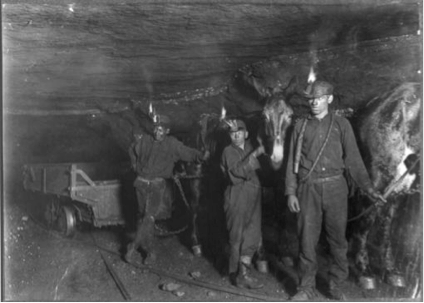
Silverdale miners... picture supplied by David Evans.
Levi. He was born in 1868 in Silverdale, Newcastle under Lyme, the second of eight children which his mother would have over 20 years. His father was a charge hand at Silverdale Coal Mine and his eldest brother was already working down the pit when Levi joined him, at the age of 10 years. He worked hard down the pit. He had to; the family needed every penny to support itself in the hard times. His family life was far from happy. As his younger brothers and sister grew old enough to go to work they, too, were despatched to make their own way in life.
Levi’s mother knew she had to make a new life for herself and for her youngest children who were still at home. Levi wanted to make a clean break, too.
Levi joined the army. He was fit. He was a hardworking, intelligent man. He enlisted into the North Staffordshire Regiment in 1892, at Whittington Barracks near Lichfield.
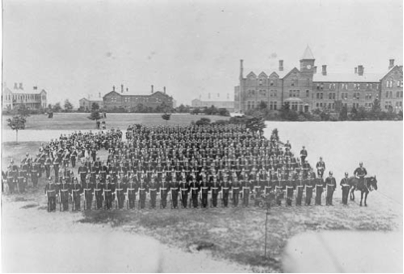
Square bashing in winter. Picture supplied by David Evans.
Here, after he had completed his initial basic training as a rifleman, and having shown his proficiency with the newly-introduced rifles, he trained as a machine-gunner on the Maxim machine-guns. His world had changed dramatically and totally. He had new comrades, a new routine, a new life. He joined the regiment based in Malta.
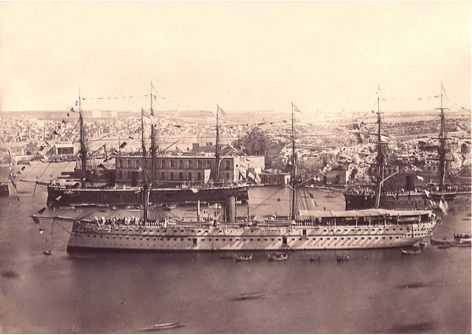
Malta was an important base, even then. Picture supplied by David Evans.
The battalion was moved to its new posting in Egypt. It was here that Levi’s battalion was engaged in the Dongola campaign. A campaign which is hardly known in modern British society. Here he served under General Kitchener and was participant in the Battle of Omdurman, at Khartoum, in Sudan. He was one of the four Maxim machine gun crews who were engaged in this horrific, one-sided battle by the banks of the River Nile. The combination of latest artillery on the British Army’s river gunboats, the charge by the cavalry (the very last charge by a British Army in battle), accurate and disciplined rifle fire by the North Staffordshires, but especially the horrendous use of the four Maxim machine guns ensured a swift and bloody outcome.

The actual four-gun Maxim detachment before the battle of Omdurman. The heavy machine-guns were carried on these carriages. Each crew numbered six soldiers. Picture supplied by David Evans.
The Generals in charge of this battle were criticised for ordering the subsequent killing of the large number of prisoners taken during this battle. One witness to the battle, a young officer named Winston Churchill, wrote his own account of this battle in his book, The River War.
For his services in this campaign, and for other services in the Second Boer War, Levi was awarded the Queens Silver Medal with Hafir clasp. It was in the Second Boer War that the British Army used a new tactic of imprisoning Boer civilian families ‘concentration camps’.
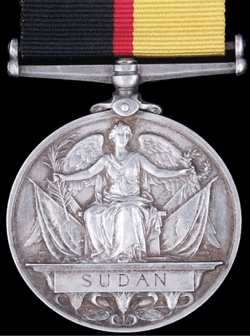
The Queens Silver Medal, presented to Levi by General Kitchener. Picture supplied by David Evans.
Levi was reassigned to the Punjab, India, where he served to train the new India Regiment in the use of the machine gun. He returned to England, his military service complete, in 1904. He had experienced a soldier’s life, been engaged in horrific, bloody conflict, and had learned to speak Punjabi whilst in India.
Back home he lived and worked in Walsall Wood where his mother and two sisters had settled. His two brothers in law were both miners down the mine and Levi joined them. Back to the same hardships, toil and danger he had known in the Silverdale Mine in Newcastle under Lyme as a child.

- That iconic poster. Photo supplied by David Evans.

Levi’s life was to change yet again. War broke out in August 1914, and within a week Levi had re-enlisted at Whittington Barracks. He knew his skills as a machine-gunner would be needed again. He had seen the poster, and believed, as all the recruits did, that this would be ‘the War to end all Wars’, that it would be over by Christmas, and that they would return to a ‘land fit for heroes’… This time!
…to be continued next weekend.