


Cotterill’s survey of the Birmingham Road Wharves, Lichfield, from the book ‘ Wyrley and Essington Canal Through Time’, by Ray Shill. Click for a larger version.
I recently acquired a new historical picture book entitled ‘Wyrley and Essington Canal Through Time’, by Ray Shill. This is a good, if slightly thin book that features some interesting ephemera and images from the history of our local canal.
One particular pair of maps caught my eye, and I thought I’d share them with readers here, and give the book a bit of a plug. Considering the debate recently about the postcard of the Lichfield Canal (actually the Wyrley and Essington), plus ruminations on Sandfields Pumping Station, I thought they may provoke further interest.
Students of Hints/Canwell/Tamworth history will note the name Floyer, big in the area.
It seems south Lichfield in the late Victorian era was a rather industrial place.
Ray Shill’s book is available from Amazon, as well as other booksellers that are more likely to treat their staff like humans. The cover price is £14.99. I recommend you buy a copy.
The explanatory notes for the maps say the following:
Cotterill’s survey, the canal from the Waterworks to the Birmingham Road is shown. The original Waterworks building is shown in black, while the red parts represent the future extensions where the later George & Ionah Davies Pumping Engine was installed. The City of Lichfield Brewery malting are also marked in red to show they were erected after 1868. A bank of limekilns has also been added to the wharf principally owned by limemasters, the Brawn family. Joseph Summerfield was the owner and propietor of the Duke of Wellington. Also etched in red is the London & North Western Railway, which formed the extension from Sutton Coldfield that was constructed between 1882 and 1884.
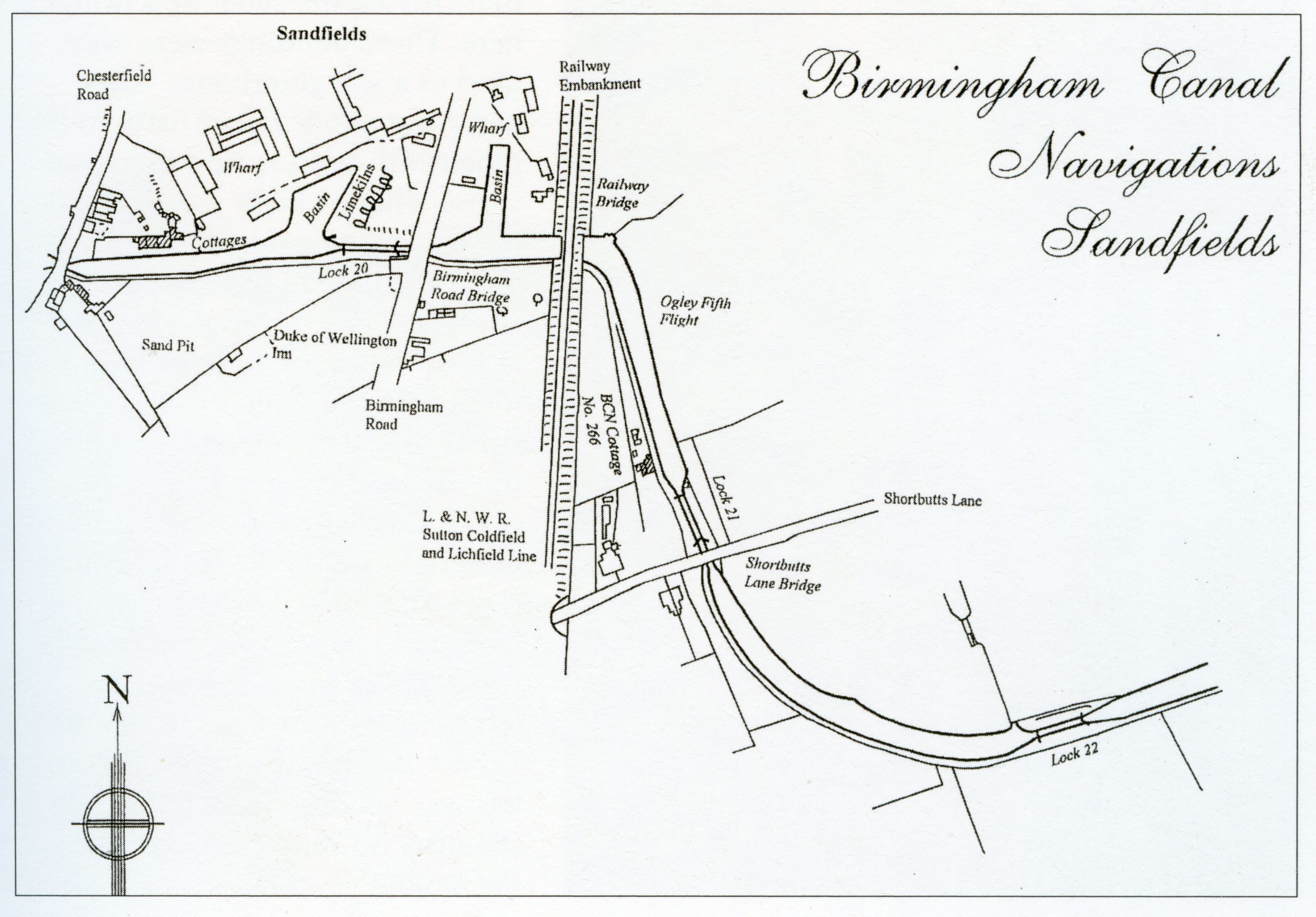
A detail map of the same area, supplied by The Lichfield and Hatherton Canal Trust, to the author. From the book ‘ Wyrley and Essington Canal Through Time’, by Ray Shill. Click for a larger version.